Memphis Startup: BioNanovations Shows Off Amazing TestQuick Technology

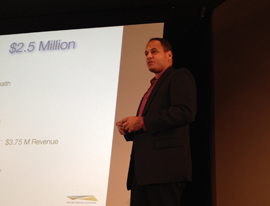
BioNanovations CEO/Co-Founder Charleson Bell Presenting at Demo Day (photo: nibletz llc)

It was Demo Day at the Memphis based ZeroTo510 startup accelerator this past Thursday. ZeroTo510 is the first cohort based medical device accelerator and was created with a partnership between Seed Hatchery and Memphis BioWorks.

We were really excited when Charleson Bell, the CEO and co-founder of BioNanovations presented their TestQuick technology on Thursday. First off, Bell and his partner Andre T Stevenson had spent some time with us a few weeks back during office hours. It was then that we learned how BioNanovations was preparing to really change the world. We all know that most startups say they’re going to change the world, the ZeroTo510 class is really going to do it.

Bell and Stevenson gave us a crash course in nano particles when we first met for office hours. Bell has done a great job of “dumbing down” the science behind their technology for laymen like myself.

We were fascinated by the BioNanovations team when we first met them. While Bell had been working on using nano particles to find bacterial infections early on and Stevenson had discovered the biomarkers for cancer before they had become cancer.

The BioNanovations team will most likely bring many great products to market but their debut product “TestQuick” will have a huge impact for millions of people suffering from bacterial infections.

Bacterial infections kill more people than AIDS, breast cancer and automobile accidents combined, every year. What’s even more troubling than that is the fact that over 1.7 million bacterial infections are hospital born. That means that people who have gone into the hospital for something else, incur some kind of bacterial infection. These hospital borne infections cost over $40 billion dollars.

That’s not all though. One of the most alarming facts in all of this is that these bacterial infections can claim a life or a limb in less than 48 hours, however the traditional diagnostic testing can take 4-5 days. Yes, unfortunately, the traditional way means that several people lose their lives before getting the diagnosis back on the infection.

What BioNanovations TestQuick product offers is a testing platform and reader that can confirm the type of infection and the level of the infection in under 30 minutes and patient side.

Bell was quick to point out his competition. That’s actually key in an investor pitch day.

BioNanovations main competition is a company called Nanosphere. They offer a diagnostic testing platform that comes back in three hours. Nanosphere received FDA approval and has 200 orders already. Their testing cassettes are $75 a piece and the machine to scan them is $100,000.

Compare that to BioNanovations TestQuick cassettes that sell for $100 a piece but the reader costs just $1000.

But that’s not all. Nanosphere’s technology has a three-hour turn around time, post culture. That means after the initial diagnosis.  BioNanovations, TestQuick platform is the first pre-culture diagnostic tool, saving critical time and lives.

Check out Bell’s ZeroTo510 Demo Day pitch video below:

Linkage:

Check out BioNannovations here at their website

Investors, reach bell at charleson.s.bell@bionanovations.com

Here’s more Demo Day coverage from Nibletz

Are Your Outside Sales People Really Working? Nashville Startup: CallProof Can Tell You

Anyone who owns or runs a business with an outside sales force has undoubtedly experienced cheating sales people. You know the type, the ones who come in for the sales meetings, report that they’ve seen a bunch of clients and that none of them were interested in your services. For all you know they could have been sitting at Starbucks all day, running around doing personal errands or even worse, at home sleeping.

Business owners and operators with outside sales forces have probably tried a few CRM solutions, but even those can be ineffective. Sales people forget to update them, or they fudge their entries just to prove they’re doing a great job.

Not all sales people are bad, of course you know your top producers, they’re out there making sales.

A startup in Nashville aims to help those with outside sales forces.  CallProof keeps call logs and appointment records and can allow a manager to monitor the progress of their sales people, even if they’re using their own phone (with permission of course). This way you can see if your sales people are making a bunch of one minute phone calls or they’re actually going through the sales process.

With CallProof you can also see if your sales people are making appointments. CallProof isn’t just about the underperforming or lazy sales people. Managers can use the data provided by CallProof to help coach their sales people as well.

Robert Hartline the CEO and Co-Founder of the Nashville based startup, created out of necessity. He was actually one of those managers managing an outside sales force for a wireless company. He created CallProof to make sure that sales people were doing the necessary activity to actually produce results.

We got a chance to talk with Hartline in the interview below.

Read More…

Memphis Startup: EcoSurg Pitches At Zero To 510 Demo Day

Every startup that has participated in an accelerator program wants to change the world. Some founders verbalize that they wantto change the world while others just think it. Well the six startups that participated in the inaugural class at Zero To 510, a cohort based medical device accelerator in Memphis Tennessee, are doing it.

Every startup that presented at Zero To 510’s demo day has developed to solve problems in the medical space. EcoSurg is one of those startups.

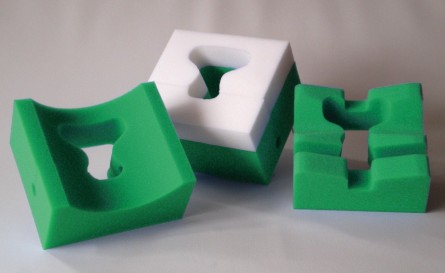
There is an environmental problem that stems from just about every surgical procedure, every day. Most surgeries use medical positioners which are foam devices that are designed to position patients in ways that are both safe, and the most convenient for doctors. These foam positioners keep legs propped up, arms propped up, patients on their side and other positions so that the surgeons have better access to the surgery site.

According to EcoSurg CEO Ray Randall, over 20 million surgical procedures per year use these foam positioners. This of course creates tons of non biodegradable waste. Specifically these foam positioners contain petroleum-based derivatives. Not only are these medical positioners harmful for the environment, but because of that, they cost more in disposal which is passed down to the customer/patient.

Randall’s company EcoSurg has developed a new line of patient positioners which are manufactured using alternative foam comprised of soybean-based composites.

With Obama Care coming into play in 2014, the amount of surgeries is going to increase significantly. EcoSurg’s medical positioners will help hospitals cut down on costs and help the environment in the process.

Check our Randall’s pitch video from Zero To 510 Demo Day below:

Linkage:

Find EcoSurg on the web here

See more of our Zero To 510 Demo Day Coverage Here

Nibletz is on a sneaker-strapped nationwide startup roadtrip here

Two Down One To Go: Nashville’s JumpStart Foundry Prepares For Demo Day

Last week we were in Chattanooga Tennessee for GigTank. GigTank was the first ever accelerator focused on startups building around 1 GB ethernet. Chattanooga was the first city in the United States with one gigabit fiber optic internet to every home and business in a 600 square mile radius. They beat Kansas City, who’s 1 GB fiber project with Google debuted last month.

We saw some great startups present great ideas. Banyan, a collaborative research tool, that is both up and running,and demonstrated first hand the effects of super fast 1 GB ethernet, was the winner. GigTank broke the mold of the traditional accelerator demo day by offering a $100,000 cash prize to the startup that won their pitch contest in the entrepreneur category.

GigTank broke the mold yet again when they ran a student track along the entrepreneur track. The students received free room and board and incubated at the LampPost Group’s offices in downtown Chattanooga. The student track had a $50,000 cash prize won by two girls whose startup Babel Sushi, is an on the go translating platform.  The entrepreneurs incubated at Colab a few blocks down the road from LampPost. The entrepreneurs however, received a $15,000 seed investment.

This Thursday was Demo Day for the ZeroTo510 accelerator in Memphis Tennessee. The ZeroTo510 accelerator was a joint project of the Memphis Bioworks Foundation and Seed Hatchery. It was also the first cohort based medical device accelerator.


Zeroto510’s demo day was more traditional in that there wasn’t a cash prize but rather a showing of what the six teams were working on and what they had accomplished in the 90 day period. All six teams did a great job presenting. They all had viable go to market strategies as well as thoroughly researched projects. Some actually had products to show off, which is a break from the traditional web based accelerators.

Patrick Woods, Director at archer>malmo’s a>m ventures group said “there was actually physical products you could touch” making reference to the several accelerator demo days he’s seen where everything was either on the web, in the cloud or still in pre-release formative stages.

You can see a quick background on the six teams at ZeroTo510 here.

Some of the presenters had already secured physical trials, others, like Restore Medical had great news, like the fact that they already had a purchase order for $3.75 million.

Next week marks the end of the current session of Nashville’s Jumpstart Foundry. Now in it’s third year, the JumpStart Foundry has a great class of startups that will be pitching next week.

Life in an accelerator is tough. Tennessee Venture Capitalist and Partner at Solidus, Vic Gatto, told nibletz last week that there were originally ten teams in JumpStart Foundry and three have since dropped out. The best of the best for next week are ready present and include:

Contigo Financial, an online consumer lender offering a suite of responsible loan products through the workplace.

Jamplify (formerly OKDJ), a social media marketing platform which turns fans into active promoters of online content.

The Skillery, a marketplace for classes and workshops led by experts in the community.

Evermind, the first consumer-friendly senior monitoring system. If you can plug-in a surge protector and use a smartphone, Evermind is easy.

Kiwi (formerly Wax),  the best way to capture any exciting moment on video.

PhotoRankr, the first online photography marketplace to leverage the power of social media.

OurVinyl, allows users to discover new music through video. The modern day MTV minus the re-runs.

Nibletz is the voice of startups everywhere else and the national voice of startups in Tennessee we can’t wait to see what these great startups have to offer.

Linkage:

There are still a limited number of tickets available for JumpStart Foundry’s Demo Day get them here

Nibletz is the national voice of startups in Tennessee and everywhere else, check out our southern coverage here


Memphis Startup: Restore Medical Kicks Off Demo Day With A $3.75M Purchase Order

We have no problem admitting that ninety percent of the ideas, and startups that are showing off today at Zeroto510’s demo day fly way over our head. There’s one thing we know real well though and that’s millions of dollars.

Today in Memphis Tennessee, Zeroto510, the first cohort based medical device accelerator in the country graduated their first class. For an overview of the accelerator and the startups presenting today, click here.

One of the startups we’ve gotten a chance to know here in Memphis is Restore Medical.  We met co-founders Ryan Ramkhelawan and Shawn Flynn at an office hours event we held in Memphis in June. That’s where we first heard about there new and innovative way to sterilize surgical instruments.

Traditional methods of sterilizing surgical instruments have been in place since Flynn was a surgical assistant in the US Army 20 years ago. Yes, with all the innovation we’ve experienced in the country in the last two decades, the sterilization of surgical instruments still resembles the way a high volume chain restaurant washes their silverware for a dinner rush. Instruments are piled into a basket with no regard for blades, needles, pins and of course accidents.

Restore Medical has two key elements to their business; protecting patients from infections from dirty instruments and saving hospitals money. Restore Medical’s new sterilization process does both.  Restore Medical’s process keeps the surgical instruments separated, or rather organized and spread out in a way that every instrument is equally sterilized throughout the process.


When we met at office hours the duo explained that there are a lot of faults in the current system. They should know this as both have had surgery support career paths for over 20 years. One of the faults is the fact that if one tool is missing from a set of tools for a procedure the operating room needs to call down for a brand new set. This can take up to two hours, on a rush. Doctors are faced with whether they are going to keep a patient under anesthesia for the wait or wake them up and put them back under. Of course both of those options can be costly and risky.

During the presentation today Flynn highlighted the fact that with Obama Care taking effect in 2014, there will be 30 million more patients in the system. Now is the time that hospitals need to streamline processes, cut down costs and maximize their certifications. Hospitals need to make sure that their infection rates are low so that they can be reimbursed for patients they take without traditional insurance.

Restore Medical can increase revenue for hospitals by $14.5 million dollars per year (each) and save $500,000 in hard costs.

Their technology, coupled with the revenue by changing to Restore Medical’s system has attracted 5 Wellstar hospitals to already putting in a purchase order. The purchase order hinges on Restore Medical getting their 510K. If their 510K is approved that purchase order is $3.75 million dollars.

Linkage:

Check out Restore Medical Here

Check out Zero to 510 here

Nibltez is the voice of startups “everywhere else” here are more startup stories from “everywhere else”

Nashville Startup: PhotoRankr Prepares For JumpStart Foundry Demo Day INTERVIEW

It’s Demo Day month in Tennessee. Last week was Demo Day at the Gig Tank, Chattanooga Tennessee’s startup accelerator themed around the city’s one gigabit fiber optic network.

This week is Zero to 510’s Demo Day in Memphis Tennessee. Zero To 510 is the first cohort based medical device startup accelerator in the country. Their teams are preparing for this week’s big event with a series of rehearsals in Memphis this week. This makes the third big startup event in just as many months in the river city. 48 hour launch kicked off the summer, then there was Startup Weekend and Demo Day this Thursday.

200 miles east of Memphis the seven remaining teams in JumpStart Foundry are preparing for their Demo Day next week. Solidus Partner Vic Gatto told us last week that there were 10 teams originally but three teams couldn’t keep up with the rigorous training, working and perfecting their startup and dropped out of the program.

PhotoRankr is one of the seven startups preparing to present next week. They bill themselves as a community and a marketplace for passionate photographers. Of course right off the bat we noticed that PhotoRankr has an actual up and working product. The website for PhotoRankr is polished and aesthetically appealing to anyone, especially those photographers with a nose for design.

Within PhotoRankr members can get genuine feedback from fellow photographers. They can also find link minded photographers that they would want to learn from. They can find photographers based on portfolio, location or skill level which means the user can have role model photographers and peers to exchange experiences with.

PhotoRankr also offers a marketplace for their users own work. PhotoRankr members can sell their original work for whatever price they would like. It gives a much more creative and artistic source versus traditional stock photography sites.

In reading all of the profiles for next weeks startups it’s a tough call. We got a chance to talk to the PhotoRankr team in the interview below. Check out the interview and then after that hit the link and check out PhotoRankr yourself.

Read More…

When Bad Names Happen To Great Startups: Corpora And More NSFW

We were in Chattanooga Tennessee this past week covering GigTank’s demo day.  GigTank is a three month accelerator that was centered around building startups that utilized Chattanooga’s 1gb city wide fiber optic network. Chattanooga’s 1gb fiber optic network launched a year before Kansas City’s, Google backed 1gb network.

The first team that presented was a startup from Asheville North Carolina called Corpora. Corpora is a platform that uses social media to aggregate and crowdsource things on a grand scale. For the purposes of the competition they showed off how the service could be used to track medical conditions like allergy clusters. Corpora could also be used to source clusters of other conditions like a food poisoning outbreak or  conditions with widespread results.

One of the judges quickly shot the idea down by suggesting that they wouldn’t tweet about “a rash”. Aside from that, and if you can look past the medical vertical, there is a lot of data that could come out of something like Corpora. Although they didn’t win the grand prize of $100,000 they definitely have an idea worth continuing on now that the accelerator program is over.

So why is Corpora in the headline?

Well Thursday morning while sitting at the press table on the second row at the demo day presentations, I discovered something quite disturbing about Corpora.  I had just finished video taping their pitch and began to compile this story about Corpora. After writing a short summary of their presentation, and uploading the video to YouTube, I began to hunt for a logo for the startup. Like most people the first thing I did was a Google images search.

I wholeheartedly apologize to anyone reading this who was seated behind me and had their eyes on my monitor instead of the actual presentations. You see Corpora yielded a search for Corpora Cavvernosa. The first page of Google images results yielded over 25 pictures of penises. Some of the penises were pierced, some cut open, some were just medical illustrations. You see Corpora Cavernosa is the tissue part that runs on top of the urethra and fills with blood and expands as a result of nitric oxide during arousal. Yes Corpora Cavernosa is the actual part of the penis that “gets hard” during an erection.

In a half joking manner and in a half “WTF why didn’t these entrepreneurs vet this out better” manner, I texted a few of my colleagues who were sitting a few rows back (sorry Eric and Patrick) and of course they too saw the disturbing pictures that undoubtedly you’ve gone and Googled now as well.

Some may say that this is a minor thing, on the contrary it’s something that’s minor but could have been dealt with early on. They don’t actually have any significant brand presence at the moment.

We’re not totally in the clear either, however we knew about our issue early on and decided not to worry about it. There is an Urban Dictionary definition of niblets (with an s) that means something that may be a bit on the NSFW side (I’m sure you’ve Googled it now as well).

Our situation is a bit different, that colleague of mine I mentioned above Patrick Woods is a director at archer>malmo’s a>m ventures group. They specialize in branding, brand identity, advertising, and PR. Woods would love for us to change our name. When he thinks nibletz he thinks snacks, and now of course the UD definition we told him about.

Our name came about because we actually came out with our original tag line before the name itself, which was: “Small crunchy bytes from the tech and startup scene”. As a compliment to our huge Android site (which was sold in April) we came up with Nibletz last year. Our original plan was to do a capsulated version of tech and startups similar to what you would find on TechCrunch. We pivoted in January to “the voice of startups everywhere else” and kept the name.

Unlike Corpora we have an established brand presence so for now the name is the same.

a>m ventures has submitted a suggestion for a SXSWi panel/talk in 2013 called “When Bad Names Happen To Great Startups”. If selected archer>malmo’s Chief Creative Officer Gary Backaus along with their Senior Copy Writer will host and moderate a discussion on the importance of naming and having a great name that you can build an even greater brand identity with.

They’ll highlight some of the companies that have changed their names under archer>malmo’s direction and done very well.

Name changes happen for many reasons, but it’s much easier and a lot less costly when little nuances like your name being part of the word for erection, come up early on in the startup process. Even major corporations sometimes go through name changes. Phillip Morris Companies, the manufacturers of Marlboro cigarettes and one time owner of Kraft foods recently went through a name change to Altria. Of course for Altria many will always refer to them as Phillip Morris.

The Haloid Company was the first name for Xerox.  Lucky Goldstar, the Korean company that became LG, changed their name for better global adaption. Under the Lucky Goldstar name they released a number of very low end electronics, this may have had to do with the shift when they started shipping flat screens, and smartphones worldwide. Now with the shortened name they’ve adapted the slogan Life’s Good.

Many don’t realize that when they fly AirTran they are traveling on the same carrier once known as ValueJet Airlines. ValueJet quickly made a name for themselves in the early to mid 90’s until 1996 when a crash in the Everglades caused them to change their name permanently. Now, most people have forgotten (or didn’t know) that Airtran is ValueJet and just associate AirTran (a unit of Southwest) as a value carrier.

Our own word?

One thing we like about nibletz is that we’ve made it our own by swapping the S for the Z. Do we think we’re the next Google? No of course not but made up words can be fun. The downside to made up words is when you invert a letter like we did or use some other creative spelling that’s hard to articulate in speaking. We are forced to use some SEO ninja skills to help direct people who may be looking for us with an “s” and not a “z”.

We’ve also had a problem with good ole Heather who holds the Twitter name “nibletz” she used the name nibletz as her gamer name for many years and has tried to hold the Twitter handle hostage hoping we’ll pay her thousands of dollars to use it. Sorry we’re doing just fine wtih @startuptechguy my personal Twitter and @nibletztweets.

We’re hoping that the team behind Corpora will do something with the name (or flood the net with pictures to push down all those pictures of penises). We’re also hoping that archer>malmo will win a spot at SXSW for their valuable talk.

Linkage:

More great Chattanooga GigTank coverage here

Nibletz is the voice of startups “everywhere else” here are more startup stories from “everywhere else”

This may be our last crowdfunding campaign but we need it the most!


Chattanooga’s SimCenter Could Use The Gig To Plan For The Zombie Apocalypse And More

While we were in Chattanooga Tennessee for the GigTank Demo Day on Thursday, our hosts, the Chattanooga Chamber of Commerce took us on a great tour of the city with special attention to services, companies, and educational centers that utilized Chattanooga’s 1gb fiber optic network. Chattanooga was the first city to have 1gb ethernet fiber, a year before Kansas City and Google.

One of the stops on the tour was the University Of Tennessee’s Sim Center: National Center For Computational Engineering.

The SimCenter was established at Mississippi State. With the help of the Jack Lupton Foundation a SimCenter was established in Chattanooga in 2002. The SimCenter houses 6 super computers with the largest having 1300 cores and 325 node diskless cluster by Dell. There are 4gb of RAM per node and of course it’s hooked up to the 1gb ethernet.

Since it’s inception the SimCenter has worked for clients in the public, private and government sectors which require unheard of large amounts of data. When a company like Boeing needs to simulate new turbine engines for a new airplane project the SimCenter is able to simulate the airplane in various conditions to accurately calculate the data engineers need to know while designing new engines.

A recently completed SimCenter project for US Express truck lines resulted in $68 million dollars in fuel savings. The SimCenter did simulated data trials and research on drag and turbulence. They found that by adding “skirts” in three places on semi trucks and their trailers, US Express could save on millions of dollars on gas.

You want me to get to the Zombies part right?

A research project for the SimCenter that was commissioned by the Department of Defense after 9/11 was recently declassified. The Department of Defense used the SimCenter to simulate catastrophic events. More importantly though, the SimCenter research was vital in finding ways to quickly contain a public catastrophe, limiting casualties and losses and protecting first responders as best they could.

Through their super computers, and units called GENI’s, as well as sensors, and communications equipment all linked together on a super fast network, the SimCenter was able to simulate a hazardous materials spill and explosion. In a situation that would typically take hours to contain and more hours to clean up, using the SimCenters’ simulation they were able to:

– Give first responders on going data pertaining to atmospheric conditions, environmental threats, and the trajectory of where the “cloud” of hazardous materials would go.

– They were able to get first responders to the scene quicker by pinpointing the accident

– They were able to alert the citizens through a smartphone app, essentially evacuating the at risk area before any major harm could be done.


Through this study municipalities and local governments will be able to construct a similar system of super computers, sensors, communications and network to be able to respond to their own disasters just as quickly. As gigabit ethernet emerges we will see more and more public safety resources relying on that super fast internet to get vital life saving information to and from command centers, to first responders, to the public and to the media.

The SimCenter opened in Chattanooga long before 1gb ethernet was available.  The computer power alone coupled with the brain power of the engineering researchers in the SimCenter have provided research covering everything from lithium battery modeling, aerodynamic analysis, heavy truck modeling (see above), modeling of coastal and urban flooding and much more.

Our host for the presentation about SimCenter, SimCenter Enterprises President and CEO Tim Walsh, did tell us that the gigabit fiber provides even newer ways to utilize the center. Walsh was a mentor for some of the GigTank teams who were looking to send huge amounts of data over the internet.

Gigabit ethernet tackles huge problems for big data projects like the ones at the SimCenter. During the GigTank presentation for Banyan, the entrepreneur team that won, revealed that it would be quicker for an engineer at Stanford to drive to the airport and fly to London with a terabyte hard drive than it would be to send it over a 100/mbps connection. Using Chattanooga’s gig the Banyan team was able to send a Terrabyte of data to Standord in 2.5 hours. That coupled with the computing power of the SimCenter will mean even bigger things will be done at this amazing institution.

Linkage:

Visit the SimCenter website here

More Chattanoga coverage on nibletz.com here

We’re the voice of startups “everywhere else” here are more startups from “everywhere else”

Nibletz needs your help, help us out here.

Tampa Startup Banyan Wins Entrepreneur Track At Chattanooga’s Gig Tank

Over 500 people came from across Tennessee and across the USA to Chattanooga TN Wednesday and Thursday for GigTank’s Demo Day. 

GigTank is a 90 day accelerator program based in Chattanooga with an emphasis on using Chattanoga’s 1GBPS internet. Chattanooga was the first city in the United States (edging out Kansas City and Google by a year), to implement 1gbps internet. Every resident and business in a 600 square mile radius has 1gbps fiber optic line straight to their home or business.

Chattanooga was able to set up the 1gb fiber by rolling out a smart grid that provides communications from utility meters at every home and business back to a central location. Citizens of Chattanooga can elect to get data and tv services from the 1gb fiber pipe in their homes on a monthly subscription based model.

Chattanooga’s GigTank accelerator featured two separate tracks. The entrepreneur track was a traditional 3 month accelerator model with a seed investment, and access to services, mentors, office space and other resources. The student track was similar to the entrepreneur track but without the seed investment. Students participated in a pitch contest in Chattanooga Thursday where they competed for a $50,000 prize.

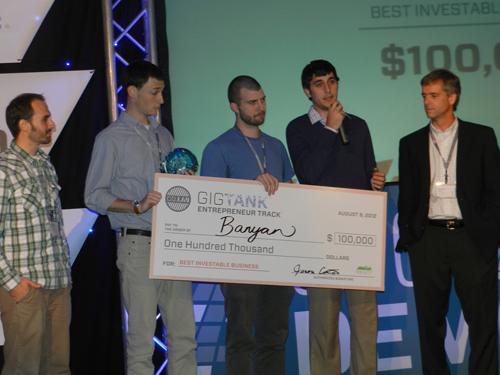
The winner of the entrepreneur track was a Tampa Florida startup called Banyan. The Banyan team was Toni Gamayel, Travis Staton and TJ Weigel.

Banyan is a cloud based collaborative research system. This allows researchers who are working on the same project to keep their research together. It also solves major pains for those managing the research.

During Gamayel’s pitch he brought up an instance where two students at the University of Kentucky were working on the same exact research one floor above each other and didn’t even know it. With Banyan the research manager would have easily been able to identify this duplicate research.

In another instance a Stanford professor had been working on some research. The need arose to validate that the particular research he was working on was being performed at the school rather than at home or another lab. With Banyan they could have easily identified the source of the actual research.

Banyan took a $100,000 check back to Tampa where they plan on using it to beef up their development and marketing. Gamayel is very active in the Tampa startup community. He was a judge for a recent Startup Weekend in Florida and is well known as a resource and mentor in the region. In fact he has provided mentorship to Feathr a Gainesville based startup that is working on eliminating the paper business card.

Check out Banyan’s complete pitch below:

Linkage:

Check out Banyan’s website here

Here’s more of our GigTank coverage

Love what we do, click here, do it, RT, Repeat

GigTank Chattanooga: And The Winners Are: Iron Gamer, Babbel Sushi & Banyan

It’s been a great two days here in Chattanooga TN, the Chamber of Commerce has done a great job hosting media from across the country for two intense days of learning about Chattanooga, gigabit ethernet and the startups of the GigTank.

For the GigTank entrepreneur teams and the student teams it’s been a grueling three months, and this last week has been one of sleepless nights and startup hyper babble as they prepare to wow not only the judges, but over 500 people from the venture community in and around Tennessee. In fact, there are folks here from Revolution in DC and several VC firms in the Atlanta region.

It’s all come down to this moment. The judges have now seen all the pitches twice. They’ve all talked amongst themselves and the winners of the first every Chattanooga GigTank contest are:

The winner of the $10,000 media award from Warner Brothers went to Iron Gamer

The winner of the $50,000 student track was Babbel Sushi

The winner of the $100,000 entrepreneur track was Banyan.

Linkage:

More GigTank Coverage here

Nibletz is the voice of startups “everywhere else” here are more startup stories from “everywhere else”

We could use your help here


Georgia Startup: Vigia Shows Off Their Concept That Will Make Campus Life Safer VIDEO PITCH

Well we’ll be honest with you here, when we read the initial synopsis of Vigia we thought it wouldn’t be that exciting. When Anthony Guglielmo got on stage and started talking about a bee sting, we were still on the fence. However that bee sting shed light on a much bigger problem for college students on large campuses that has really snowballed in recent years as wireless phones and smartphones became more prominent on college campuses.

The problem here is that college campus’ public safety infrastructure is disrupted on a 911 call by the wireless companies who are required to route phones to the nearest 911 center. To put it in perspective for you, if you got stung by a bee, and were allergic to bee stings without an epi-pen near by, you would most likely call 911. From there you would be routed to the county or cities 911 center not your campus security or EMS.


In an incident like that the few seconds or minutes could prove fatal if you don’t get your medicine in time. Perhaps it’s because of  the recent tragedy in Colorado, but getting direct access to campus security and public safety could prove to be life saving for a number of reasons.

Enter Vigia, a startup from Athens Georgia. Vigia is a platform that allows a smartphone to connect directly to their public safety professionals and dispatchers and enhances the emergency services for the public.

In addition to routing your call more efficiently you can also add a profile to your device. If you’re allergic to bees, medicine, diabetic, or have any other medical condition, a profile could be delivered to a 911 center that could get you the help you need quicker.

Check out Guglielmo’s pitch video below, you’ll agree that Vigia is a great idea.

Linkage

Check out more GigTank coverage here

Nibletz is the voice of startups “everywhere else” 

We’re on a sneaker-strapped, nationwide startup roadtrip and need your help here.

Video Pitch: Asheville Startup Corpora Pitches At GigTank Demo Day

One of the startups in the entrepreneur track at the GigTank in Chattanooga is Corpora from Asheville. Corpora is a real time intelligenet agent that uses Twitter status updated and other public facing data to determine the health of individuals by geography, providing insights into the spread of illness and quantifying the impact of previously elusive factors on public health.

Andrew Abumoussa the CTO of Corpora was ready with his presentation on what seems to be an innovative new way to track health problems in mass. Now we’re not talking about an ecoli breakout. In his slides he showed off the value of aggregating this data from Twitter for things like allergy breakouts and other similar problems.

One of the judges asked Abumoussa if they were working on aggregating the data from other social networks telling Abmoussa he didn’t see people “Tweeting about that rash”. After a quick chuckle from the audience that raised a valuable point.

The team hails from Asheville North Carolina and is hoping to win the GigTank contest today and walk away with extra venture capital from one of the 500 investors in the room.

Check out his pitch here:

Linkage:

More Gig Tank Demo Day coverage here

Nibletz needs your help here

Chattanooga GigTank Mentors Log Over 600 Hours

One of the biggest things that’s struck me about the Gig Tank and Gig Tank’s demo day is how the entire city has come out to show their support. Last night we talked about how various businesses throughout downtown Chattanooga participated in the event by holding events.

We went to a reception at co.lab as well as CraftWorks headquarters. There were other events earlier in the day that we unfortunately missed.

This morning there was a bike ride organized, a tour of the Hunter Museum and a tour of the world famous aquarium here in Chattanooga. Chattanooga as a whole seems invested in the success of the entrepreneurs and students who’ve been hard at work the past three months in anticipation of the big day today.

Chattanooga is also invested in the gig itself. It’s exciting that 1 gb fiber is available everywhere in a 600 square mile radius. This morning we had the opportunity to have breakfast with Hamilton County Mayor Jim Coppinger who admittedly isn’t a big “tech” guy but certainly understands the opportunities that come with the smart grid and the 1gb fiber.

The entire “gig” is part of his county. There are 340,000 folks in Hamilton County and of course the biggest part of that is the approx 170,000 people living in Chattanooga.

Coppinger is excited about where the “gig” goes for infrastructure, beyond running communications for power and water for residents and businesses. Coppinger is excited about what the gig will do for education in his county. Currently he has high schools with 500 students and on the other end of the spectrum, schools with 1500. Using remote teaching, relying on the back bone of the gig would mean that students county wide would have a consistent quality of education.

Mayor Coppinger, who served as Fire Chief before being elected Mayor, is also excited about what “The Gig” can do for public safety and first responders.

On the entrepreneurship side Mayor Coppinger is ecstatic about what’s happening with the Gig Tank along with the 60 companies being grown at a small business incubator on the north shore. That incubator has held 60 companies at a time and generally employs 300 per session.

Chattanooga’s support came out this morning when Four Bridges Capital and co.lab’s Charlie Brock pointed out this morning that the mentors for the GigTank entrepreneur’s track offered up a cumulative total of over 600 hours of mentorship during the three month session.

Mentor’s really got engaged with the entrepreneurs and the students as well and have provided more guidance than one would expect, which all lends itself to the buzz going on in Chattanooga surrounded by “the gig”

Linkage:

Nibletz is the voice of startups “everywhere else” here are more startup stories from Tennessee.

We sure could use your help

Jumpstart Foundry Nashville Startup Rentstuff.com Moves To Chicago & Pivots Away From Core

Earlier this year we brought you an interview with Rentstuff co-founder Chris Yaeger. The Nashville startup had quickly rose to prominence in the peer to peer renting category, with the idea they cultivated as part of the JumpStart Foundry program.

With $600,000 raised to help them along the way the startup relocated to Chicago’s 1871 in July and debuted their Chicago based team at TechWeek earlier this summer.

Their original idea, had a lot of holes in it in terms of insurance to the renter, and market viability but the concept was rock solid. One user could rent that DSLR camera that sits in the closed for $30-$50 a day to their local neighbor and make a few bucks on the side. You may have even been able to go as far as to call the idea “AirBnB for Stuff”.

At last look you could find anything from tents and sleeping bags, to weed-eaters and iPads. While I admitted to a friend on the phone just the other night, I would never rent out my personal iPad, if there was a market for it, I may pick a used one up off Craigslist just to rent out on rentstuff.com.

While couchsurfing and AirBnB made it ok to crash at a complete strangers house or even on their couch, it seems that letting a complete stranger rent my crock pot, serving trays or video camera, wasn’t in the cards.

The company, now based in Chicago, has pivoted to a more mainstream, portal to connect folks with businesses in the “Rent To Own” industry like RentACenter and Aarons.  Now, you go to rentstuff.com and you can fill out a form which lets you request rental quotes from local companies. You can attempt to rent anything from a limousine to a laptop, to a sofa, whatever you need you should be able to get it.

A note on the site tells you that letting a rental company call you can get the process done faster. Of course, bidding out your rental should also mean that you get better deals.

Call me crazy though, the original idea was much more innovative. In fact the crazy guys that produced the Wipple video below, used a leaf blower that they rented from the “rentstuff.com marketplace” to produce this video.

There is definitely a market for the new version of rentstuff, similar to the way that there is a market for the pivoted SpareFoot.com which we covered earlier this month.

Linkage:

Check out rentstuff.com new site here

Nibletz is the voice of startups “everywhere else” here are more startups “everywhere else”

We need your help here