Top 5 Reasons Startup Founders Blow Through Money

Markerly, Sarah Ware, Startup Tips, Guest Post, DC Startup, 500 StartupsThere’s a lot of reasons why companies don’t make it, and sometimes it’s not that the idea or product isn’t good — it’s just that you run out of money. Even though we know that blowing through money is a “bad” thing, I’ve been talking a lot with founders and investors about what “bad” means. What have they noticed as common themes when they sit down with founders that exhausted their money too quickly at the seed stage?  So here are the top 5 reasons startup founders blow through money.

Let me know your thoughts and if this aligns with what you’ve personally seen. What have you regretted spending money on, or what do you roll your eyes at as an investor?

1. “I have a business meeting in Thailand!”

We all know these founders. They travel somewhere new every week. Their meetings take them around the world–frequently. They are always tired and busy from travelling, and they make sure to check-in at every luxurious hotel they stay at.

Why this fails: The desire to pre-maturely live a life of luxury through funding raised for business development extends to other poor choices. It goes — fast.

Understanding this entrepreneur: Typically extroverted and commands control of the room. Works efficiently on little sleep and cares a lot about appearances.

Can benefit by: Making sure that meetings are efficiently scheduled. One entrepreneur told me they combat this by making a “day trip” rule. If the meeting is important enough to fly for the day and return, it’s a go. It helped this entrepreneur cut down on meetings that could be conducted via phone without sacrificing quality.

2. “That’s way too expensive!”

This is another extreme–founders that don’t want to spend anything and opt for cheap solutions…cheap everything. This sends bad signals to clients and investors and often costs the entrepreneur more in the form of lost opportunities.

Why this fails: Some founders are very conservative. They need money in the bank–a cushion. They are risk takers with anxiety and they want to ensure that they get the results that they need for the next raise.

Understanding this entrepreneur: Typically introverted and mathematical. Usually overly conservative in their predictions.

Can benefit by: Giving up some control and working with investors and advisors to create healthy budgets.

3. “It’s a marketing spend!”

We all enjoy celebrating successes of startups for special launches or funding announcements. Sometimes startups plan evenings with open bars and chalk it up to a good use of marketing dollars. Chances are this isn’t the best use. Same can be said for overly-spending on trade shows, fancy promotional videos, or sponsoring an event before the time is right.

Why this fails: Marketing is extremely important, but many startups will exhaust their “marketing spend” without focusing on basic things first — like establishing a healthy blog presence, or discovering ways to become “experts” in a topic by speaking at conferences. If you’re spending money on marketing and you don’t have a blog, you’re doing it backwards.

Understanding this entrepreneur: Typically extroverted and creative and full of ideas. Too focused on big picture instead of steps to get there.

Can benefit by: Forcing themselves to write plans about their spends. Marketing is about ROI, so if you are planning on spending money you need to know what a worthwhile conversion will be for you. Are you looking for customers, users, app downloads? What result will make you happy?

4. “We’re going to hire salespeople!”

A great mentor told me that you only need one salesperson. She didn’t mean literally one – but she meant that you, as a founder, need to be able to sell your product yourself before trying to hire others to sell it for with/for you. Managing a sales team without getting your hands dirty in the sales process only makes you disconnected from your product, and will frustrate future early sales employees.

Why this fails: As a founder you are the product, don’t expect to hire and watch the numbers soar. Your product won’t sell itself unless you sell it first. It doesn’t matter how many sales people you hire if you don’t have the sales process down in the first place.

Understanding this entrepreneur: Typically they don’t have a background in sales and think that hiring sales employees will magically make numbers appear on a sales board. Typically technical, sometimes egotistical.

Can benefit by: Selling the product. That’s all there is here. If the founder is technical and won’t be doing sales, someone on the founding team must be a hustler. Founders are either selling or building. Choose one and do it well.

5. “I’ll never work for anyone, ever!”

This entrepreneur is right out of college. They don’t want to get a job, or can’t last at a job for more than a few months. They have great ideas and plans and want to change the world, but need some reality first. These founders just spend money in all the wrong places for all the wrong reasons, which could be anything from 1-4 mentioned above. Great mentors seem to make or break these types of entrepreneurs.

Why this fails: If you haven’t had a job before you may lack judgement of certain realities and what it really requires to start a business.

Understanding this entrepreneur: Typically driven, these founders need to get broken in a bit before reaching the point of being able to successfully manage others.

Can benefit by: Getting a job and showing that you can work well with others and under the management of others. The goal is to show that you are able to learn and adapt.

Sarah Ware is the co-founder and CEO of Markerly, next generation publisher tools. Markerly is a recent graduate of 500 Startups. Nibletz has used Markerly’s publisher tools since their launch last year. Right click on anything on the site and see the magic happen.

Last year Sarah appeared on Bad Ass Female Founders From Everywhere Else and the “I Survived An Accelerator Panel” hosted by GAN’s Pat Riley,at everywhereelse.co The Startup Conference! Find out more about the next everywhereelse.co here.

EESVDeal1

3 Key Startup Jobs To Outsource

Startup Tips, Guest Post, YEC

(image: leasingnews.org)

If you’re running an early-stage startup, chances are there are some knowledge gaps in your core team. You may be strong on the technical side or a product whiz, but what about financial strategy, administration, HR? Are you prepared to manage the day-to-day of your startup, from recruiting new talent to bookkeeping to financial planning?

If you have a knowledge gap within the ecosystem of your organization, you need to fill it. But your in-house startup team needs to focus on developing your products and service, creating partnerships, and earning revenue. Your internal resources should be focused on your core competencies, not on these side tasks.

So, what should you do? Outsource — to professional consultants or groups.

The best plan is to outsource whatever services you can so as to save on the highest business costs of all — staffing costs — while getting the support you need and the assurance that these functions are being taken care of by professionals.

Specifically, you can outsource the following 3 functions:

1. CFO: If your company has closed a seed round of funding or is earning more than $250K per year, you need a CFO to  handle your financial strategy and run your accounting team. Even if you’re not yet funded or earning significant revenue, you may still be in need of CFO services. For example, if you’re in high-growth mode or have a lot of activity or expenses, you definitely need a financial professional to oversee your financials.

Depending on your needs, a consulting CFO may be able to help with financial projections, cash forecasts, operating budgets, financial plans, pricing, reporting, debt management, M&A, equity and debt negotiations and liquidations. Overall, CFOs help you with business planning, providing your business plan with essential rigor. Your business is creating a product or service; finance is not your business. Look for a professional CFO who has experience working with startups.

sneakertaco2. Accountant: If your financial status doesn’t warrant hiring a CFO, you still need financial support; at the very least, you’ll need help with your day-to-day accounting and regulatory compliance. This could mean tracking down the best US or Canadian accounting software deals. On the other hand, outsourcing your bookkeeping to the right firm will give you the support you need for cash management, AP/AR, financial close and taxes.

You can also hire a consulting group to provide accounting support on a project basis. So, whether you need help with audit preparation or generally accepted accounting principles (GAAP), your accounting partner can give your accounting issues the attention they need — so you can focus on other things.

3. Human Resources: Any entrepreneur can attest to the fact that HR can be a total time suck. From recruiting to managing personnel issues, from compensation to benefits, from payroll to employee policies and procedures, human resources management can take over your entire schedule. And HR costs include much more than wages — all HR functions, while non-revenue driving, have an associated cost. Outsourcing your HR functions is definitely a cost as well, but when you calculate it out per employee (and figure on the invaluable savings of staying in compliance) it becomes clear that this is a necessary business cost.

While your company is in its early stages, it’s essential to get support, but only as you need it. To outsource doesn’t mean you just hand over a function and forget about it. You’ll still want to be apprised of all aspects of your startup; hiring the right consulting groups will insure that you stay informed.

Remember, you don’t outsource to make a service disappear; you outsource to reduce your cost structure and keep your internal resources focused on your business.
When you outsource necessary functions on an as-needed basis, you can concentrate your internal team efforts where they are most needed: growth. And the companies you hire will help you stay on track as your company grows to the next level.

David Ehrenberg is the founder and CEO of Early Growth Financial Services, a financial services firm providing a complete suite of financial services to companies at every stage of the development process. He’s a financial expert and startup mentor, whose passion is helping businesses focus on what they do best. Follow David @EarlyGrowthFS.

The Young Entrepreneur Council (YEC) is an invite-only organization comprised of the world’s most promising young entrepreneurs. In partnership with Citi, the YEC recently launched #StartupLab, a free virtual mentorship program that helps millions of entrepreneurs start and grow businesses via live video chats, an expert content library and email lessons.

Need a cofounder, why not try CoFoundersLab.

EESVDeal1

How Startups Can Identify Their Core Values

Startup Tips, Guest Post, YECWhile walking a potential investor through my first company’s office, he suddenly stopped to take a few deep breaths. I thought something was wrong until he told me, “I’ve never felt such powerful energy!” As a 21-year-old entrepreneur, I had taken our company culture for granted until that moment.

In the course of building my first and second companies, I learned firsthand that a startup’s culture is built on its founders’ true values. With this in mind, I set out to discover and define my own values as I was finishing up my second year at Stanford Business School and getting ready to start Fig, my third company.

But how do founders identify their personal values? While I cannot provide a universal recipe, I can share three questions that helped me determine my core values, and some of the ways my current team aims to align our culture with our shared values:

  1. When have you felt most alive? Building my first startup during my undergraduate years was a deeply fulfilling life experience. I pinpointed what made the experience so rich by asking “Why?” many times over. Our team, a group of 20-somethings, was on an adventure of self-actualization. Every day, we pushed one another to grow — not just because we wanted to see the startup succeed, but also because we longed to see each team member fulfill his or her potential, professionally and personally. Once I uncovered the root of my fulfillment, I was able to articulate my passion for the value of “Becoming and Achieving” — whether it means developing product design skills to create richer customer experiences or improving my listening skills to strengthen my marriage.  At Fig, we reimburse team members when they invest in their own growth and share their learning with the rest of the team.
  2. What behaviors stir up intensely negative reactions in you? During grad school, I examined the wide range of emotions I experienced while listening to speakers and interacting with my classmates. The vast majority of the time, I felt inspired and challenged. There were a few experiences, however, that got under my skin. When speakers or classmates demonstrated airs of arrogance or coldness, I felt frustrated. As I questioned why I had these feelings, I discerned the root of my discomfort: these airs created distance between the members of a community that was usually open and supportive. Meditating on my discomfort helped me understand just how much I value another value, “Cultivating Authentic Community.”  To help us connect at at a deeper level, our current team holds weekly emotional check-ins, and alternating bi-weekly team workouts and book discussions.
  3. Are there narratives you hold sacred or value systems you can borrow from? The Torah and The Prince are two texts I found helpful in discovering my values. The Torah speaks to human dignity in conveying that all people are created in the image of their creator. By contrast, The Prince encourages leaders to pursue power by any means necessary. Distinguishing between the perspectives I cherish and those I eschew helped me understand my commitment to a third value, “Affirm Human Worth.”  We embrace this at Fig by striving to honor people’s time and avoid instrumental behavior.

While all our values will drive our behavior as leaders, don’t assume all of your personal values should become part of your startup. One of your chief roles as a startup leader is to prioritize and communicate what is most important. Startup coach Dave Kashen encourages founders to “select startup values that enable team members to flourish and the company to win in the marketplace.”

Finally, give yourself and your team members grace for the moments you fall short of the ideals you hold most dear. I miss the mark more often than I would like to admit. Perfect adherence isn’t necessary to create a life-giving and high-performance culture. Your startup culture is strengthened every time team members discuss and help one another better lean into your shared aspirations.

Kevon Saber is the CEO of Fig, a mobile startup focused on personal well-being. Prior to Fig, Kevon was VP of Sales & Marketing at GenPlay Games, a mobile games developer he co-founded which has created fifteen games and $40+ million in consumer revenue. Kevon holds a BS in Finance from Santa Clara University and a MBA from the Stanford Graduate School of Business. Kevon and his family live in the San Francisco Bay Area.

The Young Entrepreneur Council (YEC) is an invite-only organization comprised of the world’s most promising young entrepreneurs. In partnership with Citi, the YEC recently launched #StartupLab, a free virtual mentorship program that helps millions of entrepreneurs start and grow businesses via live video chats, an expert content library and email lessons.

Now check out 1o must read startup tips for young brands.

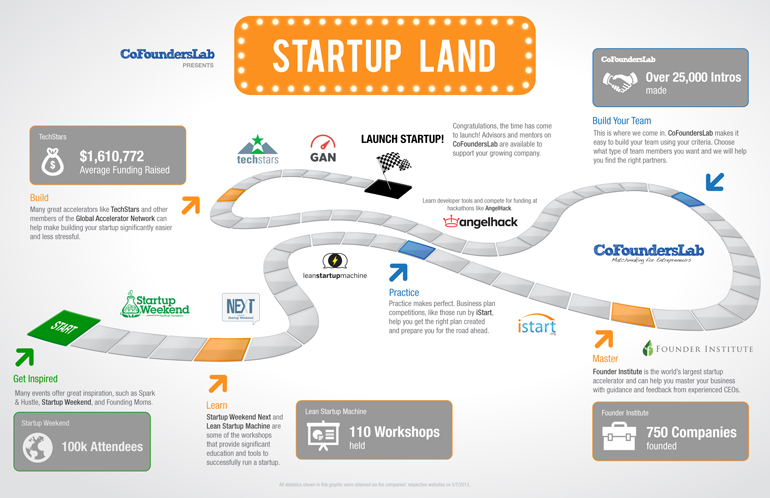
Navigating Through Startupland [INFOGRPAHIC]

CoFounders Lab,startup tips,Startup Land,infogrpahicAs entrepreneurship continues to grow at a rapid pace, navigating through this startup land of ours can be a little tricky.

Startup Weekend, hackathons, Founders Instititue, accelerators, incubators, funding, pre-seed, post-seed, valuation, pivot and all those other terms we use each and everyday, are enough to get some entrepreneurs and founders extremely confused. Believe it or not, there are entrepreneurs out there that have an idea and just want to get it to market.

Once they spend a day, a week, or a month talking to other entrepreneurs and startup community leaders, they typically have even more questions.

One thing I’m asked a lot are “What are some startup resources for me?”. If I have the time I go over a lot of the resources in the infographic above. The same goes for our good friend Shahab Kaviani, the founder of CoFounders Lab (which we featured on Monday). That’s why CoFounders Lab has created the “Startup Land” infographic.

We’ve known for a while that CoFounders lab is more than just founder dating. Kaviani and his team have created a full online community of entrepreneurs, leaders and feeders. From that experience, and through exiting out of a previous startup, Kaviani was able to come up with this Startup Land infographic which we think you’ll find extremely useful.

You can check out all CoFounders Lab has to offer here.

Click here to download the full sized infographic.

New to startups? Check out these startup tips.


My Favorite Startup Wisdom Came From Critics

Startup Tips, Guest Post, YEC,StartupsMy mentors are not the bite-sized platitude types. And no entrepreneur I know ever actually listened to advice — otherwise, we would all be IP lawyers like our parents wanted us to be.

Sure, we nod in agreement with the advice we get, but only because the advice we get is pretty benign to begin with: hire people who complement your weaknesses, fall in love with the problem you are solving and not the product, get in touch with your customer’s feelings, add cheerful touches of color to your office, etc. I can feel you nodding.

Truly “good” advice, on the other hand, burns like dirt in an open wound. The scar tissue that forms is the armor you need to survive the entrepreneurship battle. What kind of advice is that? It’s what you remember verbatim after all the compliments are forgotten: the criticism. 

Listed below, then, are my absolute favorite pieces of “advice” — and how each shaped my career to date:

1. “You know you aren’t good enough, right?” In the Lifetime movie of my life, I have a snappy reply, like, “Move over old man, ‘cause ladies are doin’ it for themselves!” In real life, I was stunned into submission as the advice-giver planted a big wet kiss on my cheek and whispered something about me reminding him of his daughter. Yuck!

But here’s what’s even more shocking: I agree with this criticism. I am not good enough to do a startup on my own. I am not a truly gifted and creative physics savant, but my co-founder and CTO, Robert Kester, is! I am also the type of person who would forget to pay quarterly payroll taxes. Luckily, the lovely Kayla Porche, our Accounts Manager, would never allow any such nonsense, and so our ship runs very smoothly.

I am not good enough in more ways than I can count, but I am very good in the few things that a CEO needs to be good at: I have excellent taste in people and technologies, I have a vision the whole company believes in, I can sell ice to Eskimos, and I am arrogant enough to ignore old dinosaurs who think they are doing me a favor.

2. “You won’t make any money.” Keep this between us friends, but I would totally do this job for free. Today I can earnestly say that my colleagues and I made the world a better place. And we do, in fact, make quite a bit of money — go figure!

On day one, you and your co-founders need to decide exactly when you want to cash in your chips and exit the company. The path you choose needs to fit your personality type as well as the true potential of your company.

Do you want to sell the company in two years for mega-bucks? OK, then you should probably follow the traditional VC route that looks to sell fast and inflated (think force-fed duck for foie gras). Generally, the company will need to have a massive market size and be easily scalable. This rules out most companies.

If you are a young founder, there is a very high chance that you will be pushed aside. Are you OK with that? When you spend your money, will it bring you joy?

Do not forget the joy multiple when considering how much money you want to make. When I go buy a new car, I get the happiness from the car and the extra joy from remembering how I came to afford that car. Unfortunately, I meet too many depressed founders who seem a bit lost. If the money does not bring you long-lasting pride and joy, then it was all for naught.

3. “You’re a b—h.” I was 12 years old when someone close to me first called me the b-word. I am all grown up now, and my response is, “Yes, but I’m a glorious b—h.”

I don’t get this said to my face so much anymore, but I still get that look. If you are confused about what this look is, try an experiment: Disagree with a 40-something-year-old VC about one of their recent investments.

Yes, ladies, being a young female entrepreneur is going to be much less fun for you than your male counterparts. The boys  get more dates and the girls get thinly veiled hostility. You will not be liked for your success. But you’re not doing this to be liked, are you? (See: Sheryl Sandberg’s 2010 TED talk.)

Ignore the people trying to bring you down a peg. And do not, not, not give up and become an attorney/consultant/doctor. I am sick of being the only young woman on the entrepreneurship panel. Please join me!

Finding the starting line will be the hardest part. It may take years to form the right company, but you will be successful because you, my friend, are a glorious b—h.

Allison Lami Sawyer is the CEO and co-founder of Rebellion Photonics.

The Young Entrepreneur Council (YEC) is an invite-only organization comprised of the world’s most promising young entrepreneurs. In partnership with Citi, the YEC recently launched #StartupLab, a free virtual mentorship program that helps millions of entrepreneurs start and grow businesses via live video chats, an expert content library and email lessons.

Now Check Out Warner Music Executive Ping Ho Gives Important Advice For Music Startups

Got Klout? Now You Can Get Into The American Airlines First Class Lounge

American Airlines,startups,startup tips,Klout,Klout PerksThe “new” American Airlines has been doing a lot these days to come out of an airlines typical “business traveler” comfort zone. They are the only domestic airline that’s supporting startups at the ground level.  Through a variety of partnerships and a nationwide team devoted to small business, and specifically startups, American Airlines is promoting their BusinessExtrAA program to the business leaders of tomorrow.

Their efforts to help startups don’t just end with an extra layer of rewards, the American Airlines team that’s working with startups is routinely found at startup events, job fairs and even hackathons. At these events they’re telling people about American’s programs but also mentoring and providing sound business advice to entrepreneurs both young and old.

Paul Swartz, who heads the airline’s small business and startup outreach in the north east, is routinely found taking office hours at events. We saw him spend countless hours talking with startup founders and entrepreneurs at CES 2013, and at SXSWi. One founder at SXSW told us that during his office hours consultation they talked about marketing, and brand loyalty.

Now American Airlines has decided to beef up their social outreach. Sure they’ve had a Twitter account that tweets out business tips, blog posts and customer service tips, but now American Airlines wants to reach influencers.

ourkloutThrough a unique partnership with Klout, American Airlines is now offering 1 day access passes to their first class Admiral’s Club lounge for those with high Klout scores. The best part is, you can get the benefit and hang out in the lounge, even if you fly on a different airline that day (we’re not sure why you would want to).

From experience the Admiral’s club lounge typically has great wifi, comfortable workspace, workstations with printers and desk tops, a variety of snacks, soda, beer and wine and it’s all free. Many of the Admiral’s club lounges have favorable views of the tarmac, gates and runways and they make for a great escape while waiting on a layover. In some of the bigger airports, the Admiral’s lounge offers private call areas and lounge furniture so you can catch a quick nap.

There is no restriction on the Klout perk for more information you can visit klout.com and for info on American Airline’s BusinessExtrAA program click here.

We flew American to NY for TechCrunch Disrupt NY 2013, Here are over 30 startup stories from Disrupt.

11 Tools To Simplify Your Startups Accounting

accounting tips for startups,startup tips,guest post,YECStay on Track With Indinero

“The most important financial metric for most startups is monthly cash flow. Indinero lets us easily see how much we’re spending each month by category so we can budget for the coming months.”

QuickBooks Eases Things

“Almost all small business accountants in the United States are familiar with QuickBooks. Thus, I recommend any QuickBooks product (although I like Online Edition the best) because it makes it easy for your to clean up books and collaborate with your accountant for tax time.”

Eric Bahn | Founder, Beat The GMAT
Outright Shows Everything

“I’ve got Outright set up to push notifications to my phone: every time I receive a payment, my phone goes ‘cha-ching!’ It’s a good noise to hear. On top of that feature, Outright can automatically pull in data from accounts and other apps, while putting everything together in a format that makes my CPA very happy. (Disclaimer: I write for the Outright blog, as well as using the app religiously.)”

Go With Google Docs

Google Docs is a great tool to manage business finances. It’s very powerful and simple to use which makes it a breeze to use.”

Ben Lang | Founder, EpicLaunch
Pay Up With Square

Square is a great payment processing mobile app that makes accepting credit cards a snap and moves money quickly into my bank account.”

Microsoft Excel Is Still Relevant!

“It is the industry standard for spreadsheets for a reason. With a little training, you can run circles around any closed source software.”

Peter Minton | Founder & President, Minton Law Group, P.C.
I Owe It All to Freshbooks

“I’ve never been very good with money. In fact, at one point, I appeared on CNN as the poster child for those with shopping problems. But Freshbooks helps me keep it all together on the business side. I use it to track my time and my business expenses, send invoices (and followups), send out and receive estimates, and generate tax reports. And despite my history with money, it’s all a breeze.”

Steph Auteri | career coach, writer, and editor, Word Nerd Pro
Wave Accounting Saves Time

Wave Accounting is completely free and connects directly to your bank account. It automatically keeps track of all your spending for you. It’s a great product and a huge timesaver.”

Josh Weiss | Founder and President, Bluegala
Sync With Mint.com

“Although most people use Mint.com to monitor their personal finances, many business owners don’t take advantage of doing the same thing with their business accounts. Not surprisingly, Mint’s software works similarly with business bank accounts and credit cards, which makes it very valuable to manage budgets and overall spending.”

Logan Lenz | Founder / President, Endagon
Stick With Shoeboxed

“I used to dread tax time, because my receipts were always a mess, and often nonexistent. Shoeboxed makes it incredibly easy to keep track of all of my receipts, and then import all of the data to sites like Outright, Mint, etc.”

There Are Still ‘Human’ Applications…

“I have this awesome human application called a Director of Operations. She handles all the accounting, financing, taxation, and regulation. It’s like magic. I’d highly recommend getting one. They can read between the lines on all those long-winded documents and keep you from wandering into trouble.”

Brent Beshore | Owner/CEO, AdVentures

The Young Entrepreneur Council (YEC) is an invite-only organization comprised of the world’s most promising young entrepreneurs. In partnership with Citi, the YEC recently launched #StartupLab, a free virtual mentorship program that helps millions of entrepreneurs start and grow businesses via live video chats, an expert content library and email lessons.

Now check out  10 Tools That Simplify Startup Collaboration

sneakers

Recruiting for Success: Tapping into Your Local University

DTA,REDI,Mike Brooks,Startup Tips, recruitingPeople sometimes assume that a startup needs to be based in a large city or Silicon Valley to succeed. While both these locations might offer certain advantages to a new business, college towns can offer just as many incentives. The presence of colleges or universities in your locale can reduce your costs and allow you to form lasting and rewarding relationships with those institutions. Perhaps the most rewarding and beneficial aspect of running your startup out of a college town is the chance to hire willing, intelligent, and dedicated students. The opportunities and experiences found in smaller college towns can provide your startup with the resources you need to succeed.


Considering the Cost


Consider how expensive it would be to start and run a business in Los Angeles, San Francisco, or New York City. The cost of starting a business in a smaller college town can be significantly less than in a metropolitan area. Workspaces can be rented at a lower cost, and starting wages for employees, coupled with the lower cost of living, can greatly benefit your bottom line during your formative years.


Funds saved can be used for more important startup endeavors, such as marketing, attending conferences, or improving products. And while it might seem that there will be fewer opportunities to meet and interact with mentors and advisors, you might be one of a handful of young companies innovating in a specific area. You’ll have ready access to university professors who have worked in the corporate world and can provide invaluable insight into a particular industry.


Creativity and Innovation


Each new school year in a college town is beneficial for startups for many reasons. One of the most basic opportunities in a college town is the influx of new students every fall. Fresh faces and eager learners bring new skillsets and experiences.


Many students seek part-time employment to help support themselves or pay for tuition. Your business then has an affordable and available built-in workforce. Recruiting entrepreneurial-minded students will help you develop a driven staff, and being near a university that offers degree programs in business, advertising, design, and information technology will provide you with the opportunity to recruit some of the top students and young entrepreneurs in the country.


These employees can also help make your startup visible on campus with their ties to other organizations or clubs. They will usually know what’s popular with — and meaningful to — their peers and the school as a whole. With this knowledge, they can help propel your company forward by talking to others about it or promoting your products. Relaying your company’s message to different groups of consumers or potential clients is always a good thing.


Internship Opportunities


Many students will seek internships to enhance their professional and classroom experiences. Several majors may even require internships with local organizations to graduate. This is a great way for your startup to gain the insight and assistance of a dedicated employee without incurring any cost.


You also have your next potential full-time employee in an intern who already knows your company and its operating procedures. Finding interns can require a more focused effort than simply hiring part-time employees, but the long-term payoff can be well worth it. Through these opportunities, your company might be able to become an educational partner with a university’s internship program.


Practical Partnerships


The invaluable educational partnership opportunities form another great aspect of running your startup in a college town. These partnerships are a way to gain new resources and provide an educational opportunity in return. Your business can gain access to costly university equipment or programs that you wouldn’t have otherwise. This gives you the chance to foster a learning environment for students working with your company as well.


A great example in my own college town is Newsy. Its founder, Jim Spencer, was the vice president of content and answers at Ask Jeeves. When he decided to make the leap into the entrepreneurial world, he relocated to Columbia, Mo. By collaborating and partnering with the University of Missouri’s Journalism School, he was able to recruit top talent for his video-based news startup. In exchange, Newsy staff teaches courses, furthering the students’ education in evolving media, and it provides young journalists with access to a digital news facility. Various different economic development and investor organizations worked together in order to help Newsy make Columbia its home.


Many colleges or departments also require students to have a capstone experience during their senior year. Offering your company as a case study or viable research option can again provide students with an enriching educational experience. Specific courses might even ask you to present your journey and experience as an entrepreneur to students. This opportunity can give you a chance to reflect on the skills and determination that led to your success, providing you a platform to market your business.


University towns commonly have an ample supply of resources, talent, and enthusiasm for innovation and success. By partnering with a local university, you can take advantage of internship and part-time student employment possibilities, university equipment and forums, and a consistent foundation for networking and marketing. While all of these factors benefit your business goals, the true reward is guiding and educating future entrepreneurs and leaders.


Mike Brooks is President of REDI (Regional Economic Development, Inc.) in Columbia, Mo. REDI promotes positive economic expansion and provides increased economic opportunities in the Columbia area, assisting entrepreneurs, developing businesses, and companies relocating. As president, Mike led REDI in creating a supportive ecosystem for entrepreneurship and business growth in Columbia. Mike welcomes anyone to reach out to him on LinkedIn or REDI at columbiaredi.com.

7 Opportunities to Save on Startup Expenses

annoucement2_rz_

Older, more established companies have the flexibility of deciding how to allocate their budgets and spend their available funds on the resources that make their

Startup Tips,Guest Post,YECbusinesses more comfortable and easier to run.  But as a young startup, you have no such luxury! Because it’s important to make every dollar count while your business


is still growing, you’ll want to take a look at the following seven opportunities to save money on common business expenses:

Expense #1 – Office Space

First of all, with many of today’s alternative office space options, it’s entirely unnecessary to run out and sign a

But if you absolutely must have a traditional office for your startup, contact property management companies in your area and ask to see non-traditional spaces or spaces that the agencies have had trouble renting out.  With a little negotiation, you may be able to save big on spaces that would otherwise remain empty.commercial lease to house your startup.  Instead, look into incubator spaces, co-working offices and executive office rentals – all of which can provide you with flexible office space options at a much lower cost.

Expense #2 – Office Furniture

One word: Ikea.

Although, more seriously, if the world’s leading producer of cheap furniture doesn’t appeal to you, consider seeking out used or consignment furniture stores in your area, hitting up garage sales for discount items or even pulling the extra furniture out of your parents’ basement.  When your startup is first growing, all you need is some place to sit and work – it doesn’t have to be pretty!

rsz_incontentad2Expense #3 – Office Supplies

When it comes to purchasing the necessary office supplies for your growing startup, the lesson here is that the best offense is a good defense.  Instead of looking for ways to save money on the supplies you think you need, focus instead on eliminating the need for physical supplies.  As an example, if you pursue a “paper free” office, you remove the need for paper clips, staplers, staples, hanging files and a host of other associated products.

If you absolutely must purchase some supplies, try cashing in some credit card reward points to fund these expenditures.  It’s an easy, creative way to free up the extra funds needed to purchase your must-have office supplies.

Expense #4 – Shipping Expenses

While there’s no way to eliminate postage fees (if your startup ships out a physical product), you can cut back on the cost of packaging products by reusing boxes, picking up free shipping containers from USPS or even collecting serviceable packing materials from other businesses in your area (grocery stores, in particular, get rid of sturdy boxes every day).

And, when it comes to the actual postage fees you pay to ship your products, be sure to shop around to get the best rates.  Yes, you’ll wind up paying something, but you might be surprised by the variability in rates that exists between today’s major shipping carriers.

Expense #5 – Employee Costs

The hiring and training of employees typically represents a startup’s largest expense.  As such, take the following steps to minimize unnecessary expenditures in this area:

  1. Consider bringing on new employees as independent contractors.  This will minimize your tax burden and give you more flexibility regarding the costs associated with terminating employees who don’t work out.
  2. Invest in improving your interview process.  Training a new employee, only to have him or her leave down the road due to a bad fit, represents a tremendous cost to startups in terms of lost productivity.  You can reduce this fiscal waste by enhancing your hiring process so that you’re more likely to wind up with suitable candidates.
  3. Offer benefit reimbursements – not benefit plans.  Although providing employment benefits will help you to attract better employment candidates, it isn’t cheap to set up group health plans or other benefits packages.  As a cost-saving alternative, consider offering employees a set monthly reimbursement for benefits that they purchase on their own.

Expense #6 – Advertising

Established companies can run pay-per-click (PPC) advertising campaigns, run TV spots during popular programs and send out highly-effective direct mail pieces.  You probably can’t.

Minimize your advertising expenses by taking advantage of “free” (as in, free outside of your time investment) techniques like SEO, content marketing or social media marketing.  It’s possible to generate a significant amount of traction in this way, which can drive the sales volume needed to make traditional paid advertising methods a possibility in your business’s future.

Expense #7 – Professional Fees

One last expense that you’ll likely encounter as a startup is professional fees – that is, the amounts that you pay to accountants, lawyers and others for their services.

While you shouldn’t cut them out of your budget entirely, look for opportunities to barter services or products in order to get a discount on your bill.  No matter what professional skills you have to offer, you should be able to find the common ground needed to craft an arrangement that benefits both parties, while saving you some serious cash.

Sujan Patel is the founder and CEO of Single Grain, one of the top Digital Marketing agencies in San Francisco, CA. With more than 10 years of Internet marketing experience, Sujan leads the digital marketing strategy for companies like Sales Force, Yahoo, Intuit and many other Fortune 500 caliber companies.

The Young Entrepreneur Council (YEC) is an invite-only organization comprised of the world’s most promising young entrepreneurs. In partnership with Citi, the YEC recently launched #StartupLab, a free virtual mentorship program that helps millions of entrepreneurs start and grow businesses via live video chats, an expert content library and email lessons.


The Dropbox Story: From 0 to 100 Million Users: How a Simple Video Can Change Your Business

Fred Wilson’s Venture Capital Do’s And Don’ts

repost-us-image-5423123
Fred Wilson’s: Venture Capital Do’s and Don’t (via http://www.besttechie.com)

Fred Wilson is currently being interviewed on stage at TechCrunch Disrupt NY by Michael Arrington and a topic of discussion that came up was the “Best and Worst Things to do in VC Pitches.” If you’re not familiar with Fred Wilson, he is a managing partner and venture capitalist at Union Square…

Read More…

Startups: Is Your Public Relations Strategy Outdated?

Startup Tips, John Hall,DTA,YECThere’s one thing that’s consistent in this world: change. This is no less true in business; industries have to evolve to keep up with developing technology and new trends. On top of that, they have to promote their ability to keep up altogether.

In the past, public relations required a client to pay a large retainer in order to be mentioned in a sidebar or get quick features published, promoting a service or product. Today, the future of PR is online, and it includes a combination of content marketing, SEO and thought leadership. Times are changing, and there are some things you should take into consideration when you’re making decisions about your startup’s PR.

People Want to See Results

In the past, PR companies weren’t held to meeting specific client expectations. They could always hide behind saying, “How do you measure credibility and authority?” Clients consistently felt screwed over by PR companies because they were paying a sizable retainer without any way to gauge the results. With online tools, you can now track exactly where leads and opportunities are coming from. The analytic tools that are available online — like Google Analytics, DoubleClick Ad Planner, WhoReTweetedMe, and Klout – can help you get a better idea of the results of placements.

To break down sales barriers and comfort people who have previously been shafted by PR companies, pay-for-performance models should be adopted. When I switched Digital Talent Agents to this model, our client base doubled and customer satisfaction increased. Retainers have left a bad taste in many people’s mouths and will continue to be used less. Don’t ride this dinosaur any longer than you have to.

Paper Is a Thing of the Past

Instead of grabbing your morning paper off the front porch, you likely get your preferred content on your tablet or phone these days. The future is online, so print editions are becoming archaic and far less beneficial. The focus won’t be on just the initial placement of an article, but on the potential effect of it going viral. Social media can accelerate media exposure just by having the right influencer sharing it with his networks. If you don’t get the social media boost you’re looking for, there are content aggregators, like Zite, that give your content another vehicle to reach the right influencers.

Google is also rewarding site owners for the higher amounts of quality content they have available. The easier it is to find your name and your article, the more exposure you will get; that allows for a tail benefit that can last much longer than a one-day feature in a newsletter. Magazines and newspapers are thrown away after one read and don’t give you the opportunity to amplify your media exposure, but an online post can be shared over and over again.

The Best Promotion Is Not Being Promotional

Personal and company branding will be extremely important in any PR campaign. The more you concentrate on building your brand, the more press opportunities will naturally come to you. People can see through a promotional piece pretty easily, so direct your efforts toward educating people as a thought leader. It’s the best way to promote yourself without seeming like you’re being promotional. If you just concentrate on a promotional piece to bring in leads, you’ll have a short-term gain. However, if you change  strategy and start developing your own content as a thought leader, you have a short-term gain and you help build your long-term brand, which ultimately is more important. It’s what everybody should be working toward. Industries and approaches change, but your reputation can last if you play your cards right.

“Mad Men”-era public relations are a dying breed. Old-school PR companies companies may still insist upon paper press releases, a trusting attitude toward the “results” they’re producing, and promotional features that focus more on what your clients can do for you than what you can do for your clients.

But if you want to keep up with changing times, ditch these efforts, and focus on PR that gives you a high return on investment every single time. Insist upon results, and you won’t feel screwed by PR companies – you’ll feel empowered by them.

John Hall is the CEO of Digital Talent Agents, a company that helps experts build their personal and company brand through producing high quality content for reputable publications.

The Young Entrepreneur Council (YEC) is an invite-only organization comprised of the world’s most promising young entrepreneurs. In partnership with Citi, the YEC recently launched #StartupLab, a free virtual mentorship program that helps millions of entrepreneurs start and grow businesses via live video chats, an expert content library and email lessons.

Now check out 5 Rules for naming your startup.

10 Ways Subscription Sales Can Increase Your Startups’ Sales

TRY TO BUNDLE AND FINANCE

“Consider bundling your products into groups of commonly utilized items, and offering your customers the chance to pay for a “package” on a monthly basis rather than all at once. For example, If your average client buys 10 widgets a year for a total of $110, offer a package of 10 widgets for only $9 per month. Basically, you’re offering in-house financing. People love that sort of thing.”

– Robert Sofia | Co-Founder & COO, Platinum Advisor Strategies
PRODUCT OF THE MONTH CLUB

“Subscription plans that automate sales are a great way to get your product out to raving fans regularly. Whether it’s a cupcake, T-shirt or fabric of the month, giving regular access to your new and best sellers can build anticipation and brand loyalty.”

INCENTIVIZE GIFTING TO OTHERS

“We have a “Mod of the Month Club” where customers choose any one of our watches for a heavily discounted price (30-45 percent off retail). We always make sure to thank these members by offering them first-looks at our new merchandise. The best perk: we offer an extra strap ($15-$20 value) in the package when customers tell us they are “gifting” the watch, gaining us new customers monthly!”

– Aaron Schwartz | Founder and CEO, Modify Watches
USE MEMBERSHIPS TO CURATE

“Subscriptions and memberships are a great way to offer customers the best of the best — wines handpicked by the best sommelier or this season’s must-have shoes chosen by a Hollywood stylist. Combine subscriptions with curators to offer customers the best of your selection.”

– Laura Roeder | Founder, LKR Social Media
HELP YOUR CUSTOMERS USE YOUR PRODUCTS

“Customers come back to companies whose products and services they use. A membership program that helps a client actually learn how to effectively use what they’ve bought makes it more likely that they’ll come back to you. That can include offering case studies, in-depth training and support far beyond the typical user’s manual.”

PROMOTE ACTION AMONG YOUR MEMBERS

“By positioning your membership or subscription as the best way to take action, you’ll inspire people to join. Very few things motivate people as much as spending money. If they are spending $50/month on your service, most people will actually do something with it, thus see results. These positive results become the best testimonials you’ll ever receive.”

– Sean Ogle | Founder, Location 180, LLC
START TO SUBSCRIBE AND SAVE

“Follow Amazon’s lead and implement a ‘Subscribe and Save’ program, where you give customers a discount for setting up a subscription. It’s an added convenience for the customer and it’s a nice revenue stream for the business.”

– Josh Weiss | Founder and President, Bluegala
CREATE COMMUNITY MASTERMINDS

“If you already have customers that are willing to pay for your products, there is an opportunity in bringing all of your customers together to share their ideas and network. By creating some sort of forum or mastermind platform, all of your customers will be able to enjoy an uncontested level of product support, fresh ideas, and new opportunities through your community.”

– Logan Lenz | Founder / President, Endagon
PICK YOUR PROBLEMS WISELY

“Examples of subscription services with high lifetime customer values include hosting, email marketing, and other self-service apps. The key to them is that they solve an ongoing problem. In other words, you don’t just need hosting for your website next week, you need it all the time! So, pair your product with a subscription that makes sense. For instance, web design and web maintenance packages.”

– Matthew Ackerson | Founder, Saber Blast
EVERY COMPANY IS A MEMBERSHIP!

“The key to long-term sales growth is developing a loyal customer base that you can tap into in order to sell new products and add-ons. And the best way to build customer loyalty is with a rewards program. Whether with points used to redeem reward items or randomly distributed benefits, any merchant can convert its customer list into a membership.”

You can find more startup tips here at nibletz.com The Voice Of Startups Everywhere Else.

How to Find the Right Venture Capitalist for Your Startup!

Venture Capital,Startup Tips, Guest Post,YECThis is one match that’s certainly not made in heaven — you’ve got to toil and woo several partners to finally arrive at one that best understands you and your business, and is ready to commit to you in the long term.

I’m talking, of course, about your relationship with a venture capitalist. You’ve probably heard grieving entrepreneurs who, after signing the dotted line, are quite unhappy throughout the relationship with their investors.

But there’s nothing wrong with the venture capitalist (VC) per se. You just made the wrong decision. As an entrepreneur, you’ve got to choose the right VC to work with, because the right marriage can help define how successful your business will be and how happy you will be running it.

Here are 4 key points to consider for a happy and long-lasting marriage with a VC:

1. Expertise: Choosing a VC is just like a marriage — that is, it’s a long-term commitment. You need to court first to find out whether the VC is a right fit for you. Take the time out to research whether the VC has funded companies in the domain they are operating. Research to find out what companies they have invested in and what their level of involvement has been in each of those. Do they have potential conflicts (e.g., is the expertise a by-product of an investment in a potential competitor)?

2. Adding Value: Look for investors who can add value to your business and not just give you funds. The best marriages between entrepreneurs and VCs happen when the latter can contribute to the growth of the former and when it isn’t purely transactional. Entrepreneurs need to ask, when things get tough in my venture, will this VC be a part of the solution?

3. Term Sheets: This is where you really find out what the intentions are of the person putting in the money. Look out for exit clauses; if not clearly defined, ask for them to be. Although they are not cast in stone (I know of one venture where the exit was clearly defined, but deferred as the company entered a new vertical and that added to their top line immensely, adding to a bigger valuation), it helps to know what the person with the money is really looking for.

Term sheets are very carefully crafted to fool even the best of people into believing that they’ve struck a great deal, but in reality, for the entrepreneur, that’s not always the case. So if you’re at this stage, it wouldn’t hurt to have your term sheets validated by experienced entrepreneurs who’ve gone down this road and/or a lawyer who has the relevant experience.

4. Set Expectations: Many deals are left to ambiguity, either because of lack of clarity at the stage of getting into a deal or because of assumptions made by either party. It is very important to set expectations from both ends and be clear about it. Entrepreneurs need to build trust with their VCs and vice versa. If you don’t have trust at the beginning of the relationship, it is bound to cause heartaches at the later stage.

Whatever you do, do not take this relationship for granted. You are in it for the long haul, and giving up because of a failed marriage is the last thing that you want to do with your venture. So take caution before you enter into a contract.

That said, all the best with your pitch! If it has worked out well for you, I’d like to hear your experiences and what makes your marriage successful.

This post originally appeared on the author’s blog.

Rahul Varshneya is a startup coach and the co-founder of Arkenea, an enterprise mobility and cloud solutions provider. He writes on starting up and mobile strategy at http://rahulvarshneya.com/blog.

The Young Entrepreneur Council (YEC) is an invite-only organization comprised of the world’s most promising young entrepreneurs. In partnership with Citi, the YEC recently launched #StartupLab, a free virtual mentorship program that helps millions of entrepreneurs start and grow businesses via live video chats, an expert content library and email lessons.

In the Mouth of a Shark: Learn From ‘Shark Tank’

Startup Tips,Guest Post,Shark TankHave you seen “Shark Tank” yet? For entrepreneurs, it’s one of the best reality TV shows. Cable and satellite packages start at around $30 per month, according to www.directtvdeal.com. “Shark Tank” has five investors that are selected to sit on a stage that listen to entrepreneurs pitch their products and business ideas. After their pitch, the sharks decide whether or not they will be given money to fund their business ideas.

In the process, the entrepreneurs are asked a barrage of questions, sometimes humiliated, often laughed at, occasionally insulted and generally traumatized. Some of the sharks include Mark Cuban, real estate mogul Barbara Corcoran, Kevin O’Leary, who created and sold “The Learning Company” to Mattel for $3.2 billion, FUBU clothing founder Daymond John and comedian Jeff Foxworthy. Despite the hostile atmosphere created by the sharks, participants could walk away from the experience with a big, fat check if one or more of the Sharks believe their business idea is a good one. Lessons can be learned from “Shark Tank” for entrepreneurs:

Find Your Niche

When an entrepreneur makes their pitch, reactions from the sharks can be pretty telling. If it’s an Internet-related idea and Mark Cuban doesn’t like it, no deal. If a clothing idea is rejected by Mr. FUBU, chances are the designer will be sent back to the drawing board. If an idea geared toward an infomercial is rejected by the infomercial expert, it’s back to square one. You can’t be all things to all people, but you should know your target audience and connect with them.

Use Your Passion

Coming from a place of truly enjoying what you do is key, and the sharks pick up on it. One investor came in with just an idea — a medicine dropper in the shape of an elephant for kids — and won investment dollars. AVA the Elephant is now sold in 10,000 stores in 10 countries. Founder Tiffany Krumins used her passion for helping kids to create a successful business.

Fill a Need

Find a need and create a great product to fill that need. ReaderRest Magnetic Glasses Holders from season three is one of the show’s most successful products. It calls itself a “simple solution for eyewear management problems” and allows the user to keep their glasses safely and securely within reach using magnets that automatically attach and self-center. Overall, sales went quickly from $65,000 to $5.5 million after the show.

Do it Better

You don’t have to reinvent the wheel to be successful; you just have to make a better wheel. BBQ sauce is nothing new, but sales of season one’s Pork Barrel BBQ sauces and rubs went from $5,000 to $3.5 million after their investment. Jamba Juice bought season three’s Talbott Teas in 2012. Both products took an ordinary item to the next level, doing it better than their competitors.

Sell the Dream, not Numbers

Some entrepreneurs start working their pitch with statements like, “I sold X amount of my product last year.” These people tend to get the worst deals from the sharks, or none at all. Sometimes the sharks don’t seem to care about numbers like $1 million in past sales, i.e. games2u.com, an excellent company that got no deal. Past numbers do not sell — the dream does.