Rawporter: Nitty Gritty Raw Citizen Journalism

Rawporter, New York startup, North Carolina startup, citizen journalism startup,startup,everywhereelse.co

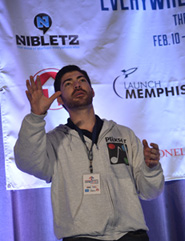
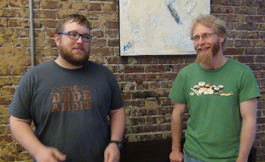
Rawporter co-founder Kevin Davis pitches at everywhereelse.co 2013 (photo: Allie Fox for NMI)

By: Andrea LeTard, University of Memphis Entrepreneurial Journalism Student

To startup co-founders Rob Gaige and Kevin Davis, news is news, and it’s spreading fast with their website, rawporter.com.

Rawporter.com helps people earn money for the photos and videos they normally post on Facebook and Twitter,” said Gaige. “Think about when you see breaking news or you see a celebrity, your normal instinct is to take a photo or video, and you tweet it out. With Rawporter, you can make money off these posts.”

Many media outlets, ad agencies, and brands want to use the photos and videos people post online. The problem is they can’t always find good, relevant photos and videos, and when they do, they can’t always trust them. Once they finally find one they actually want, they have to negotiate and determine what it is worth.

“With Rawporter, you can actually take a photo or video, post it to our site, and we still tweet it or put it on the Facebook page, but it’s got a watermark and it’s got a price tag,” said Gaige.

Every big idea has a story, and Rawporter came about when Gaige and Davis were at the right place at the right time. Back when both of them were working in corporate America two years ago, they were at a local bar’s happy hour talking about their future careers when a car ran into the restaurant next to them. According to Gaige, it was a huge scene, with the street closed down and people running out to take pictures and videos – something they assumed would naturally be seen on the news that night. Wrong. The story didn’t even make the local evening news.

Gaige said, “By the time the news media got there, the scene had already been cleared and there was no story, but if they would’ve had our footage they could’ve had something to lead off the newscast.”

Rawporter turns regular people into reporters. Media outlets send push notifications via the Rawporter app if they know a story is breaking across town. If they can’t get there fast enough, they can go to Rawporter and see how many people are in that area, and those people will be paid for the job.

“So instead of media outlets patrolling twitter or hoping someone got a photo, they can now go online and find what they need immediately,” said Gaige.

With several thousand users in over 50 countries, Rawporter’s base is now strong enough for them to approach media outlets and outsource their assignments.

For more information on Rawporter, visit http://rawporter.com.

ListenUp.fm Gives Fans Perks and Prizes From Their Favorite Artists

Listenup.fm, everywhereelse.co the startup conference, startupBy: Brittany Tuggle, University Of Memphis Entrepreneurial Journalism Student

The creators of ListenUp.fm give users rewards for listening and sharing music with their friends.

“The more times a user listens to an artist or shares what they are listening to on Facebook or Twitter, they gain more points. Depending on the artists, users can earn backstage passes, tickets, or other merchandise,” says CEO Mykas Degesys.

In addition to offering fans rewards or discounts, ListenUp provides record companies with real-time data about listeners’ preferences they can use to develop better marketing strategies and build fan loyalty.

“We want to turn users into paying fans, which increases concert and album sales, [creates a] bigger fan base and more exposure,” said Degesys.

Degesys says the concept for ListenUp came out of learning about the music business and the different royalties artists earn from streaming platforms and sites such as iTunes.

“A song will have to be played on a streaming platform 140 times before making the same amount of royalties on iTunes, for any artist,” says Degesys.

ListenUp.FM was in the startup village at everywhereelse.co 2013, Are you going to be at EE 2014? 

Pink Robin Avenue Brings the Party to EverywhereElse.co And Beyond

Pink Robin Avenue, Memphis startup,startup,startups, everywhereelse.co the startup conference By: Brittany Tuggle, University Of Memphis Entrepreneurial Journalism Student

Memphis-based startup Pink Robin Avenue offers personalized party events for any occasion. Clients can discuss everything from color schemes to tablecloths with CEO Danielle Inez, and her team takes care of the rest.

“I want my clients to have a great party experience without sacrificing so much of their time,” says Inez.

What makes Pink Robin Avenue different from other event planning companies is the convenience of it all. Inez gets all the details from her clients in one session; when her website launches, clients will be able to easily create customized events quickly that way as well. The company pre-assembles your selected party items and ships them to you.

“If you envision it, you don’t have to create it. We’ll do it for you. Everything is exactly how you want it and it’s as unique as my client,” said Inez.

Pink Robin Avenue designs events nationwide and is currently working on launching their website and expanding their business. Inez is planning on entering the Black Enterprise Magazine pitch contest later this year in hopes of garnering additional funding.

To start planning your own event, visit: pinkrobinavenue.com<http://pinkrobinavenue.com> or twitter.com/pinkrobinavenue<http://twitter.com/pinkrobinavenue>.

Be sure not to miss next years, everywhereelse.co The Startup Conference, Click Here

The pivoting features when creating the next rockstar mobile app

Appscend, Developer's Corner, Guest Post, startup devs,mobileOr if we’d rephrase it, how long would it take before a user would give you a hug because he had a good experience with your app? Why? Besides having a great app in terms of users and success, hugs are less expensive than bandages.

We talked about what mistakes you can make when developing a mobile application. But it would be presumptuous to just point out mistakes. Now we’re going to focus on what you should never loose sight of if you want your mobile app to become the next app rockstar.

We’re going to highlight on what makes an app a great mobile app that people actually like, what can make it a viral app, what features are sine qua non and how it can grow beyond its limitations and get a lot of users patting you on the back.

1. This cannot be stated enough….UX, user experience, la experiencia del usuario, you get the picture

Think about Angry Birds. Yes , I know, everybody keeps beating the drum on how that game took over the world.

Even so, whether intentional or no, it really hit the nail in the head when it came to psychological impact and reasons. Why do people play that game? Let’s analyze it for a moment.

As people, we like to destroy things in games, and it’s no wonder why games in which you throw birds at entrenched nasty pigs ( and scream evilly and cute) would be addictive. The micro-physics in Angry Birds creates a unique user experience each time you catapult those frowny birds into everything. What mobile app mechanic can we learn from this example?

Simply put, when developing an app, create the possibility for the user to customize his own experience as much as possible. If it’s a social app, then let them customize colors, icon sizes, buttons, etc. If you’re gunning for a business app, then you should focus on what content the user deems to be relevant : such as choosing preferences over certain information providers (like newspapers, business blogs, etc.) so they won’t have to check each bit of info one at a time. ”

Make a user feel like he can play with the app in more ways than just tapping a few buttons and closing it. In doing so, you gain a greater level of user engagement and retention. Make it fun and easy or in other words, make creation a part of the user experience. It’s their app at the end of the day and making it feel even more personalized will go a long way for them to remember you.

2. Push notifications = a light tap on your shoulder to improve the day

Push notifications. They can mean anything from alerts, products, offers, updates, beeps, images, anything.

They are essential to the success and survival of a mobile application. From getting certain discounts or new updates on an app, PN’s can remind your users that your app either is still there or that you can ease their day.

For example, a way Foursquare created and maintained user loyalty was through push alerts. When a user was 10 check-ins away from becoming mayor of a certain location, it would provide an incentive to continue using the app.

The key words of push alerts are : targeted, context, geo-points, geo-location, timezones. Unlike ads where often you can shoot blindly and hope for a catch, push notifications mean you know your niche and if you do it right, you’re going to expand it.

3. Contact points, friend invite, developer and customer feedback = visibility and friendliness

In the App Store or Play Store, you’re going to find apps by the bucket. So how exactly is that shiny piece of code you wrote going to attract any attention?

Simple. The user knows who developed it, who published it and what to expect. Reviews are golden. This should be done with simplicity unlike web browsers, where you have to create an account (a uselessly tedious business) to post a comment or a review. A one tap, one touch contact point (i.e. address, mail, phone number, forum) where you tell the developer or the company of that specific app what it’s all about.

Without contact points, the user will feel isolated with his app, which is quite the opposite of what a mobile phone means. Your app philosophy should emulate this concept.

Also, don’t forget about social one touch sharing, like Facebook, where you like the app and want to share it with your friends or invite them.  Another useful trait is bug reporting from users. Although the chances of encountering a bug on a mobile app is rarer than a few years ago, it’s a great way to quickly correct mistakes through on time feedback.

4. Social integration – if you want your app to be known it has to support social interaction

People like to talk about their mobile phones, that’s a given. What they can do, how they pay their bills and don’t have to wait in line, how they filmed their cat doing a back flip and so on.

We’re going back to the Angry Birds analogy. So what was one of the leading causes for the proliferation of this game? Social interaction.

Among many other of its traits, one of the things that made the game such an immersive experience was interaction and competition. You could play the game and see the ranking of your friends on Facebook for example. And that really made users want reach the top rankings and use the app more

Gamifying your app is a must. If you make it fun for users then you’ll set the stage for a memorable experience. Monetizing an app is nearly impossible if the app is a headache to use or it’s simply too complex without any reason. It’s all about psychology and the things we tend to remember were those bits of info encapsulated in fun emotions.

Again, it’s about simplicity that has infinite ramifications. One tap sharing and fun comments from users to their social companions is the most powerful form of communication that leads to brand visibility and retention.

,,Extremely useful for understanding user experience : 48 psychological facts you should know”

According to Susan Weinschenk, synchronous activity bonds the group. Your mobile app will be popular if it supports features such as interactive ratings or reviews (either through smart push notifications or an easy to scroll comment bar, either from friends or experts). Buzzword: Interactivity = popularity.

5. Cross-platform compatibility

Or one code to rule them all.  It means that a program developed as cross-platform is fully capable of operating on any mobile phone regardless of what operating system that phone is running.

Application development frameworks offer the beauty of code reusability. A magnificent and useful app such as Google Maps would have been a hell to program for one OS at time.

They don’t just cut down development costs and time pressing situations, but they offer the advantage of updating the app as quick as possible. Thus you can ensure you can deliver content /updates to your app faster and users will have higher retention and appreciation. If the app you’re going for is a native one, then having cross platform tools will give you a boost in ensuring fast delivery for updates and changes.

6. If less is more, then great apps mean a dialectic of simple and brilliant implementations

Great mobile apps are very task-focused. A nice analogy would be the classical saying ,,Do you want the short version or the long version of the story?”. With mobile apps the same truth applies. The hardest part in any area is to make something simple.

It’s quite easy and tempting to fall into the mindset of ,,Yeah, we need a button for that, and a scroll for that one, 50 side scrolling screens and so on.” But tablets and smartphones aren’t desktops. Quite the opposite of what people were saying at the dawn of smartphones, which was ,, A computer in the palm of your hand”. It’s a little more than that.

Because the screens are small , you need clear buttons and a precise functionality. Here’s a good example of rules for a clean and simple design.

A stunning app is one that incorporates complex ramifications in a few simple buttons and touches and not dozens of buttons for just one thing. Don’t rush when mulling over complexity and needs. Think about the old military saying. ,,Slow is smooth and smooth is fast”. Just what do we mean with it? Well, the nature of mobile, being on the run and everything. Even though people spend more time on their mobile than on their desktops, one of the reasons for this is clever and fluid simplicity.

7. Analytics are the backbone of where your app is going

Besides finding out how many users actively use your apps, other bits of info can be the turnpoint in knowing what to add or what to cut out in your app. Analytics can be combined with smart push notifications to deliver the most relevant content where it matters and when it matters.

They are also a boon when taking the pulse of in-app purchases and polishing monetization strategies.

The key traits of mobile app analytics are:

  •   Acquisition and user metrics such as downloads and new user   
  •   Engagement metrics such as retention, crashes and conversions     
  •   Outcome metrics such as app sales and in-app purchases

We could mention other traits a great mobile app should have but that is dependent on the nature of the app itself. QR code scanners are useful in retail and shopping. In-app ads are starting to become a little more refined but then again, this is solely linked to what you want to do with your app and if ads are going to be your main monetization plan. Other things we could highlight would be GPS coupons (repeated visits to a certain place give customers a bonus or discount), loyalty points and promotions.

A viral app has the possibility of creating an online community by itself if it’s done right.

And there we have it. Now these are just the main elements when designing an app that has the possibility of becoming viral. In the end it comes down to basic psychology and user experience. The pivotal features you need to always consider is how your app can spread through social media. To give a soul to an app means to make it interactive and unbound.

And the most coolest trait is that your app will do most of the heavy lifting and actually market itself, leaving you with a lot of monetization options rather than picking a niche and crossing your fingers. Elements such as customer points, badges, in-app money, rewards, they all gamify and create more engagement, fun experience and all round good user reaction.

Unless you’re putting one time apps intentionally, all of these will lead to your own app success story.

This is a guest post by Appscend (http://www.appscend.com) — the all-in-one cross-mobile performance based application platform. Appscend offers its customers the fastest cross platform development technology available on the market today together with a complete list of backend technologies that ensure application & user management, a powerful push notifications platform as well as app analytics, ad-integration, in-app purchases and over-the-air distribution services.


Plixser Addressing The Pains Between Music Students & Music Teachers

Plixser, Memphis startup, everywhereelse.co the startup conference, ee2013

Plixser founder Marcus Wiggins pitching in video contest finals at everywhereelse.co The Startup Conference. (photo: Allie Fox for NMI)

By: Calvin Carter, University Of Memphis Entrepreneurial Journalism Student

Plixser, a music teaching startup, is hoping to expand nationwide from its base in Memphis.

Plixser is a software program that attempts to fix many of the headaches faced by music teachers and students. The program features a live-streaming function for teachers to give lessons to students online, an automated billing system, and the ability to track lesson completion.

Marcus Wiggins, a doctoral student at the University Of Memphis who has been involved in music since the 8th grade, is the founder.

“I know the pains of both the teacher and the student, and Plixser can eliminate those pains,” he said.

By the time you read this, Plixser will have already officially launched. It spent two to three weeks in beta, gaining a positive reaction from ten teachers and students so far, Wiggins said. But Wiggins will continue to spread the word about the music program outside of Memphis, starting with an upcoming event with the Texas Music Educator’s Association. He hopes to garner some interest from the crowd of 25,00 expected to attend.

In it for the long haul, it appears that Wiggins is already enduring the trying moments of being an entrepreneur.

“The sexiness of being an entrepreneur wears off real quick, especially when you get no sleep and are working all the time,” he said.

But Wiggins said he shares one goal of many entrepreneurs trying to solve a problem: going beyond just having a job.  “I want it to be that this is who I am and not what I do,” Wiggins said. “…. I want to fund the life that I live.”

Did you miss EE 2013? Don’t miss EE 2014 tickets available here 

Black Girls Code Shows Off At EE 2013 A Week Before Launch

Black Girls Code, BCG, Memphis, startup,everywhereelse.co,ee2013By Calvin Carter, University of Memphis Entrepreneurial Journalism Student

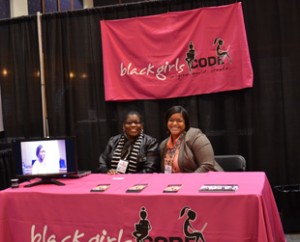
Kimberley Bryant grew up in Memphis, but her startup, Black Girls Code, originated in San Francisco, where the biotechnology/engineering professional is currently based. The organization, which aims to teach young women of color ages 7 to 17 skills in computer programming and digital technology, has branched out to other cities before Memphis, including Chicago.  It wouldn’t be until a local architect, Meka Egwuekwe, reached out that the startup would find itself in Memphis.

“I messaged her [Bryant] about it on Twitter,” Egwuekwe recalled.

Egwuekwe’s interest and involvement in the program—he has two daughters—has launched it from  one-man operation in to a team of 20 to 30 volunteers.

Black Girls Gode has seen a lot of interest, and will hold a workshop February 16 at Rhodes University to help young women learn how to build their own websites. It immediately filled up with 60 participants, and a follow-up workshop is being planned.

Black Girls Code is another sign that Memphis isn’t as behind in embracing the 21st century as some outsiders or even some insiders may  think.

“People seem to have this stereotype about Memphis,” Egwuekwe noted. “They find it hard to believe that we have stuff going on here with technology. They still think that this is the Memphis of 45 years ago, or what they’ve seen in documentaries.”

Did you miss everywhereelse.co 2013, well don’t miss next year’s conference, tickets available here.

Women Rock The Startup World At Huge Startup Conference

Female founders, everywhere else.co the startup conference, startups,startup panel,ee2013,ee2014By Tyler Stafford & Rachel Wilhite, University Of Memphis Entrepreneurial Journalism Students

The “The Kick Ass Female Founders from Everywhere Else” was a success at the Everywhereelse.co The Startup Conference in Memphis, TN. The topics discussed expanded on those typically covered in the male-dominated world of all things entrepreneurial, and this gave the conference a girl power kick in the khakis.

The panelists included Sarah Ware of Markerly; Wendy MacKinnon Keith of Digital Retail Apps; Kelsey Meyer of Digital Talent Agents; and Andrea Livingston of Grit Design, Inc.

Elizabeth Lemmonds, the Chief Brand Officer of Launch Memphis, moderated the event. Danielle Inez of Pink Robin Avenue provided the questions for the Q & A that followed.

One of the most provocative questions asked at the event was, “Can the woman entrepreneur have it all?” Panelists noted that one of the concerns shared by many women entering the startup field, as well as men, is whether or not they can have a family life with a partner and kids and juggle the numerous demands of entrepreneurial ventures.

In her tongue-in-cheek response to this query, Andrea Livingston said that nobody can have it all, but they can make it work regardless. “Our house is like a comedy of errors every minute of every day,” she said.

“No one can have it all, but you can have moments,” said Keith, adding that “it’s about quality of time; not quantity.”

There is a silver lining, though.  Not only do entrepreneurs have the ability to create businesses,  they can also create their own schedules and set their own priorities.

“It doesn’t matter if you’re a woman or a man,” said Livingston, “you better show up and be ready to work your ass off.”

The Everywhere Else startup community is eager to collaborate together rather than compete against one another.  Entrepreneurship is about taking risks, learning to accept failures and respecting others (as well as yourself) throughout the process.

Wendy MacKinnon Keith agreed that women cannot have it all, but that they certainly can have “moments.” She said that it isn’t just the quantity of time that matters, but the quality.

Women in Memphis  looking for advice and support in their own business endeavors should check out Upstart Memphis, an organization dedicated to fueling women’s innovation and entrepreneurship at www.upstartmemphis.com.

For more information on the panelists featured, follow them on Twitter:@WareSarah; @gritdesign; @digitalretail; @DTAgents; @SocialDani; @elizlemmonds

PhotoRankr Shows Off A Better Stock Photo Model At Everywhereelse.co The Startup Conference

PhotoRankr,Nashville startup,startups,everywhereelse.co the startup conferenceBy David Morris, University Of Memphis Entrepreneurial Journalism Student

CEO Jacob Sniff is headstrong and passionate about his first entrepreneurial project, PhotoRankr.

PhotoRankr a platform that covers all the needs of today’s photographers and some needs they may not even be aware of yet. The PhotoRankr platform is web-based and lets photographers handle several key tasks, including the sale of their work, social interaction with fellow members , and an internal job market for clients to list jobs for photographer members.

What makes PhotoRankr different from stock photo sites such as istockphoto.com and shutterstock.com is the photographer keeps 70 percent of their photo sales, and “photo ranker battles,” said Sniff. These battles let photos be placed side by side so site members can easily compare them and select which photo is better. The site generates battles automatically while also allowing users to create their own battles. This information gathered from these battles is of great value to photographers in order to gauge the quality of their work against peers.

“Social media is our current marketing channel,” said Sniff. Current integration with large social media sites such as Facebook, Twitter, Pinterest, and Google+ set the stage for information exchange for PhotoRankr and its photographers. Photographers can seamlessly share their photos to any one of these social media sites.

Currently, PhotoRankr is free for anyone who signs up. At the beginning of March this year, PhotoRankr will roll out an annual, three-tier subscription model. “The base plan will remain free,” said Sniff.

Everywhereelse.co The Startup Conference 2013 was a huge success, ticket information for 2014 here.

Entrepreneurs From Everywhere Else Offer Sage Pitch Advice

iLocale, LifeKraze,startup,startup advice, everywhereelse.coBy Bret Bilbrey, University of Memphis Entrepreneurial Journalism Student.

What makes a good pitch? That is what many startup entrepreneurs had to figure out in the “Quick Pitch” contest at Everywhereelse.co 2013.

For Lou Griffith with iLocale, his strategy is to get the person he is pitching to think.

“You want to hit three or four key points in your pitch and then what I like to do is ask questions. That gets them thinking,” said Griffith. “For instance, with iLocale, I might ask them: ‘Do you have a hard time keeping track of your receipts? Wouldn’t it be easier if you could track it on your phone?’”

Many entrepreneurs have their own style of pitching, complete with hooks, key phrases, and taglines. To capture investors’ attention, Ben Wagner of LifeKraze, a social community that lets people post their accomplishments, starts his pitch with “We help people facilitate action.” Richard Billup of Screwpulp, a self-publishing startup, captures investors with the line “Breaking into traditional publishing is like climbing Mount Everest… on roller skates.”

It is important that your pitch be clear, concise, powerful, and visual.

“Be light on the details, that is what a flyer is for,” Griffith said. “The pitch is to connect with the person and form a relationship.”

Thoughts came from startups competing at everywhereelse.co The Startup Conference, tickets on sale here for next year’s epic event.

GreenPal Looking For Green Twice This Month In Tennessee

GreenPal,Tennessee startup, Everywhereelse.co, SouthernAlpha


By Bret Bilbrey, University of Memphis Entrepreneurial Journalism Student.

When it comes to lawn care, Bryan Clayton believes it should be easy. That’s why he founded Green Pal.

“Green Pal is the quickest way for people to find, schedule, and pay for their home services,” said Clayton.

Green Pal lets you set up your lawn profile online and they do the work. They link you with lawn care specialists in your community that will fit your needs. Each specialist posts his or her price on your profile. You can then read reviews of the specialists, see pictures of their work, select the specialist that is right for you, and schedule the appointment right from your computer or mobile phone app. When the job is completed, the specialist will send a picture of your lawn to your phone. You then pay Green Pal by credit card and schedule your next appointment, right from the web or app. Green Pal takes the hassle out of handling your lawn service.

What makes Clayton qualified to know what people want with their lawn care? “I’ve been in the landscaping business my whole life,” he said.

GreenPal Startup Video from Ten Fast Feet on Vimeo.

Green Pal was one of many startups in Memphis earlier this week for everywhereelse.co The Startup Conference. Next up they’re headed to Nashville for SouthernAlpha’s Spark Nashville event on February 21st. GreenPal competed with 87 other startups from around the counry, in the quick pitch contest Sunday at everywhereelse.co. Next week they’ll compete against 9 other regional startups for $1,000 or an iPad at SouthernAlpha’s inaugural Spark Nashville meetup.

For more information on this startup, visit www.yourgreenpal.com.

Tickets are still available for the Spark Nashville meetup here.

EE 2013: The only way to network is to get out there

20130210-231935.jpg

By Laura Fenton

Brittany Fitzpatrick had to take a deep breath and make the first move.

“I’m an introvert,” said Fitzpatrick, founder and CEO of Mentor.Me. “I do have to
make a concerted effort to go out of my comfort zone.”

But by taking the initiative, Fitzpatrick has created and formed a team for her
startup, which will help match mentees with the right mentor.

Attending the Everywhere Else conference was not the first
event for Fitzpatrick and her Memphis-based team. She is a member of the the Memphis Seed
Hatchery Program, attends other LaunchMemphis events like LaunchLounge, and
started “working networking events” following the LaunchMemphis Upstart Memphis 48
Hour Launch weekend..

At networking events for startups, “you get access to people with complementary
assets,” such as web developers to balance Fitzpatrick’s communication and public
relation skills. Plus, “you get to see the innovations that are out there,” and get greater visibility,
which is essential for getting the ball rolling, she said.

What advice would Fitzpatrick give up and coming entrepreneurs? “Go for it. Put
yourself out there. You never know who you’ll meet.”

Learn more about Mentor.Me at http://mentordot.me or email
Mentordotme@gmail.com.

EE 2013: The only way to network is to get out there

20130210-231935.jpg

By Laura Fenton

Brittany Fitzpatrick had to take a deep breath and make the first move.

“I’m an introvert,” said Fitzpatrick, founder and CEO of Mentor.Me. “I do have to
make a concerted effort to go out of my comfort zone.”

But by taking the initiative, Fitzpatrick has created and formed a team for her
startup, which will help match mentees with the right mentor.

Attending the Everywhere Else conference was not the first
event for Fitzpatrick and her Memphis-based team. She is a member of the the Memphis Seed
Hatchery Program, attends other LaunchMemphis events like LaunchLounge, and
started “working networking events” following the LaunchMemphis Upstart Memphis 48
Hour Launch weekend..

At networking events for startups, “you get access to people with complementary
assets,” such as web developers to balance Fitzpatrick’s communication and public
relation skills. Plus, “you get to see the innovations that are out there,” and get greater visibility,
which is essential for getting the ball rolling, she said.

What advice would Fitzpatrick give up and coming entrepreneurs? “Go for it. Put
yourself out there. You never know who you’ll meet.”

Learn more about Mentor.Me at http://mentordot.me or email
Mentordotme@gmail.com.

EE 2013: Get “in” with the InCrowd Capital

20130210-232308.jpg

By Laura Fenton

There’s a funding gap, and Phillip Shmerling has the solution.

“Entrepreneurs all have one thing in common — they all need capital,” said
Shmerling, CEO of InCrowd Capital.

The gap between those who need money for startups and those who want to give to
startups is closing, thanks to the connections forged from the online crowdfunding
startup.

InCrowd makes it easier for startups to raise money from friends and family, as well as
angels. It simplifies the process and makes it easier
for founders to communicate with their investors with less anxiety.

So why choose InCrowd Capital for your startup funding needs? “Because great
businesses start here,” Shmerling said.

For more information about InCrowd Capital, visit http://www.incrowdcapital.com.

The Minimum Working Thing GUEST POST

WorkForPie, Lean Startup,MVP, Brad Montgomery,startup

WorkForPie co-founders Cliff McKinney & Brad Montgomery (left) (photo: nibletz llc)

By Brad Montgomery, co-founder WorkForPie

I’ve been pondering this post for a long time. Any student of startups is probably familiar with the phrase Minimum Viable Product. It’s really a simple idea, and I think it embodies an important philosophy for anyone starting a company. The idea is that your product (whatever it is; e.g. a service, a physical thing, or some software) should be as small as possible, but still be a working, viable product that customers will buy.

The concept is fairly easy to understand, and I don’t really think anyone misudnerstands the idea. However, the execution of that idea is incredibly difficult. Who knows why this is the case, but I’m going to postulate that the terminology is getting in the way.

Let’s get some definitions out of the way.

  • Minimum. The least or smallest amount possible.
  • Viable. Capable of working successfully.
  • Product. An article or substance that is created or refined for sale.

I don’t really think anyone has a problem with these terms individually, but put them together, and I think many people have wildly varying interpretations of their definitions. One reason, I think, is that people unknowingly emphasize the wrong words. Let’s break it down even further.

Minimum

This may be the most important word. Yet, I think it often gets the least amount of emphasis. Honestly, if I were to change the phrase (and I am!), I’d keep this word. It’s perfect. We want to do the smallest amount of work possible, but we need to strongly emphasize that.

This is hard to do. People like to make things more complex than they need to be.

Viable

Here’s where things start to get confusing. The problem is, that many entrepreneurs (especially first-timers–myself, included!) very rarely agree on what will work. It’s also very tempting to try to build a solution without fully understanding the problem.

I say it’s OK to not fully understand what you’re doing (that’s what startups are all about!), so it’s even more important to adjust your definiton of viable. And, you know what? It’s much smaller than you realize.

Product

This is where things really get confusing. When you say the word product, many people start thinking features! Seriously, go to a business guy, an engineer, or anyone that calls themselves an entrepreneur; sit down and brainstorm a new “product”. Start making a bulleted list of all the features that you’d like to see, and then tell me how many pages you have after an hour.

That’s the problem. People envision a product as a fully-featured, complete, does-it-all-with-bells-and-whistles… thing. As soon as you speak the word product, you’ve already started having feature-creep, and you’ve already forgotten that all-important adjective: minimum.

Build a Minimum Working Thing

I’ve complained long enough, so now I’m going to propose a solution. In the tech-startup world, I suggest that we ditch the phrase Minimum Viable Product, and adopt the phrase Minimum Working Thing.

Again, let’s break it down:

  • Minimum. Do the least amount of work possible. This is important! You know why, right? If you’re in a startup, you’re going to have to go back to the drawing board. You’re going to have to re-work some things. Build less up front in order to save yourself some time later on.
  • Working. Deploy something that works. Remember, you’re just as interested in failure as you are in success. Your first few iterations don’t have to launch your company into success. They have to teach you the direction in which you need to travel. If people can use it to do something, then it’s working. It doesn’t have to be successful.
  • Thing. Don’t build a product. Don’t build features. Just build a thing Yes, I’m being intentionally vague, because your thing may be very different from someone else’s thing. In fact, take that long list of features that you think your product needs, and circle the first item on the list. That’s your thing.

So there you have it. Ultimately, forget what you think you need to build. Instead, build something really small that works, and let your customers start using it. Then, pay close attention to what they do and how they use your minimum working thing. They’ll guide you the rest of the way.

About the author: Brad Montgomery is a developer and the co-founder of WorkForPie. Cliff McKinney, WorkForPie’s other cofounder penned these guest posts here and here.

WorkForPie is hosting a huge party at everywhereelse.co The Startup Conference