Nashville Accelerator Jumpstart Foundry Announces Early Bird Applications Now Open

Accelerator, Jumpstart Foundry, Nasvhille startup,startups, startup acceleratorHere at nibletz.com we continue to provide superior national coverage of the southeast. With that in mind we love covering Nashville’s startup scene and especially their local accelerator program Jumpstart Foundry.

Jumpstart Foundry is a three month cohort based startup accelerator program. Several alumni have received follow on funding. RentStuff, a Jumpstart Foundry graduate from two years ago was acquired back in November..

JSF’s 2012 program accelerated the growth of ten startups and built on the overall Jumpstart Foundry track record of success. Like other national accelerators, JSF rates its success in part on the number of graduate companies that are able to raise capital or boot-strap operations without additional capital. Over the first three years of the program, JSF has achieved a very strong 65% success rate. Thirteen JSF alumni have raised follow- on capital and are building operations. These results combined with a rigorous program refined over multiple years, a deep mentor pool and affiliation with the Global Accelerator Network position Jumpstart Foundry as one of the top accelerators in the United States.

“Each year both the number and quality of applicants has grown,” Marcus Whitney, chief technology officer for Moontoast and one of Jumpstart Foundry’s managing directors said in a statement. “Given the program’s established track record of success for our graduates, I’m excited to see the group this year.”

“Year after year we increase the strength of the Jumpstart Program expectations in terms of Mentors, guest speakers and participating company performance. The tradition continues this year as we open up the application process for 2013” Vic Gatto, Partner at Solidus Company and Managing Director at Jumpstart Foundry told nibletz.com.

Startups interested in applying can head over to jumpstartfoundry.com

Meet Marcus Whitney, and Several Jumpstart Foundry startups at the biggest startup conference in the country.

Former Facebook Chief Invests In Nashville Startup Streamweaver

20130113-142906.jpg

Nashville startup, Streamweaver launched in September. The company offers a new, more socially integrated video experience.

According to TechCrunch, Streamweaver has actually found a way to make video more social. This is achieved by not only sharing videos with friends, and tagging video recordings, but in playback StreamWeaver allows for split screen. This way friends at the same event can watch their friends videos in a more complete, multiscreen display.

Early on Streamweaver was able to raise $2.6 million dollars locally from Tennessee Community Ventures and Mountain Group Capital according to the Tennessean. Both firms are part of the TNInvestco program.

Now they’ve raised a $1.3 million dollar Series A round that was led by former Facebook Privacy head Chris Kelly. Kelly joined the social giant in 2005 when there were only about 25 employees. He left in 2010 and began investing in startups. Kelly also recently invested in video startup GoDigital that produces documentaries.

“As mobile users, we all love to share content and connect with others on the go … and I’ve seen a lot of social startups,” Kelly told TechCrunch, “but Streamweaver is making a difference in how we collaborate with each other and collectively create interactive content.”

You can tryout Streamweaver here

GeckoCap Is Gamifying The Asthma Inhaler, We Checked It Out At Eureka Park

Millions of kids across the country and around the world suffer from Asthma. Fortunately, for many of them the Albuterol rescue inhaler helps them live mostly normal lives.  The problem is that many kids either forget to take their inhaler or forget to tell their parents and loved ones that they used their inhaler. It’s actually pretty important to a parent to know when their kid couldn’t breathe.

A Boston startup called GeckoCap is hoping to help kids get back into a regular habit of using their inhalers and telling their parents and loved ones when they do.

Using the companies patent pending technology, a connected cap is placed on the top of the Albuterol cartridge on an inhaler. This cap has sensors, a transmitter and cool LED lights. The cap also keeps kids honest about their inhaler use and keeps a log of when it’s used and what the conditions at that time were.

All of the data collected from the GeckoCap can then be distributed to a child’s pediatric team and their parents.

We caught up with GeckoCap at Eureka Park 2013 at CES 2013. Check out the video interview below:

Oh my nearly 2000 have bought tickets to the biggest startup conference in the country everywhereelse.co The Startup Conference. 

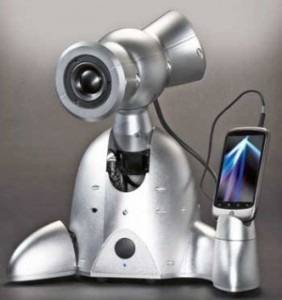
Shimi The Dancing Robot From Atlanta Startup Tovbot Debuts At CES 2013

You’ve always wanted a dancing, djing companion robot for our iPhone right? Well if you did you’re in luck. A group of entrepreneurs hailing from Georgia Tech, IDC in Israel and MIT Media Lab formed a company called Tovbot and have now introduced their first product to the world, and it’s name is Shimi.

Tovbot says they specialize in social, expressive, connected robots and Shimi definitely speaks to that mantra.

“Shimi is a robotic musical companion. He’s like your personal DJ, the guy that knows how to keep a party going and always knows what you want to hear next” Tovbot says on their website.

While companies have been trying to make robots interact with music for quite sometime it seems like Tovbot has really nailed that goal. The robot also doesn’t feel like some cheap piece of crap that’s going to have howling, treble filled speakers. The sound that comes out of Shimi is pleasant, although we didn’t get to hear it that loud.

Check out the video below from our interview at Eureka Park at CES 2013:

Over 130 startups, and over 1800 attendee tickets sold so far for the largest startup conference in the US everywhereelse.co The Starutp Conference

TDC Games Shows Off America’s Funniest Home Videos Hybrid Board/Tablet Game At CES 2013

TDC Games, Chicago startup,CES 2013, Eureka ParkA startup from the suburbs of Chicago called TDC games showed off an exciting new way to play board games. Combining the power of QR codes, along with video playback, the company has created a hybrid America’s Funniest Home Videos game.

A Hybrid Game?

We’ve seen the app interactive toys at toy stores and department stores everywhere, we’ve even seen games like Life that have taken to the iPad for the “spinner” experience, however TDC Games utilizes the iPad in the game in different ways. For the America’s Funniest Home Videos Game, when the player selects an action card, they scan it with their tablet or smartphone (iPhone, iPad and Android devices) a video pops up with a decision box.

In the demo we watched it was a video clip of a kid kicking a soccer ball in the gym. The player would have had to decide what was going to happen next in multiple choice. That would dictate the next move on the actual game board.

TDC Games has licensed an entire library of proprietary America’s Funniest Home Video clips for this game which makes it interactive.

The Illinois based startup has several games in the works that will utilize several different technologies found in mobile devices to enhance the family game night.

Check out our video interview below:

Several startups from Chicago’s startup community are in the Startup Village at the largest startup conference in the U.S. it’s not too late to exhibit at everywhereelse.co The Startup Conference

Draw Something Meets Twitter With New Social Startup Didlr: CES 2013

We met a very interesting, and fun, app startup from the UK and Atlanta Georgia at Eureka Park. The startup, called Didlr, essentially combines Draw Something and Twitter for a fun new way to socialize and interact with people across the globe.

Users download the app to their smartphone or tablet, on just about every platform commercially available. After the app is downloaded you go through the normal social networking notions like creating a profile and inviting your friends. Once you’re all set up you can get to Didling.

A Didl is using your creativity through drawings and creating pictures rather than through words. As they tell us in the interview below, 140 characters is a lot more limiting than creating pictures. Didlr allows you to be as creative as you like, or can be.

Thousands of people have already flocked to the service and see it as having a little more meaning than playing the once uber popular Draw Something.

Like Twitter you can follow friends, or Didlr’s whose pictures you like. Also, the more popular a Didl is the longer it stays on the front page of the app.

Creatively speaking Didlr has included a good sized color pallete and various brush tools for any artist.

Check out our our cofounder and CEO, Nick Tippmann’s interview video below.

 See startups from across the country and around the world at everywhereelse.co The Startup Conference

Tony Hsieh Considering ZBoards For Downtown Project? Check Out Their Pitch! CES 2013

Zboard, California startup,startup, Tony Hsieh,Downtown Project, las vegas, CES 2013The problem is simple, you want to get from point A to point B and the distance is just a little too far to walk, and a little too close to drive. Sure you can take a bike but then you need to worry about keeping your bike safe, and the fact that you could work up a little sweat and soil your clothes for the rest of the work day.

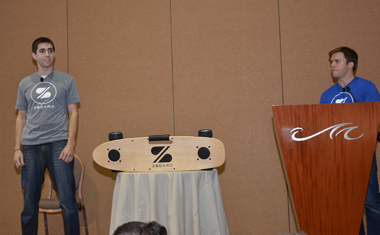
California startup Zboard has the answer. Zboard is an electric skateboard that works fundamentally the same way a regular skateboard does. Well at least it kind of sort of looks like a regular skateboard.

The Zboard seems to be powered by the same kind of technology that Segway’s use by moving your body forwards and backwards or leaning.

If you lean forward while riding the Zboard it speeds up and goes forward. You can move your feet, applying pressure to the left and right sides to make the Zboard turn. It also comes with a brake that will stop you when you lean back.

It’s a new wave of hipster transportation. So cool in fact that Zappos CEO and Downtown Project founder Tony Hsieh hinted in a fireside chat at CES that he may be considering getting Zboards for the downtown Las Vegas community. For Hsieh, the Zboard answers the question “How do you connect where you don’t need a car, possible electric boards that are electric”.

Check out Zboard’s pitch from the Launch.It event at CES 2013.

Is your startup in the Startup Village at everywhereelse.co The Startup Conference, find out more here about the biggest startup conference in the U.S.

Popchilla The Robot For Autistic Children Shows Off At Eureka Park, CES 2013

Popchilla,Pittsburgh startup,startup,startups, Eureka Park, CES 2013Raising children can be both hard and a blessing. Raising a child with autism is a lot more challenging. Autistic children often times have problems communicating even their simplest needs sometimes.

Parents of autistic children are constantly looking for “more tools to put in their tool chest” Michael Knight the founder of Popchilla, told nibletz.com in an interview.

Popchilla is a fun loving robotic stuffed animal that also has an app to go along with it. As an example Knight showed us a portion of the app where the Popchilla would tell the child to get his or her toothbrush and tooth paste from a virtual house on a tablet, and then brush Popchilla’s teeth.

Knight knew early on that Popchilla would be a success. His company used to make animatronic robots. He wold get questions from parents of autistic children all the time, asking when he was going to make a robot for them. He learned that sometimes children with autism actually interact better with robots rather than humans.

Popchilla was one of the most innovative things we saw at Eureka Park. Not only is Popchilla a cool robot, but when you couple that with the app you have a recipe for success, and definitely another tool for the tool chest.

Check out our video interview with Knight here:

Check out Popchilla at popchillasworld.com

Want to exhibit your startup at the largest startup conference in the U.S.? Check out everywhereelse.co the startup conference.


CheckOutTheLatest Lets You Check Out The Latest Videos Just About Everywhere

A New York startup called CheckOutTheLatest lets you do just that. The video aggregation and search startup populates over 250 million videos from the top video sites like Youtube, Vimeo and Dailymotion to give you access to one site that can find just about any video on the planet, that you may be looking for.

“The idea came to us a year ago while on twitter. People were always tweeting @ us hoping to get us to “Check out” their latest Youtube videos or go watch their vimeo vids.” co-founder Deni Belanich tells us about how they came up with the idea for a super video search engine.

We got a chance to interview Belanich, check out the interview below.

Read More…

Are Accelerators from “Everywhere Else” Better at Producing Groundbreaking Innovation? Maybe. Here’s Why GUEST POST

Accelerators, Startups, Cliff McKinney, Work For Pie, Seed Hatchery, Memphis startupsThere’s been a lot of press lately about the lack of true, groundbreaking innovation in Silicon Valley. I don’t think that’s completely true, but reading about it made me think a bit about the nature of innovation and whether the current system is built to foster it.

I live in this little city called Memphis and we have a small but growing tech community and a great little startup accelerator called Seed Hatchery that is currently taking applications for its third class.

Now the thing about Seed Hatchery is that it doesn’t get near the number of applicants as a Y Combinator or a TechStars or even some of the less well-known accelerators. They’re okay with that and they’re okay with plugging along and making improvements year after year and meeting goals and milestones that are at a somewhat smaller scale. And there are a lot of accelerators just like Seed Hatchery, all over the world.

There have been arguments made that these accelerators will die out. That may be true for some. But I happen to think that before they do they will have trained and produced more innovative entrepreneurs than some of their larger counterparts. Why? Because, generally, the enrollees in these programs have a high appetite for risk to begin with, and because they won’t have that appetite beaten out of them by the time they finish.

True innovation typically happens at the knife’s edge between failure and success. It doesn’t come from the safer and satisfied middle. That’s good news for tiny accelerators, and may be bad news for some of the more successful ones.

A program that gives me a ton of money, a good to great chance of raising more, and an almost 100% chance of landing softly even if I fail tends to convince even big risk takers to play things a bit more safe. It seems like the opposite should be true, right? I have all these benefits with virtually zero chance of absolute failure, so why shouldn’t I give it a go? But, as we see time and time again, that kind of thinking just doesn’t happen very often.

For these programs, getting in is the big challenge, and once you’ve achieved that you’re granted superstar status. Your success rate jumps to 70% or more. And if the success rate is 70% or more, then beating everyone else isn’t as important as not being in the bottom 30%. So, often enough at least, you don’t build something that has a 10% chance of glorious success. You play it safe. You try not to f$%k it up.

For other programs, by contrast, getting in is potentially easier, but success after graduation is much much harder. A lot of smaller accelerators have one or two companies out of ten successfully raise follow-on funding. When the success rate is that low, the companies tend to take bigger chances in the hopes of finding themselves among those one or two success stories. Except in extraordinary cases, it doesn’t matter what kind of human being you are. The company you build will be different based on whether you’re motivated to succeed above all others or motivated to not screw things up.

Now, before you jump all over me, I will say that there are things that continue to make Y Combinator and TechStars amazing programs, and you would be a fool not to join them if invited. The mentor networks, and the advice participants receive from those mentors, are probably by themselves worth the price of admission. But, imagine for a moment the kinds of companies that might be produced by a Y Combinator should, say, only five to ten of the 80 companies receive follow-on funding. Might that look different? My bet is yes, and that they would be much more groundbreaking.

I’m also betting that the smaller accelerators—so long as they don’t measure success by Y Combinator standards—can produce these kinds of companies. There will be more failures, sure, but that’s okay by me. The near certainty of failure is one the most compelling features.

Author Biography:

Cliff McKinney is CEO of Work for Pie, a company that is changing the way software developers get recruited and hired by changing the way they communicate with


Here’s another take on accelerators “everywhere else” from nibletz.com 

We Talk Starting Up At CES With Ian Bernstein CoFounder Of Sphero

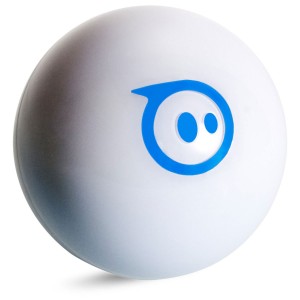
Sphero, Orbotix, Boulder startup, Colorado startup,starutps, Ian Bernstein, Brad Feld, CES 2013, CES video Imagine you want to create something. In the case of Ian Bernstein and Adam Wilson, that thing was a platform to create robotics controlled by smartphones. It was that initial idea that set Bernstein and Wilson out on a mission to get into an accelerator program. They tried for most of the big programs but really wanted Techstars “primarily because of the mentorship”. Bernstein and Wilson are both techie software and hardware guys, and knew they needed help.

That was three years ago, and yes they got into Techstars. Back in August we brought you the story of how a brow beaten Wilson and Bernstein turned to startup community leader, mentor and investor Brad Feld. It was that meeting with Feld where they decided to create the Sphero ball.

I was first exposed to Sphero at the International CES in 2011. Wilson and Bernstein barely had a couple of prototypes but they were determined to show Sphero off to the world at an annual CES event called “Show Stoppers”. At that time I was still working on Thedroidguy and was amazed at how cool the Sphero ball was. Wilson and Bernstein were talking about freaking out cats and creating apps.  That was 3 CES’s ago.

At last years CES (2012), Wilson and Bernstein were back, they had a product, and they had started selling it. Talks turned to apps and games that you could play with Sphero. Sphero had also been the center of attention at the previous years Google IO conference. Sphero had a section of the official Google after party where amidst pulsating music party goers could control Sphero around an obstacle course of sorts.

2012 was the year they really broke through though. Sphero attracted one of it’s biggest fans in President of the United States Barack Obama.  Bernstein talks about that story in our video interview below.

Not only did they get the Presidential seal of approval on the Sphero ball, they had other big news just before the holidays. Back in October, it was announced that Sphero would be available in Target stores across the country.

It’s been a whirlwind three years for Orbotix and the Sphero ball. After covering the fun and cool factor of controlling a robotic ball with your smartphone, we got a chance to interview Bernstein on video about starting up. Check out the interview video below.

If you’re a startup everywhere else, you need to get to everywhereelse.co The Startup Conference, the largest startup conference in the U.S.

Tony Hsieh Talks ROC, Culture & 10 Hour Phone Calls At Eureka Park CES 2013

Tony Hsieh, Scott Case, Eureka Park, CES 2013,

Zappos CEO and Downtown Project founder Tony Hsieh speaks during a fireside chat with Startup America CEO Scott Case (photo: nibletz.com)

The Startup America stage as part of Eureka Park at the International CES started off with a bang this morning. Startup America CEO and technical co-founder of Priceline.com, Scott Case got a chance to have a fireside chat with Tony Hsieh. Hsieh is the CEO of Zappos, the founder of Link Exchange and the founder of the downtown project.

Their intimate fireside chat gave the standing room only crowd a peak into Hsieh’s mind. Hsieh founded his first company, Link Exchange, with his college roomate in 1996. They exited from Link Exchange by selling it to Microsoft just two years later. Early in the discussion Hsieh discussed the real reason that they sold Link Exchange. It wasn’t about the money, an enormous exit or even getting bored with the company. Hsieh and his partners decided to sell Link Exchange because the culture went bad.

” I was dreading waking up and going to work at my own company” Hsieh said during the fire side chat. From that point forward culture has played a crucial role in everything Hsieh does, from the companies he invests in to the employees Zappos hires. To one end culture is a condition of being around people you like “I try to be around people I like being around”, pretty simple concept, but it transcends across just your friends and personal circles. ” companies that have strong cultures out perform companies that don’t” Hsieh said about several studies that have been done on the subject.
Numerous articles have been written about Zappos and the community of employees that work there. Even though the company famous for their “return it for any reason” shoe return policy, is part of Amazon.com now, Hsieh said that it was a prerequisite to selling to Jeff Bezos that Zappos still functions independently. Zappos recently moved their warehouse operations to the Amazon umbrella because warehousing is something Amazon exceeds at. Hsieh and his other Zappos executives still handle customer service, marketing and every other part of the business.
Zappos is always mentioned alongside companies like Google when it comes to culture, and lifestyle within the Zappos campus, which is moving to the old Las Vegas City Hall next year. It’s the company’s culture that drives their employee base. When Zappos has a new hire they go through a traditional interview, once they pass that interview, the next interview is entirely based on how that person will fit in the company culture.
Case commented that when they were growing Priceline.com that culture was important as well. Like Zappos, at one point Priceline went from a company of 10 employees to over 100. In the early stages one person accounted for 10% of the culture.
“10% changes the culture if you’re not careful about it”  Case warned to startup founders in the room.
Culture is just as important to Hsieh in his Downtown Project/Las Vegas Tech Fund companies. He wants to know that startups and their founders will fit in the culture in Las Vegas.
Hsieh committed to investing $350 million dollars in growing downtown Las Vegas (not the strip). He wants to make it the biggest and best city for coworking in the world. Startups and entrepreneurs in the downtown Las Vegas community, and Hsieh’s employees for that matter, live by the Three C’s, collisions, community and co-learning.
Hsieh has $50 million dollars set aside for investing in startups and small businesses. To be the recipient of part of that money though, Hsieh looks at the possibility of ROC (return on community) verse traditional ROI (return on investment). Hsieh just invested in a building at a prominent intersection in downtown Las Vegas. They are using that building for a community speaking theater where distinguished entrepreneurial and startup speakers will speak to community members. Hsieh admits that any other real estate investor could make a lot of money with the same location for a bar, restaurant or even a McDonald’s franchise.
From all the different parts of Hsieh’s business life, everyone in the room benefit from Hsieh’s discussion with Case. He even let on to a milestone Zappos recently had, their longest continuous customer service phone call. The length, 10 hours.

See Scott Case and several other startup and entrepreneurial leaders at the largest startup conference in the U.S. everywhereelse.co The Startup Conference, click here

CES 2013: DC Startup Troop ID Validating Veterans Past & Present In The Civilian World

TroopID,DC Startup,Pitch video,video,CES 2013,Startup AmericaThe members of the U.S. armed forces are heroes. Going all the way back to the revolutionary war, and the military that helped deliver our freedom to the British, to those troops that have helped curb the unrest in the middle east, time and time again we honor them by calling them heroes, recognizing military at events and in tributes on all types of media.

Another way that we, as American’s, have honored those who are willing to give the ultimate sacrifice in our military, is by giving them military discounts and other benefits in a civilian context at retailers, restaurants and services across the country.  In some cases these tiny tributes can result in saving our military heroes a little extra time, a little extra money and a little extra pain in day to day civilian life.

Unfortunately wherever there’s a discount program, or a benefits program, there’s also the other side of Americans, those trying to cheat and game the system. In the online world, it makes it hard for online retailers to offer discounts to military because they can’t tap into the government database to validate veterans past and present.  While some online retailers have felt the benefit to recognizing the veterans is worth the loss they take in discount fraud, other companies just can’t afford it.

Traditional offline retailers, restaurants and services don’t have the same problem. They can recognize veterans by their uniforms and in some cases by their military ID cards. Online sites can’t see either.

That’s why DC area entrepreneur, and veteran, Blake Hall has created Troop ID. This startup serves as a validation clearing house for military personnel and they are able to do this not with some top secret government clearance and access to the official database, but by leveraging partners like USAA.

Hall already has several partners lined up who are using the system to validate military personnel and open up avenues to offer them discounts and speedy service. He has also given the use of the Troop ID service free to Startup America for their veteran’s initiative launched in November 2012.

Hall got the chance to pitch a team of judges during the Launch.It showstoppers event at CES 2013. This event included special guest judge, the world renowned Guy Kawasaki.

Watch Hall’s pitch video below and hear about the milestones he’s achieved in a short time since he started working on Troop ID.

Several veteran founded startups will be in the Startup Village at everywhereelse.co The Startup Conference


CES 2013: Inventor Jamie Siminoff Creates Christie Street, Crowdfunding For Inventors, VIDEO

ChristieStreet,California startup,startup,startup interview, CES 2013When inventor Jamie Siminoff turned to Kickstarter for his latest invention he started realizing how flawed the Kickstarter model really was for inventors creating great products. Often times he noticed that inventors weren’t thinking the entire process through.

In an interview at CES 2013 with nibletz.com Siminoff told us that inventors sometimes go to Kickstarter with a great idea and a funding goal that barely covers cost. Their ideas get quickly validated by folks who oversubscribe on their project, but at the end of the day they go in the hole by netting down less than it costs to even make a product.

Other inventors may take a prototype product to Kickstarter that they had made at one factory but don’t take into consideration the factories that they may actually use when trying t scale a product up.

That’s why he created ChristieStreet, a crowdfunding site that is about inventors and their products. ChristieStreet uses a familiar crowdsourcing model once projects go live, however the team at ChristieStreet vets out the product answering questions like those above. Siminoff has real discussions with inventors before letting their projects go live, and even offers advice to young entrepreneurs with a great idea, on how to make the idea even greater and less costly.

To that end there are currently just three projects on ChristieStreet and each one has it’s own “cool” and “wow” factor.  Right now there’s a wireless doorbell with camera that allows the user to view who’s at the door on their smartphone. They also have a bluetooth product that’s a headset with cool shapes like a skull and crossbones. The final project right now is a Powerbag type backpack on steroids complete with the capability of charging three devices at once, one of them being a laptop.

Siminoff says anyone with an actual invention can apply to ChristieStreet. In fact, in the video interview below he says how easy it is to get the product submitted and looked at. Siminoff and his team have seen their share of winners but also their share of products that most likely won’t make it out of the lab.

Check out our video interview from CES 2013 below.

Read More…