Charlotte Startup: Worksnaps Helps You Monitor Your Remote Workforce

Worksnaps, Charlotte startup, North Carolina startup,startup,startup interviewAs the internet gets faster and faster more and more remote work opportunities have opened up at companies both large and small. Sure gigantic Fortune 500 companies with a telecommuting workforce have monitoring tools in place, but for small companies like startups and even blogs can’t afford the same luxury.
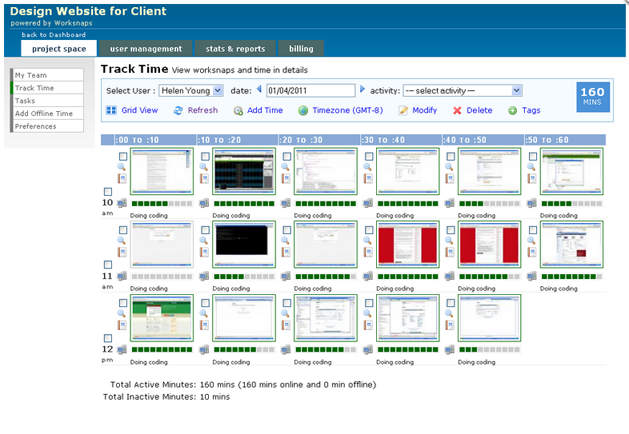
Sure you can see output but how can you tell if a delayed assignment is a legitimate issue in the workflow or perhaps your telecommuter decided to take a three hour lunch?

Charlotte startup Worksnaps, founded by Waley Zhang, hopes to solve the problem of monitoring remote workers. They employ technology similar to the kind you may find monitoring children using the internet. Spyware would be an unfair term for the type of service Worksnaps offers because ultimately it’s meant to benefit the business owner or entrepreneur but essentially that’s what it is.

Worksnaps technology is based on screen shots that are taken while the remote worker is “on the clock”. A service like Worksnaps may draw harsh criticism from privacy advocates. The easiest way around that would be to supply the remote worker with a company owned computer. As Zhang told us in an interview, it’s about monitoring work flow and making sure that remote workers are actually working, not what they may be doing in their free time.


Worksnaps has already attracted 3000 clients with over one million hours tracked, and with that, productivity improves.

Check out the rest of our interview with Zhang below.

Read More…

Chicago Startup: SpotHero Raises $2.5 Million

Spothero,Chicago startup,startups,funding,startup newsA Chicago startup that was developed after the cofounders had received over $3,000 in parking tickets, has now raised $2.5 million dollars. SpotHero, an app that allows users to find parking spots on their smartphone, was well received by the city of Chicago.

At first sight the startup seems very similar to Baltimore startup ParkingPanda, however SpotHero boasts 24 hour customer support and touts that they are superserving Chicago first and building a loyal customer base before eventually branching out. Chicago seems to love SpotHero as well. Since their launch in 2011 the company reports that more than 10,000 people have used their iPhone app and website platform to find parking spots.

SpotHero’s iPhone app allows drivers to reserve parking spots on the go, something that ParkingPanda is just now having developed through MindGrub. ParkingPanda is a web based platform that allows people to book parking spots from either individuals like driveways and curbside spaces, or public lots that have extra spots to rent. Both services allow the user to pick how long and when they want to start the parking spot rental.

SportHero was part of the most recent class at Excelerate Labs one of Chicago’s thriving startup accelerators. SpotHero just recently presented at Excelerate Labs’ August demo day.

“How many times have you been frustrated by parking? We created SpotHero to solve this problem by helping drivers get the right spot with just a few clicks” says SpotHero CEO and Founder Mark Lawrence.

Battery Ventures, 500 startups, David Cohen’s Bullet Time, e.Ventures, OCA Ventuers, New World Ventures, Light Bank and Draper VC all participated in the round led by Battery.
Part of the attraction to investors is that SpotHero has already brought in over $2,000,000 in revenue to parking operators at some of the largest national parking companies.  “Our parking partners know that their customers are online and looking for convenience, that is what we deliver – while helping the lots fill their unused spaces with paying customers ” says Lawrence
Linkage:

Lookout Amazon, Google Acquires Waterloo Startup BufferBox

BufferBox,Waterloo startup,Canadian startup,startup,startup newsAnyone who’s followed mobile technology over the last 18 months or so knows that Google and Amazon are in an all out war .When Amazon launched their Kindle Fire tablet, loosely based on the Android operating system, they immediately set up a walled garden ecosystem to provide Amazon content to the tablet device.

Amazon has been in the online e-commerce business a lot longer than just about everybody else. For that they are one of the most trusted names in e-commerce. They’ve also built up a huge collection of content that fuels everyone’s taste in movies, music and of course books.

Many feel that Google’s Android powered tablets, dubbed “Nexus 7 and Nexus 10” are direct competitors for Amazon complete with their own media and app store called “Google Play”.

Now it looks like Google is planning on expanding their click and mortar business to directly compete with Amazon. The acquisition of Waterloo based BufferBox is just another indicator of what Google may have planned in the not so distant future.

BufferBox preceded “Amazon Lockers” by over a year.

When BufferBox co-founder [Mike McCauley] first heard about Amazon Lockers he was disheartened and felt their idea had been ripped off. He was later able to turn it into a much more positive spin when he said: Amazon “put credibility behind the technology,” McCauley said. “Now there’s a big new market Amazon has created. Because Amazon controls 30% of the e-commerce market, you need a third party to offer the service for everyone else.” to the Wall Street Journal read more at http://markerly.com/p/_ZhMm73

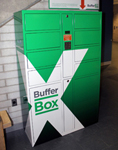
The concept is simple, BufferBox lockers are placed in high traffic businesses. Customers of e-commerce shopping sites that have partnered with BufferBox can use the lockers for a safe, secure, and sometimes 24 hour a day place to receive packages. With BufferBox and the Amazon Lockers, long gone are the days someone has to worry about their purchase becoming lost, stolen or damaged, waiting in an overnight carriers pick up location or on the front step.

We’ve even heard from several sources that Memphis based FedEx is working on a similar locker based system that will solve a billion dollar problem with drivers having to attempt a delivery to the same address multiple times a week. This will also solve problems for e-commerce customers who may not get off work until after their local delivery service closes for the day.

Late last month Google announced that they had acquired BufferBox.  The team at BufferBox will all be joining Google in the acquisition but they don’t have to move far. Google’s Waterloo offices are on the upper floor of the building where BufferBox is based.

It’s obvious from our interview with BufferBox co-founder Mike McCauley that the small startup is looking to disrupt the way that packages everywhere are delivered.  Now they’ll get to do that on a huge scale as part of Google.

“Being a small company and a startup, there’s obviously a lot of challenges,” BufferBox chief executive Mr. McCauley said in an interview with the Financial Post

“So us being able to work very closely with someone like Google allows us to leverage their resources and share vision and combine thoughts and talent together to really make something a lot bigger than we ever would have imagined. We’re really excited to be able to build out that vision quite a bit quicker than we otherwise would have without them onside.”


Linkage:

Source: Financial Post

More startup news from “everywhere else”

Check out everywhereelse.co The Startup Conference

Accelerators Everywhere Else Are Still Great For Startups

Startup Accelerator, Ycombinator, startup,startups,seed hatcheryAfter Thanksgiving many startup and tech sites feverishly began telling the story of doom and gloom for startups, follow on funding and startup accelerators.

This vicious news cycle began with the Dow Jones VC Edge report released at the end of November. The report highlighted many positive things, including growth for some key areas in high growth potential tech sectors both here and abroad. Fred Wilson, the principal at Union Square Ventures and a respected authority in the startup and VC space, was quick to point out that VC funding for consumer web and mobile companies was down 42% in the first 9 months of 2012.

The Dow Jones report coupled with Wilson’s commentary sent a tremor through Silicon Valley that we could be on the cusp of a bubble.

While startups and high growth potential technology companies are contributing to job growth, what’s not being considered is the fact that his down turn in VC funding may actually be more of a leveling off.

The same week the Dow Jones report and the Wilson piece came out, Paul Graham, founder of YCombinator sent out more troubling news. Again, interpreted at some of the startup and tech sites as bad news.

Graham had explained how the next cohort of YCombinator companies would receive less funding. The very next day Graham again took to the YCombinator blog to let everyone know that the class size was shrinking as well.

For a startup accepted into the program it instantly meant prestige and validation, not to mention a huge six figure seed investment.   Reading the news from Graham made people all around start doubting the accelerator model. PandoDaily quickly opined. Erin Griffith, a writer for Pando Daily, said “We know accelerators are headed for a shakeout- but do they“? Griffith pointed out that there were over 100 startup accelerators across the country churning out thousands of startups with only a 10% success rate.

But what’s really happening in accelerators and across the startup space, is that people are getting more conservative in the valley because they’re used to a culture of ginormous funding rounds and even bigger exits. Everyone knows the story about Color. Everyone’s also seen the value of the Instagram Facebook deal diminish as Facebook’s stock went down hill fast.  Truth be told, even after the $1 billion dollar Facebook deal, Instagram still had less than 25 employees when they moved into Facebook’s offices back in September.

That billion dollars really produced a lot of jobs right? Consider the fact that the $1 billion dollar Instagram Valuation was more than the New York Times is currently worth and they employ over 10,000 people.

The real question about accelerators is really about whether the goal behind an accelerator is to help yield larger than life venture investments or is it about building companies with solid foundations and solid founders.  It is about the cash or the wave of now more educated entrepreneurs who may not get their first startup entirely off the ground but may hit a home run or even just a double in the next go round?

It seems accelerators with the real goal of producing these crazy funding rounds and crazy exits are no better than public schools who are just teaching whatever standardized test it is to graduate the next class.

The beauty about accelerator programs “everywhere else” is that the startups in the programs are being taught important lessons about starting up, business and even life.

It’s awesome that YCombinator and TechStars have mentor networks that read like a “Who’s Who” in the startup and tech world. Every startup founder wants to learn from these great mentors, and they can, sometimes even in small towns. Take Oklahoma City’s Blueprint For Business accelerator. They all got a chance to learn from a day with Brad Feld.

Perusing the websites of startup accelerators outside the valley (everywhere else) you don’t typically find a “who’s who” of the startup and tech world. What you do find is a “who’s who” in most local business communities.

Startups may apply to programs like the Fort in DC because they want to be close to the epicenter of government. They may apply to the Brandery in Cincinnati because they want to be close to the biggest branded company in the world, Proctor & Gamble. Startups that are logistically focused or enterprise focused may want to apply to Seed Hatchery in Memphis to be close to FedEx. Startups in the entertainment and music space may choose an accelerator in Los Angeles or even Jumpstart Foundry in Nashville.

While some of these accelerators “everywhere else” may have mentors from the Valley participate or founders with big exits, the bulk of their mentor list is either mentors who speak to their niche or mentors in the local community. Which can be equally, if not more important than name brand mentors elsewhere.

Are you building solid companies or is the accelerator only looking for “the next big thing”?

Linkage

Apply for SeedHatchery here

Check out these accelerator stories from nibletz, the voice of startups “everywhere else”.

And check out the two great accelerator panels at the everywherelse.co The Startup Conference, the biggest startup conference in the U.S


DC Uber Driver Accused Of Rape

Uber,Über DC, Über DC rape, startup,startups newsThe unthinkable, that some opponents of private car hiring app Uber have been anticipating, has finally happened. According to our good friends at In The Capital, a DC Uber driver has been accused of raping a customer.

The accusation comes by way of the Cleveland Park Email listserv. Cleveland Park is a neighborhood in Washington DC. The Cleveland Park list serv post says the crime was caught on tape.

In The Capital is reporting that Metropolitan Police Department spokesperson Hugh Carew, has confirmed they are investigating forcible sexual abuse case in Cleveland Park that occurred on December 8th.  There are conflicting reports between the actual police report which suggests the attack happened on a Friday while the police report says it happened on a Sunday.

Uber DC General Manager issued a statement saying:

“We cannot comment on an ongoing criminal matter, but it is our policy to deactivate the driver account of someone if we receive information that they have been suspected of committing a crime,”

The email on the listserv reports that the crime was actually captured on the family’s home security cameras, with a clear shot of the perpetrator.

Here is the complete email:

A woman’s teen-age daughter used Uber car serve to return to her home
last night after a late evening. The car drove up the family’s driveway
around 3:30 AM. The girl walked to the door but the driver called her
back. When she went back, the driver struck her on the head and raped
her.The family has a security camera in the driveway. The camera showed the
driver carrying the girl’s limp body back to the house. She is now at
home, trying to rest. The entire family is of course very shaken.

Because of the cameras, they know who did it. As of this morning, he had
not yet been arrested, but many officers are involved and he will be.

Linkage:

Source: In The Capital

Uber on nibletz.com

everywhereelse.co is the biggest startup conference in the US


Two Boise Startups Win B Launched 2.0 Competition

Blaunched,Boise,Boise startup,startup newsA pair of Boise startups took home $30,000 in initial funding in Boise Young Professionals competition called B Launched. The contest pitted four startup businesses against each other with the first place team getting $20,000 in initial funding and the second place team taking home $10,000.

Be Free Village is a Boise startup that connects travelers with resources and products who have special dietary needs and food allergies. They have a pretty large launch team including: Lisa Bloomquist, Jared Buff, Chase Burrell, Ali Farber, Brooke Green, Brad Hennessy, Alex Krone, Jennie Myers, Jessie Speck and Cody Wiggins.

“BeFree Village is more than just a community,” Bloomquist said to the Idaho Statesmen. “It is a brand on a mission to become the trusted name for travelers with allergy needs.”

Bloomquist told the Boise Weekly that they were ready to move on.

“That was by far the best presentation I’ve seen done,” Dr. David Pate, president and CEO of St. Luke’s Health system and B-Launched judge, told the Be Free Village team. “The reason you didn’t get a lot of questions is because you answered them.”

The second place team is called Cray Say and they plan on making an app that aids shoppers. They received a $10,000 prize.

In addition to Pate the other judges included:  Boise Mayor David Bieter, Boise Metro Chamber of Commerce President and CEO Bill Connors, J.A. and Kathryn Albertson Foundation Executive Director Jamie MacMillan, Idaho Department of Commerce Director Jeff Sayer, Micron Technology Idaho Government Affairs Manager Mike Reynoldson, and Children’s Therapy Place Inc. President & CEO Sondra McMindes.

Linkage:
Source: 1   2

12-12-12 Concert Shows The Importance Of Startups Like New Jersey’s Pre-Digital Project

Pre-Digital Project, New Jersey startup,startups

This photo was shared at the Pre-Digital Project, a New Jersey startup

The 12-12-12 concert at Madison Square Garden in New York City, last night, was broadcast to billions of people around the world. The concert was an effort reminiscent of Live Aid in 1985 or the concert to benefit victims of Hurricane Katrina back in 2005. Even before some very high profile celebrities took to the phone banks to answer donation calls, over $30 million had already been collected by the Robin Hood Foundation who will distribute those funds to victims of Hurricane Sandy.

Halfway through the concert we received a tweet asking if we could do a simple RT for a New Jersey Startup called Pre-Digital Project.  After checking the startup out a bit we decided to not just RT them but report on what they’re doing and how it’s connected to events like Hurricane Sandy.

Although they launched in June, a couple of months before Hurricane Sandy ravaged the mid-atlantic and north eastern United States, world changing events highlight one of the purposes behind the startup.

The Pre-Digital Project is a “then and now” photo archive to show off old photos of locations, landmarks and places. The site shows off user submitted photos dating back to the 1800’s from across the country. It’s a crowd-sourced pre-digital, digital archive, which is of course where the startup took it’s name from.

A lot of the photos are from New Jersey and surrounding areas and others are from as far away as London and the Philippines.

The digital archive has a unique spin and it’s great to have everything all grouped together. Some of the more popular photos include photos of the New York skyline prior to September 11th.  Others highlight monuments like Buckingham Palace and the Bay Bridge in San Francisco.

There are also several photos of Atlantic City, the Jersey Shore and parts of New York that were beaten down by Sandy. Many images that could never be captured again. Through the Pre-Digital Project, users can save their memories and share them with other people for decades to come.

Linkage:

Checkout the Pre-Digital Project, here

Here are more startup stories from nibletz, the voice of startups everywhere else. 

Make sure you make it to everywhereelse.co The Startup Conference. It’s the largest startup conference in the U.S.

Toronto YCombinator Startup: Canopy Labs Raises $1.5 Million

Canopy Labs, Ycombinator,startup,startup news, fundingY-Combinator Toronto based startup Canopy Labs has just raised $1.5 million dollars to help further their company that helps mid-sized businesses build predictive customer models. These models help identify high value customers that can lead to repeat business.

While big businesses typically outsource he development of lead optimization tools, medium sized businesses that may still have over 10,000 customers often don’t have the money to hire a company to build a specific tool. Canopy Labs offers those companies a self serve tool for a fraction of the cost.

To some that may not be the best model in the world but Canopy Labs founder Wojciech Gryc, told TechCrunch in August that their target customers may not need “the most accurate, the best model ever built” instead they need something that’s “actionable and quick”

Gryc is a Rhodes Scholar who is applying his Master of Science Degrees in Mathematical Modeling and Social Science to create the Canopy labs platform.

“We offer our clients insights into their customer data that marketing or sales analysts can understand and use right away to make customers happier and increase their sales. We’ve launched analytics capabilities for our clients in under 24 hours.” Gryc said in a statement.

Canopy Labs helps consumer and retail enterprises with a large customer base prioritize efforts and deliver different marketing messages to different customers. This results in a more personalized sales experience and higher revenue. Customer modeling case studies have shown that the Canopy Labs platform is capable of processing three million records within minutes, increase sales leads by 25%, and increase sales conversions by 200%.

Canopy Labs’ self-serve platform creates customer models by importing all of the interactions that a business has with its customers. Everything from email, social media, voicemail and call center recordings are analyzed with the products that customers buy and how much they paid for these products. Canopy Labs clients are then provided recommended actions for each customer without a sales rep having to reflect upon each customer, thus saving time for the company while decreasing customer churn and increasing customer spend.

“Many analytics companies say they can solve tough problems but most IT projects in enterprises fail or end up stagnating,” said Ron Warburton, managing partner at the BDC Venture Capital IT Fund. “Canopy Labs has found a way to address a very clear problem for enterprises that don’t want to hire consultants or create customized customer modeling programs – streamlining their analytics process and delivering smart, usable data in a very short timeframe.

Canopy Labs $1.5 million dollar round was led by BDC Venture Capital IT Fund. Peter Thiel’s Valar Ventures and a number of other angel investors participated in the deal.

Linkage:

Check out Canopy Labs here

Here’s more startup news from “everywhere else”

Check out this big ass startup event.

Memphis Startup: AFocusED Path Starts Helping Students With Careers In Middle School

AFocusED Path,Memphis startup,upstart Memphis, Launch Memphis, Startup WeekendAFocusED Path was one of the four startups built during Memphis’ recent 48 Hour Launch for women as part of their new UpStart program.  AFocused Path is essentially a social network surrounding a students academic life, and their support infrastructure. It’s also a great way to keep a child’s support network, no matter how close or far away they live from the child, involved.

Parents of school aged children can sign up for a free profile at AFocusED Path. From there they will add information about the student academically and socially as it related to their child’s development. Report cards, progress reports, key assignments, reports, intramural sports achievements, school play programs, you name it all of this can be added to a child’s AFocusED Path profile.  This will serve as the ultimate archive for a child’s early years.

With all this information collected and displayed in a private social network, families are building an online resume of their child dating back to the earliest years. Long gone are the days of throwing shoeboxes filled with photos away during the next move.

This aspect of the the platform is also great for keeping aunts, uncles, grandparents, friends and other supporters, up to date with a child’s progress, achievements and areas of improvement. Now grandma and grandpa in Florida get to participate more actively in their grandchildren’s lives. If the student got good grades they can leave praise, if they are having a rough period they can be there for support.

Eventually the startup would like to add other key players in a child’s scholastic career in the platform as well. Guidance counselors, teachers, and coaches could all be involved in the overall well being of the child through their school career and then even onto college.

The second part of AFocusED Path is equally as interesting.

Usually when a student hits 8th grade they start getting the first real inclination of what they may want to do when they grow up. Whether the child wants to be a doctor, vet, counselor, entrepreneur or an electrical engineer, AFocusED Path is able to help create a clear plan as to what the child should be doing in their school years to prepare for college in that field.

The system will know what classes to get and what grades to maintain and if that student is underperforming or overachieving when it comes to those goals.

Naturally, starting a career path at 8th grade usually means a pivot or three and AFocusED path can accommodate that pivot and several others. The platform can also let a student and their support system know how hard it will be to change career paths at whatever point they make that decision.

They hope to become the goto social platform for everyone scholastically prior to college.

Denise Davis PHd and Rod DeBerry are the two founders behind this new startup and they are anxious to get it moving. They worked relentlessly with their 48 Hour Launch team to perfect their pitch as well as starting their social media channels. Check out their Friday pitch video:

Here’s the pitch video from Sunday evening:

Linkage: 

Check out UpstartMemphis here

Here are more startup stories from “everywhere else”

come to the largest startup conference ever in the U.S.


Swiss Startup Nearbors, Let Your Neighbors Pick Up Your Shopping List

Nearbors, Swiss startup,startup,startup interview, zaarlyIn reading the pitch from Swiss startup Nearbors I immediately started thinking about Zaarly. The pitch talks about being too busy to go out shopping for groceries or food and having someone else do it for you. Zaarly has done well in some big city markets and is deploying across other medium markets in the United States, so why not have a similar startup in Switzerland?

Well after watching the video below, I quickly realized that Nearbors has taken part of the Zaarly concept a lot further and they’ve combined mobile payments.

Here’s how it works:


Say you’re on deadline either working from home or the office. It’s lunch time and you need some groceries or a decent salad and sandwich. With Zaarly you put the request out there and hope that someone responds.

With Nearbors, there is a community of folks out there waiting for your Nearbor requests. Nearbors, neighbor couriers sign up for the service, have GPS enabled on their phone and receive “jobs” while they are enroute.

So now say Sally is passing by Panera and they are networked into the Nearbors program. I can order a half sandwich and macaroni and cheese and have Sally bring it to me on her way back to her office.

The best part is that through Nearbors they already have my payment information. When Sally gets to checkout she shares a QR code unique to my payment information order and voila it’s paid for. I can see where Sally is enroute to my home or office in the app and then when she arrives I can click the app one more time to pay her a “commission”.

This idea is very well thought out and according to co-founder Ryan Vannin they hope for global expansion. We got a chance to talk with Vannin who’s native tongue is Italian, so please look past his English and onto this great idea.

Read More…

Boston Techstars Grad: Testive Raises $500,000 Seed

Testive,Techstars, Boston startup, startup news, funding newsA recent Boston Techstars startup graduate, Testive, has just announced a $500,000 seed round led by influential local investors.

Testive operates on the premise that SAT prep books suck and SAT prep classes are too expensive. Miro Kazzakoff, the startup’s founder says not only can Testive predict a high school students SAT score but also their method is more efficient.

“Somewhere between cheap, boring prep books and expensive classes is an opportunity to deliver online test prep that doesn’t suck,”  Kazakoff told the Boston Business Journal “Testive is building the tools that help students learn more efficiently and more enjoyably.”

Immediately following the Techstars Boston session the company moved into Dog Patch Labs an incubator/co-working space founded by Polaris Venture Partners and also in the same Microsoft building that houses the Boston Techstars program.  Several other high growth potential startups occupy the space and work in a collaborative environment.

Local angels; Jean Hammond (A Zipcar investor), Eileen Rudden (co-founder of LeanLaunch), Dharmesh Shah (co-founder of Hubspot) and Bill Warner (founder of Avid/ProTools), all participated in the round.

Kazakoff reports that over 10,000 students already use their SAT Habit software. Their software is based on Turbo Test, originally developed at MIT. The investment will go to continued development of the software. They plan on adding features to add in the preparation of the “writing” part of the SAT.

Linkage:

Most startup news from “everywhere else”

Find Testive here

Check out over 10 Boston area startups at the largest startup conference in the US

Twin Cities Startup: Peerparazzi Tagging Photos At A Whole New Level

Peerparazi,St.Paul startup,Twin Cities startup,startup,startup interviewPhoto apps are now just about a dime a dozen. Many startups think they’re innovating in the photo space, but come to find that another six startups have had the same idea. Tagging photos for social reasons isn’t a new idea. In fact we just reported on Brooklyn startup Kapture that allows you to take pictures, on assignment, tag them and become a “brand ambassador” for rewards.

A new startup in St.Paul Minnesota is looking to maximize tagging in a social photo app. The startup is called Peerparazzi.

Peerparazzi says they provide an exciting new picture taking and social experience. Everything in the photo can be tagged, the people, places and things. Tagging photos within Peerparazzi allows you to automatically send the photos to the people that are in them.

On the business side, businesses can claim themselves in photos so that tags become interactive. A tag for a Wendy’s or McDonald’s could send a user to an interactive promotion. A tag for a shopping mall could send out a daily deal. A tag for a museum could send a user to a website.

Peerparazzi founder Damen Johnson believes that people are more likely to interact with product photos shot by their friends and family rather than just regular advertising.

We got a chance to talk with Johnson about Peerparazzi. Check out the interview below:

Read More…

DC Startup Speek Raises $1.2 Million Dollar Seed Round

Speek,DC startup,funding, startup newsWe’ve been tracking DC startup Speek since last May when they pitched the initial concept and platform at the TechBuzz competition in Washington DC as part of Capital Connection.

What originally attracted us to Speek was the super easy interface for their conference calling application. The conference calling space is definitely a hot one. Back in May, another conference calling startup UberConference won the highly coveted TechCrunch Disrupt Battlefield at TechCrunch Disrupt NY.

Speek is actually easier to use. With Speek you simply go to the website, pick a username and enter some information, like your primary phone number. From there, when you want to make a conference call you go to that user’s page on Speek and hit the big button in the middle of the page and voila, conference call initiated.  For example, my Speek address is http://speek.com/kyle yes I was using it early enough.

The other main attraction to Speek is the startup pedigree. The company was founded by John Bracken who sold his first big startup e-vite to TicketMaster. Speek’s CTO Danny Boice was the founder at Jaxara a startup he sold to Pantheon in 2006.

Today they announced that they’ve raised a seed round of $1.2 million by “several early stage venture funds”.

“Conference calls today are a painful experience in a $3 billion market that hasn’t innovated in over twenty years,” said Speek.com co-founder and CEO John Bracken. “Speek is revolutionizing conference calling by turning a limited telephone-based service into one that is simple, free and in-tune with the next generation of web and mobile services.”
“Speek makes conducting a conference call fast and easy,” said co-founder and CTO Danny Boice. “No longer do you have to frantically search for a PIN number or wonder who’s on the call or who’s talking. Nearly ninety-percent of people who have used Speek would be disappointed if our service disappeared.”
Linkage:

Month One In A Startup Accelerator, Cliff McKinney CEO, Work For Pie

WorkForPie, Memphis startup,startup,startup accelerator“This is my rifle. There are many like it, but this one is mine.”

So I’ve started a couple of companies before. Okay I say “started companies,” but I don’t really
mean either of those words. I just incorporated some ideas I had. I got business cards with my
name on them. I built a little website for interested people to sign up. One of them even earned
me a little play money. But in truth, I was just playing house.

When I walked in the door a month ago at Seed Hatchery, a startup accelerator in Memphis,
TN, I hadn’t discovered that yet. In my mind, I was kind of a badass. I had read more books
about entrepreneurship than anyone I knew. I had listened to every episode of This Week in
Startups. Hell I even suffered through a few episodes of This Week in Venture Capital. My
team had a GREAT idea that NOBODY ELSE was doing (or doing well, at least), and I had this
awesome, undiscovered savant of a co-founder and we were just going to waltz in there and
kick serious butt.

And day one was awesome! I was part of a special fraternity of entrepreneurs, and we were all
going to change the world. It was all champagne and roses. And I really felt that way. It was
wild man. Like livin’ on Haight in ’67.

Then the rest of the week felt something like this:

“Your idea sucks. No one is doing it because it sucks. You haven’t thought it through, you
haven’t done a bit of customer research, and it’s amazing that you didn’t have the good sense
to realize it before you walked in this door. You are only slightly less likely to fail because you’re
here than you were before you got here, which is to say that the likelihood of your failure just
went from 100% to something closer to 99.5%. Your pitch sucks. It’s too long. Where’s the
real pain? Are you solving a real problem? Your presentation isn’t that great either. Too many
words, not enough substance. You’re half as talented as my mother and you’re in Memphis-
freaking-Tennessee. They don’t give money to stupid people here. They don’t even give it
to smart people. You have 90, 89, 88, 87, 86 days to make a great product, and you haven’t
shown me anything that makes me believe that will happen yet…”

Thank you Drill Sergeant, may I have another?

It was an awakening, to say the least. Turns out everything I thought mattered didn’t, and
everything I thought was true wasn’t (except for the bit about the genius co-founder), and
everything I had learned wasn’t relevant anymore. By the end of that first week, I was huddled
in a corner with my rifle, crying, hoping the whole thing would just blow up and take me along
with it.

“Okay, forget everything we just said.”

But I kept coming back, because it was the most awesome thing I had ever done. Humbling,
yes, but awesome nonetheless. I was doing THIS. I was being brought to my knees HERE,

doing OUR THING. We didn’t answer to anyone but ourselves. We were keeping late nights
because we wanted to, not because some freaking busybody micro-manager in another
department needs her TPS reports by noon tomorrow. We were living the dream!

And we were getting better. Bit by bit. By week two the pitch had improved. We met mentors
who had been there and were willing to guide us through the trials and tribulations. We were
doing customer research and starting to turn our crappy little idea into something that just
might work. We had this amazing, awesome group of cohort companies, each with great
entrepreneurs and talented individuals, helping us along the way. We were making progress,
and we were doing it at a speed that my counterparts in “the real world” wouldn’t even be able
to comprehend.

So three weeks in we said “okay, forget about everything we just said,” and changed just about
everything about our original idea. Three days (and about 12 hours of sleep) later, we pitched
that new idea to investors for the first time. We had come far enough to be able to say “yeah,
this one is going to be better, and it’s okay that we have to scrap a bunch of stuff to make it
work.” It was progress, and the investors noticed. It IS a better idea, and they knew it. And we
had survived. It wasn’t pretty, but we had survived. At least the first battle.

“You think Grendel’s a bear–you should meet the mother!”

Things aren’t any easier these days. Not at all. Sleep still comes in short bursts. The pressure
is building as we get closer and closer to demo day, and the expectations are higher because,
somehow, we’re infinitely better than we were when we walked through the door a month ago.
We’ve got a month to build a product that thousands of people will one day use. 31, 30, 29, 28
days. They pass before we even know what hit us.

But the false hope that got turned into realistic doubt in that first week is creeping into the
territory of realistic hope. And what we’re hearing in week five sounds a bit more like this:

“Your idea sucks, but you’ve got time to make it better. You haven’t thought it through, but
you’ve got the tools to do that now. You haven’t talked to your customers enough, but we’re
going to help you do that. And no matter what you think, we didn’t bet on your idea. The only
thing you brought with you was you, and you are what we bet on, not your stupid idea. You’ve
got a shot at this. Keep going.”

Here’s hoping that kind of talk continues…

Author Biography:

Cliff McKinney is CEO of Work for Pie, a company that is changing the way software developers
get recruited and hired by changing the way they communicate with companies. He and his
team have conducted countless interviews with both developers and the companies that hire
them. You can find him on twitter at @cliffmckinney.

Linkage:

Learn more about Seed Hatchery, the accelerator WorkForPie went through, here

Are you coming to “everywhereelse.co The startup conference”

Check out Work For Pie here