The Grizz N Grind Of The Grizzlies Spawn Startup Hoop City Memphis

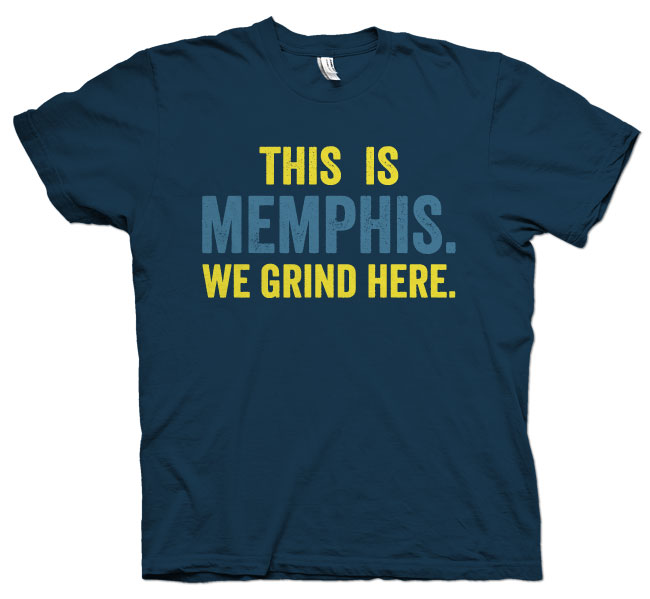
Hoop City Memphis, Memphis, Memphis starutps,starutp,gritTwo Memphians who are fairly well known in the local Memphis community found common ground in a passion that the mostly blue collar city shares, the love of basketball. I must admit when Nibletz made the move to Memphis I had no idea how much Memphian’s loved the University of Memphis Tigers. Being from Baltimore and having lived in Auburn, the only Tigers I knew were of the blue and orange variety.

The Grizzlies on the other hand I knew. Baltimore’s native son, Rudy Gay, played for the Grizzlies his entire professional career until earlier this year when the Grizzlies traded him to the Toronto Raptors. Anyone from Baltimore or who lived in Baltimore in the early part of the 2000s knew that local Baltimore TV sportscasters had three segments, the Orioles, the Ravens and Rudy Gay. They tracked the high school standout right up to the point where he decided to commit to UConn instead of Maryland. With the stellar record of our closest team since the days of Wes Unsled and Manut Bol, (the Washington Wizards), it was no wonder I had turned to Memphis as my NBA team 6 years ago. So when the opportunity came to move to Memphis there was definitely Grizz appeal. I quickly became a season ticket holder.

What I witnessed first hand through the best and worst of games throughout the 2012-2013 season in person, was nothing less than remarkable. The way Memphis and Memphians come together to support their college and NBA basketball teams is nothing short of remarkable. It reminded me of the days that an AHL, not NHL team, the Baltimore SkipJacks, united Charm City.

Memphis is a town that was built on entrepreneurship, it’s just skipped a few decades recently. Household names like Fedex, Holiday Inn and Autozone found their roots in the Bluff City. The cotton trade, and water to rail transportation were staples in Memphis for hundreds of years. As of late though, the city shows signs of trying times, scars as the team from Hoop City Memphis puts it.

“We may live in an era of plastic surgery, but Memphis wears it’s scars for all to see. They are scars from our history, a darkened past many would like to forget. But all of it has made us what we are as Memphian’s. Getting here wasn’t easy, and there’s still a long way to go, but while we can, let’s pause for a moment and think about how unique Memphis is.” Hoop City Memphis writes on their website.

The t-shirt company is the brain child of two friends, a marketer, Leslie Skelton and a designer Ian Lemmonds. Both, who wear their grit n grind proudly.  Skelton grew up in the Memphis area no stranger to a city who’s outskirts are crime ridden (downtown on the other hand is the safest district in Memphis), and no stranger to the businesses that left in droves through the 90’s.

Lemmonds on the other hand grew up in a family of 5 siblings on the brink of poverty. Escape for Lemmonds was found in art, skateboarding and ice hockey.

The two met at Mouse Foundry, an interactive agency in Memphis. Later, both ended up working for two different local papers. Lemmonds is a UX Designer at the local daily and  Skelton is now working for one of the areas largest agencies. On the side though they created Hoop City Memphis. They weren’t’ looking to get rich, and they certainly couldn’t predict that the Memphis Grizzlies would be the favorite for many national sports publications, to win the 2013 NBA championship.  Hoop City Memphis actually had more Tiger inspired t-shirts than Grizzlies.

Hoop City Memphis is a company that’s  more about culture, and uniting a community through the commonality of basketball. “Nothing brings Memphis together like basketball” Skelton told us in a phone interview Monday.

The designs are all creations that Skelton gives most of the credit to Lemmonds for coming up with. While some may be a spin on something familiar they are all original. Memphians wear Hoop City Memphis gear more as a badge of honor, to “rep their city”.

Over the past few weeks, since the Memphis Grizzlies made the pages of the national papers, people have been talking about Memphis’ grit and grind. Many articles we’ve read on the big sites like SBNation, Yahoo Sports, Sports Illustrated and ESPN have talked about this underlying theme in Memphis. On the Hoop City Memphis site, both Lemmonds and Skelton nail that theme on the head. Memphis is a city that’s breaking out of it’s “low self esteem”. That idea can be seen everywhere in the Bluff City. From entrepreneurship on the rise, to the hundreds of thousands that partake in Memphis in May, to the Memphis Grizzlies.

Hoop City Memphis offers shirts that celebrate Memphis. Sure there are shirts that celebrate the Tigers and the Grizzlies but one of their favorites is one that says 38103 which is the zipcode for downtown Memphis. A few of the others deal with “grinding” a theme that Memphis is beginning to embrace, but it didn’t start in Memphis.

Lemmonds explains: “I’m actually a big hockey fan, and a lot of people don’t know, but the notion of a “grinding” team comes from hockey. It’s the idea of just to keep working hard, and eventually an opponent will give in. In the late 90′s the Toronto Maple Leaf’s were constantly called a “grinding” team.  The idea of “grinding” is something Memphis needs to embrace in many areas when we compete against other cities – not just in sports, but in education, economic development, entreprenuership, etc. You may not realize it, but Memphis is competing against other cities in ways that are much bigger than sports…”

That was where Lemmonds came up with “Memphis Where Everywhereelse.co Comes To Grind” for the t-shirts given away at the inaugural everywhereelse.co The Startup Conference.

One of Memphis’ biggest industries these days is tourism. With that there are several companies that make t-shirts about Memphis. Skelton and Lemmonds are making t-shirts for Memphians that Memphians are proud to wear and can be found on any nationally televised Grizzlies game spread out in the crowd.

Skelton admitted though, that it’s nice that they are getting orders lately from all over the world. “Sure we have our site optimized but people come to Hoopcitymemphis.com and really like our designs.”

Hoop City Memphis has done such a good job they’ve garnered the attention of a copycat who uses the name “hoop city” which is actually a trademark of the NCAA. The copy cat has actually used property of the Grizzlies by marketing t-shirts with their team name and players faces on them. Imitation is of course the best form of flattery.

I learned about the copycat on Friday night at the Memphis BBQ festival when Memphis Grizzlies DJ Justin Baker, told me the shirt I had just been given that said “Whoop That Trick” on it, was actually from the fake Hoop City company.

As the Memphis Grizzlies continue to make franchise history, you can check out Hoop City Memphis’ shirts here and order some for yourself. For the locals the duo will have a pop up shop at South Of Beale on Main Street this Saturday before game three of the Western Conference Finals.

Grizzlies are all in with entrepreneurship and startups.

Want to see what Memphis is all about, come to this:

EEBOTHDiscount

Chicago’s GrubHub And New York’s Seamless Merging To Dominate Food Ordering Market

GrubHub,Seamless, Chicago Startup,New York startupChicago based food ordering startup GrubHub and New York based food ordering startup Seamless have announced that the two companies will merge, pending regulatory approval.

GrubHub’s co-founder Matt Maloney will become the combined company’s CEO while Seamless’ CEO Jonathan Zabusky will serve as the new company’s President. A new name for the combined entity has not been announced. Both companies have said they don’t plan on reducing staff. GrubHub employs around 350 people while Seamless employs 300 people.

GrubHub hosted Startup America Regional Champion’s during last October’s Startup America Summit. During that event we enjoyed breakfast, a tour of the company’s new offices and keynote sessions by Maloney, Scott Case and later in the day Brad Keywell of Groupon and LightBank fame.

While rivals GrubHub and Seamless were responsible fora reported $875 million dollars in food sales to local restaurants bringing in over $100 million dollars in revenue.

“We have the luxury of having two amazing brands right now. Honestly, we don’t have plans to consolidate brands at this time,” Matt Maloney, CEO and co-founder of GrubHub, told ABC News. “We are looking to position ourselves as a combined unit within this massive industry.”

Maloney acknowledged that Seamless has a great iPad app. 30% of each company’s business is currently coming from mobile an area where Maloney sees the need for improvement with GrubHub.  GrubHub offers in-restaurant tablet technology which could (and probably will) combine with the tablet offerings for Seamless.

The combined company will have a stable of over 500 cities and 20,000 local takeout locations.

The GrubHub Seamless merger lost some of it’s thunder once Yahoo announced the acquisition of Tumblr.

EEBOTHDiscount

Memphis Seed Hatchery Investor Day Draws Global Audience

Seed Hatchery, Memphis,startup accelerator,startup,startup news,investorsOn Thursday in a swank movie theater in Memphis’ revitalized midtown district, six startups presented their companies to a theater that was literally, standing room only by the beginning of the pitches.

BetterFed (farm to consumer), MentorMe (e-harmony for mentors), Soundstache (a fan engagement platform for bands), Boosterville (a huge disruption in fundraising), Musistic (Github for musicians) and ScrewPulp (a better way to self publish), took the stage for 12 minute investor pitches after concluding the three month Seed Hatchery accelerator program.

Investors and spectators from Mississippi, Arkansas, Georgia, Tennessee and as far away as Singapore and Silicon Valley were in attendance to take in the pitches.

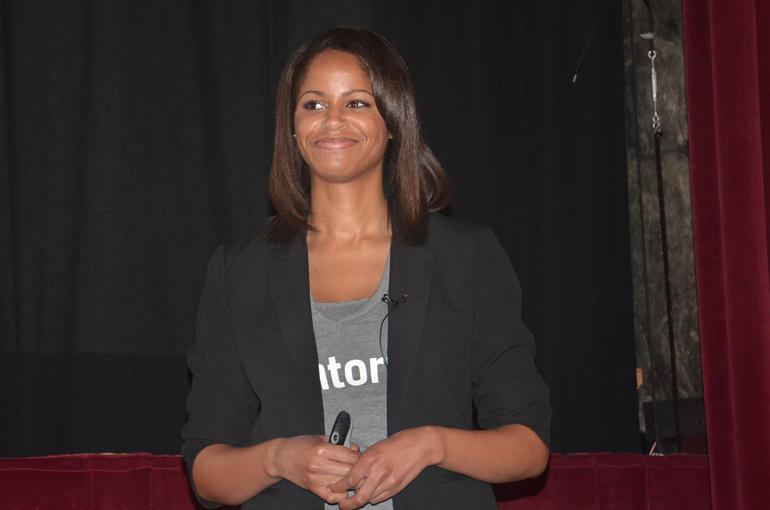
Mara Lewis, a San Francisco based entrepreneur and founder of stopped.at, was in attendance for the Seed Hatchery festivities which included an after party at the world famous Memphis BBQ competition. Lewis, who’s pitched in front of plenty of crowds said that this group at Seed Hatchery was one of the best groups she’s seen. Lewis is currently working with Start Co’s co-President’s Andre Fowlkes and Eric Mathews on their upcoming Upstart women’s startup accelerator.

After playing host to a group of Memphis entrepreneurs (including myself) in Silicon Valley in March, Kuji Chahal of Fisher Investments made the cross country trek to hear the pitches from the Seed Hatchery cohort. Chahal stuck around throughout the festivities to talk with all of the new entrepreneurs.

Andre Mouton, an investor from Singapore has been ecstatic about Memphis’ entrepreneurship. He made a trip to Memphis in February which included visits to Launch Memphis, Bioworks and everywhereelse.co The Startup Conference. Mouton took meetings with entrepreneurs all weekend long at the BBQ Festival and over at the Peabody Hotel. Mouton told us that he was impressed at how hard everyone was working in Memphis, that my friend is the Grit N Grind.

Vic Gatto, a Managing Partner at Solidus, the investment firm that seeds the Seed Hatchery class along with Jump Start Foundry in Nashville, made it a point to call out investors in the room with a call to action to talk with the entrepreneurs, and see that all six businesses have a good chance of survival.  Gatto’s partner Townes Duncan, along with his son Walker Duncan, co-founder and Editor in Chief at southernalpha also made it down from Nashville. The younger Duncan was returning from an event in Atlanta. Obviously the Grit N Grind of Memphis is expanding state wide.

Both Fowlkes and Mathews were quick to point out that Investor Day isn’t the conclusion of the Seed Hatchery program but rather the beginning. They recently added Rhodes graduate, Hillary Quirk, to the Start Co team as Community Manager. In her new role Quirk is forming an alumni association for Memphis’ accelerators which include the two cohorts at ZeroTo510.

You can find out more at neverstop.co and at their old site launchyourcity.com

See all the pitch videos from Seed Hatchery’s investor day here at nibletz.com The Voice Of Startups Everywhere Else.

SHMarstonbanner

Animate Your Life With Techstars Cloud Alum Skit [video]

Skit,Skitapp,Boston Startup,Techstars Cloud,San Antonio,startup,TechCrunch DisruptBoston Startup  Skit is a mobile app that lets you take your photos, and drawings and easily turn them into an animated story. The user doesn’t need to know a thing about animation. The app itself is all gesture based and easy for anyone with a little bit of mobile experience.

Skit is a lot more than an animated gif creator you can take your photos and drawings, turn them into a story, whatever story you want. Then you can share them with the Skit community and all of your friends through your social channels. Once you’ve shared your animation, anyone can “remix” it and make it their own.

You start with a blank canvas and Skit allows you to choose from art they provide for free or you can use your own photos and drawings from your iPad’s library. You can choose weather the photo or drawing is a character or a background, and the app provides you with tons of props as well.

Robin Johnson and Max Woon the cofounders of Skit both have animation backgrounds. Johnson has experience working on the Medal of Honor franchise, among others, while at Electronic Arts. Woon tells Silicon Hills founder Laura Lorek that he also have gaming and animation in his background but became obsessed with this animation idea after watching the making of South Park. In the video interview at SiliconHills website, he talks about how the creators of Southpark would sit in a studio and do the script first and then the animators would get to work.

Both Johnson and Woon wanted something easier and quicker to animate whatever the user wanted and to tell stories.

After the user finishes creating a skit they can save it locally or share it via Facebook and Youtube.

The team behind Skit launched it to the iTunes App store back in February and were chosen for the coveted last pitch position in the recent Techstars Cloud investor day pitches.

Check out our interview with Johnson below and for more information visit skitapp.com

We’ve got more startup stories from TechCrunch Disrupt NY 2013 here.


DisruptVJ 

Stop Putting Your Fitbit on Your Dog, Fitbark is Here [video]

FitBark,NY Startup,TechCrunch DisruptFitness and the “internet of things” go hand in hand. Today there are hundreds of devices with sensors and monitors that interact with your smartphone to give you the data you need on just about everything. We’ve tested devices here at nibletz world headquarters that monitor everything from temperature, to humidity, to steps walked to chlorine levels in a pool. Yes everything has a sensor.

The biggest segment here is of course fitness. Fitbit, Fuelband and other devices allow users to have their workouts monitored and the info tracked on the smartphone.

Well if you’ve decided to tether fitbit to your dog’s collar either to make it look like you’re working out more or you’re curious what kind of workout Rover is getting while you are at work, you can stop now.

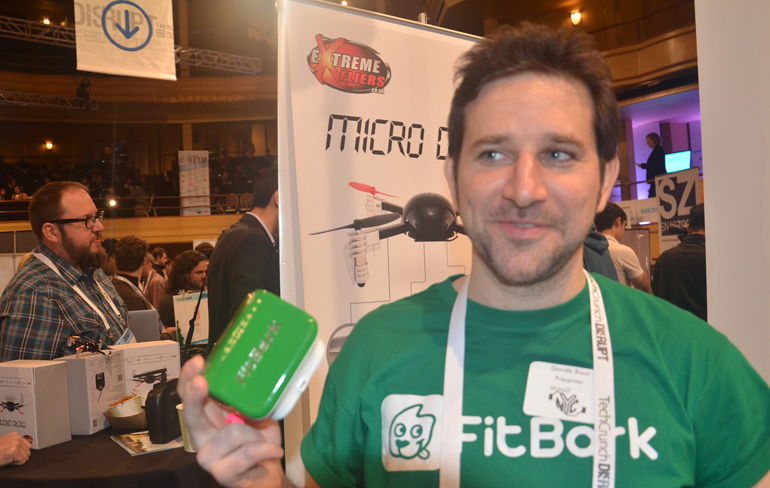
Thanks to the brother and sister team of Davide and Sara Rossi, there is now Fitbark. As  you may have gathered, Fitbark is one of those “internet of things” devies that allows you to monitor the energy level and things that your dog does. You may want to make sure that after that steak you fed him last night, he is sweatin to the oldies while you’re dropping the kids off at school.

But seriously,

Fitbark has some great real life uses that most dog owners would actually consider, before buying the device.

For instance, you want to know that your dog actually went for a walk while he was at the boarding facility or while you were paying the neighbor to “dog sit”. You could tell by the level of activity whether your dog sat around all weekend or if he had his walk. You can also tell by the data sent from the Fitbark to the smartphone app, whether or not your dog was walked at the proper times. If the pet sitter says she walked him at 4:30pm but you see he was sleeping, blasphemy, caught in a lie!

Fitbark is also a great way to monitor your dogs health. After all dogs can’t really talk. You may notice in the monitoring of your dog that he or she goes a few days with a lot less activity, that’s probably an indicator that something is just not right.

For those folks out there that are parents, and only to the canine species, a device like Fitbark may be just what the doctor, I mean veteranarian ordered.

You can support Fitbark on Kickstarter and hopefully be one of the first people to get one.

Check out our video interview with Davide Rossi below.

And here are over 50 more startup stories from TechCrunch Disrupt NY 2013.

EEBOTHDiscount

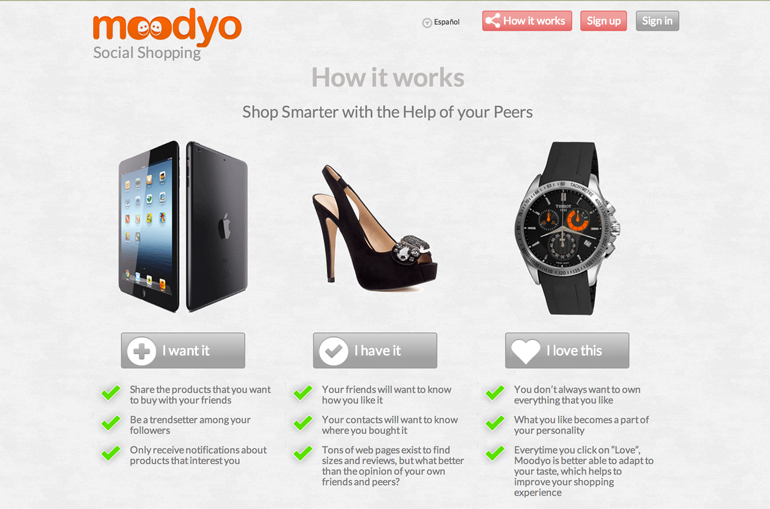
Spanish Startup Moodyo Is A Smarter Social Shopping Community

Moodyo,Spanish startup,TechCrunch Disrupt,Social ShoppingSpanish startup Moodyo is growing itself in the Spanish countryside away from big metropolitan areas like Madrid and Barcelona. In the town of Seville, where Moodyo was born, there are less than 10 active tech startups, making talent and capital extremely hard to find. That didn’t stop Javier Padilla though.

At a time in Spain where they unemployment rate is a whopping 26% Padilla went ahead and quit his job and with $120,000 dollars of his own money, embarked on creating a social shopping site. Others have attempted to bridge a social network with on and offline shopping but Padilla insists that Moodyo has it right.

Others in Spain must have agreed because he was able to raise $600,000 last November. Now he plans to expand his startup based on three simple ideas; I want it, I Have it and I love this, by opening up an office in New York. Padilla tells nibletz.com that they’ve spent the better part of a month, staying in New York after presenting in the Startup Alley at TechCrunch Disrupt. They’ve started forming relationships in the New York startup scene and with New York based investors.

But they weren’t alone, especially at Disrupt. That’s where we saw both Styloola and 3 Other Things, also international startups testing the waters of on and offline shopping.

We got a chance to catch up with Padilla check out our interview below.

What is your startup, what does it do?

Our startup is Moodyo. It’s a social shopping network that really connects the dots between consumers, vendors, brands and trendsetters. We’ve created a system where users can find the right people to follow based on their personal taste, and brands/shops can use Moodyo Insights to track the behavior of potential customers -in a non-intrusive way…- and send them targeted offers and discounts.

Who are the founders and what are their backgrounds?

Javier Padilla, CEO and Co-Founder and Alex Guerra, CTO and Co-Founder.

Javier Padilla has a deep background in the Internet business. He’s a designer and coder that started building websites in 1997. In the last 16 years he has developed more than a hundred sites for companies and individuals. He co-founded in 2006 El Desmarque (http://www.eldesmarque.com), a network of news sites that has around 80.000 unique visitors each day in Spain and is profitable. He also directed the IT department of ABC (http://www.abcdesevilla.es) for 5 years (2006-2011). ABC is the third largest online news site of Spain. Javier loves music and plays drums and the electric guitar in his spare time.

Alex Guerra is a Software Engineer with a great knowledge of Java and other related technologies. He worked for several years developing big websites for corporative clients in Spain.

Alex and Javier worked together for 2 years before they decided to quit from their jobs and start a new career with Moodyo in 2011.

Where are you based?

We are now based in Europe (Spain), but in the summer a part of the team will move to New York. We’ve spent a month now in the City looking for partners, investors and we’ve got an amazing feedback from them.

What is the startup culture like where you are based?

Well, honestly there’s no startup culture in Seville (the city where Moodyo born). There are like two or three startups in the city and a 99% of the people doesn’t know what the word “Startup” means. It’s hard to raise a company there. And it’s more difficult to raise money so we’re very happy about having closed our first round of funding back in November 2012.

In Madrid or Barcelona is different. There’s a new ecosystem of startup companies and some investors with an interesting background. In Spain we have some recent successful companies that have been acquired by the big ones. Amazon acquired BuyVIP two years ago and Telefonica did the same with Tuenti.

What problem does your startup solve?

The platform solves many problems. First, you get recommendations from people you really trust. That’s important because we’re not uploading a bunch of products that we want you to buy but, instead, users with a taste like yours are uploading things that you may like. As we have a follow/unfollow system, all the info received by the user via email, via Moodyo or via other social networks is filtered. Also trendsetters have the chance to build a community of loyal fans and shops don’t expend money on spamming users with the wrong offer. As a result, the user finally gets the product that he needs at the best price/location and shops/brands don’t spend money spamming people with offers that they will never use.

What is one challenge that you’ve overcome in the startup process?

The unemployment rate has reached 26% in Spain. There are more than 6 million people without a job (a 26% of the active population). That’s crazy. And that means that there’s a little chance for entrepreneurs to get money from banks and people around you (family, friends and fools, the famous “3 F’s”) are out of money. So you really need to have an interesting product to convince someone to invest in your project. The first thing I did was to quit my job and put $120.000 from my pocket. Everything I had. Then I tried to find the best people around and fortunately I created an amazing team.

What are some of the milestones your startup has achieved?

We won the Tech Media Europe award in February 2011. That was important because we didn’t have the product in those days and some investors validated our idea. Then we joined the Mola Incubator from Spanish entrepreneur Enrique Dubois who gave us some interesting advices. In November 2012 we closed our first round of funding ($600.000). From January 2013 the network started to grow steadily. Three weeks ago we opened the first shop inside Moodyo and we’re already processing orders everyday. So getting the famous “traction” is our last milestone.

What are your next milestones?

Getting a big amount of active users to be seen as a real opportunity for investors is the first one. We’ll do it because we’re already growing in every way. Moving to New York is also mandatory for us now from my point of view. We’re working on both things at the same time. The mobile app, that will be launched in June will help us because it’s a real tool for shopping.

Who are your mentors and role models?

Well, my first role model is my father. He taught me to work 24 hours a day if you want to succeed. Then Jeff Bezos is a big inspiration and a role model for me. I totally agree with him about how important is the team. It’s the most important thing. If you have a committed and smart team then you have a 50% of the job done. The idea is important, of course, but there are a thousand ideas that died because they didn’t have a team to support them.

What are some of the advantages/disadvantages growing your startup outside of Silicon Valley.

It’s very hard to create a new concept and spread it. When we started to talk to others about “Social Shopping” three years ago in Spain it was like… “Social…what?”. Then the media and blogs outside our country are very hard to reach. If you’re not in New York or The Valley you don’t have the chance to reach to the big ones. Now we’re starting to do it. Nibletz is one of the first sites where we’ll be featured outside Spain (and we’re very happy about that :-)). In Spain we’ve been featured in the most important blogs and newspaper.

What’s next for your startup?

Growing, growing and growing. Then we want to find new partners in United States. In Spain we have 36 pending requests to join us with a shop inside Moodyo.

Where can people find out more, and what is your Twitter username?

We have a blog > http://blog.moodyo.com

We’ve been recently featured in El Pais (sorry, it’s in Spanish. It’s the largest newspaper in Spain) > http://tecnologia.elpais.com/tecnologia/2013/04/22/actualidad/1366654572_098303.html

Moodyo Twitter account > http://twitter.com/moodyo

Check out more than 40 other startup stories from TechCrunch Disrupt NY 2013 here at nibletz.com

EEBOTHDiscount

London Startup Simplifies Employee Performance Reviews, Moves Them To The Cloud

Appraisly,London startup,startups,startup interviews


Nyk Lygkonis and James Strickland are two London based entrepreneurs who are looking to change the way employee performance reviews are done. Their startup, Appraisly, is being built in a clandestine location in the middle of London’s thriving startup hub. They’ve found great wifi, coffee and a color printer in the lobby of a swank hotel. That’s where these two financial guys by day are perfecting the art of performance reviews.

The product they are bootstrapping will help companies both large and small with employee retention. By having their employee performance platform based in the cloud, it offers easy access for both employees and managers to reference past reviews, keep up with goals, set new goals and conquer milestones. Long gone are the days that an employee should need to wait for an HR person to rifle through file cabinets to find the latest review.

While the company insists that for employees and employers to benefit from reviews they need to discuss them and have an actual in person dialogue their SaaS platform also allows employees and employers to communicate within the platform on a goal. This makes it easy for the employee and employer to remain on the same page. This can be critical for retaining good talent and for employees to set and know benchmarks so they can get raises.

We got a chance to talk with the guys behind Appraisly, check out the interview below.

What is your start-up, what does it do?

In your day-to-day job have you ever had a bad performance review? How did it feel? Unfair? Unjustified? Like your side of things had not been taken into account? Evidence had been ignored? Biased? All of the above?

Appraisly is a cloud-based employee performance management service which will improve the way performance appraisals are conducted at our customers businesses. Our solution allows business owners to manage employee performance in a manner that aligns individual goals to those of the business, in real time and in the cloud. It’s Software-as-a-Service (SaaS).

Think of Employee Performance Management as all of the activities that ensure that goals are consistently being met in an effective and efficient manner. It is the method by which job performance of an employee is evaluated. We think every business (small, medium or large) in every country should be doing this; and if they’re already doing it they should be doing it better.

Appraisly will provide the guidance, tools, processes and outputs to enable business to conduct effective and value adding performance appraisals without requiring any integration with existing systems.

Who are the founders and what are their backgrounds?

I’m James and my co-founder is Nik. I’m from Cape Town, South Africa and have a background in corporate and retail finance while consulting to some of the world’s biggest organizations. I have extensive experience with large scale talent management software (solutions provided by SAP, Oracle and IBM) and personal experience with the ups and downs of the performance management process at some of the world’s top consultancies. On the start-up scene I’ve been involved in a couple of businesses including a custom t-shirt website for social media trends, an affiliate advertising master plan which never took off, and a fledgling financial trend analysis business. On the side I am a passionate PHP developer currently learning about the joys of Ruby on Rails and Python. And I love sci-fi (especially Dune).

Nik is an ex-pat who fled the sunshine and blue seas of Greece to land up in the Welsh countryside. He mastered the town of Aberystwyth and climbed the ranks of one of the world’s leading commercial finance businesses, and ended up in the same consulting jobs as me a couple of times. He’s a pitbull and doesn’t understand the word ‘no’; literally. He has a real problem with authority but is the driving force behind some of the great work we’ve done on Appraisly so far. He’s big into Basketball but has wisely decided to focus on start-ups, since he’s a short white Greek guy who can’t jump very high. He codes on the side

Where are you based?

We’re based in the cultural melting pot of London, U.K. We also have full time jobs in the Financial Services sector at the moment (but hopefully not for much longer). We tend to operate out of a swanky hotel but this is mostly because we like the waitresses, the beers are cheap and the wi-fi is free. Also there’s a color printer. We just pretend that we are staying in the hotel, but really we just rock up each evening and use their facilities. I will decline to mention the name for obvious reasons.

What is the startup culture like where you are based?

We are fairly new to the startup culture, but outside of Silicon Valley I would say that London has a great deal to offer especially around the Old Street area. There are meet-ups occurring all the time and plenty of interesting ideas and people to meet. It seems like every person we meet in our day job has an idea for a start-up too – probably because there’s a lot of really motivating success stories in the UK right now, and some really viable channels to obtain funding. Having said that, I think the proportion of folks who actually get up off their seats to make their ideas a reality is really small; and the people who have the determination and motivation to succeed is even less.

What problem does your startup solve?

Small businesses aren’t doing performance appraisals. They should be. Bigger businesses probably are doing performance appraisals, but they aren’t doing them well enough. This affects people’s job happiness and success, and ultimately affects the bottom line of even the smallest business. Overall, employee performance is not measured or managed accurately.

What is one challenge that you’ve overcome in the startup process?

Doing valuable and unbiased market research is hard, and something we’ve failed to do in past ventures. We’ve been incredibly candid with friends, family and people we meet – we are pitching the idea to every man and his dog. But getting honest unbiased market research has been tough. Here’s how we overcame that: we built a market research survey on Google docs and personally emailed everyone we knew. We put ads on Gumtree and Google to garner additional responses; we promoted the hell out of it on Twitter. In addition, we harvested as many publications and research papers as we could from the routes available to us in our day jobs. At this early stage the data looks really promising, and most importantly it’s proving some of the hypotheses we initially conjectured. The findings are proving very useful as we move through the construction of our detailed business plan.

What are some of the milestones your startup has achieved?

Getting off the ground in the right way has been a real win. We’ve tried the lean approach in a few other scenarios but we’ve really not found that method to be a great success. With Appraisly, we wanted to plan things out properly and that’s been a huge help. By planning I mean the following: We’ve drawn up a macro plan which outlines where we want to be in 5 years, where we want to be in 1 year, and then what we need to do to get there. Some of the key outcomes from that process have been things like “We COULD go away and build this thing right away; but it’s more sensible to plan, design and then raise investment before starting”. We feel so passionate about this idea that just going away and doing a slap-bang job would be doing a great disservice to ourselves and to our idea. Having said all that we do understand that our plan almost certainly will not survive the first investor contact, let alone the first customer contact – but it will get us to those contact points in good shape, and that’s a big deal.

We’ve also drawn up a 6 week plan to get us out of the plan phase, and into design. That’s nearly complete and we’re looking forward to wire framing.

We’ve also built a holding page (htttp://www.appraisly.com), bootstrapped it and launched an EC2 instance to host the site. We’ve started a blog (http://www.appraisly.com/blog), built up a good network on Twitter (@appraisly) and most importantly, registered from early stage investor events. This gives us real targets to aim for and those targets align to our macro plan.

What are your next milestones?

At the moment we’re finalizing our detailed business plan for 12th May, as well as a ten page investor pitch and a couple of one-pager infographics. Following that we’re going into a detailed design phase for the following 6 weeks. That will flesh out our major product offering – we’re really looking forward to this. We’ll be doing an extensive wireframe in Balsamiq and preparing detailed use-cases. Upon completion of the design phase (mid-June) we’ll be heading into the funding/investing phase.

Who are your mentors and role models?

Our role models are Mark Cuban (the man started an IT business, bought a sports team and starred in Entourage!), Elon Musk (the guy has started three separate $1bn businesses – enough said) and Kenny Powers (fictitious), the washed out baseball player from the HBO show Eastbound and Down.

Our mentors include our buddy David Batey (@davidlbatey) a coding genius and lead developer on a couple of awesome projects like Shutl, The Mediagraph and many others. If you want to mentor us give us a shout on Twitter, we’d love to hear any advice you can offer to a new start-up.

What are some of the advantages/disadvantages growing your startup outside of Silicon Valley?

Our major advantages include ready access to the rest of the world (outside of the US). European venture capitalists are on our doorstep, along with a number of potential Arabian and Asian investors. The scene is growing massively and we’ll be part of that wave. We think investors outside of Silicon Valley are looking for founders who are serious, experienced, determined and will not give up. That’s us.

The disadvantages are probably on the flip-side – from what we’ve read, having never visited Silicon Valley, the culture is very immersive; everyone is talking about start-ups or knows someone who knows someone. I guess the disadvantage we have is in terms of the networking possibilities available to us. We also have to ditch our full time jobs and focus exclusively on Appraisly.

What’s next for your startup?

Getting featured in Nibbletz!

We’ll be kicking off our external facing campaign on June 13th at the Launch 48  Showcase event in London. Look out for us there, and stay in touch on Twitter (@appraisly) and via our Blog in the mean time.  You can find out more at appraisly.com

ThisChattanooga startup is gamifying workplace wellness.

sneakers

New York Gets Billion Dollar Exit With Tumblr

Tumblr, Yahoo, David Karp, Marissa Mayer, Acquisition, Exit

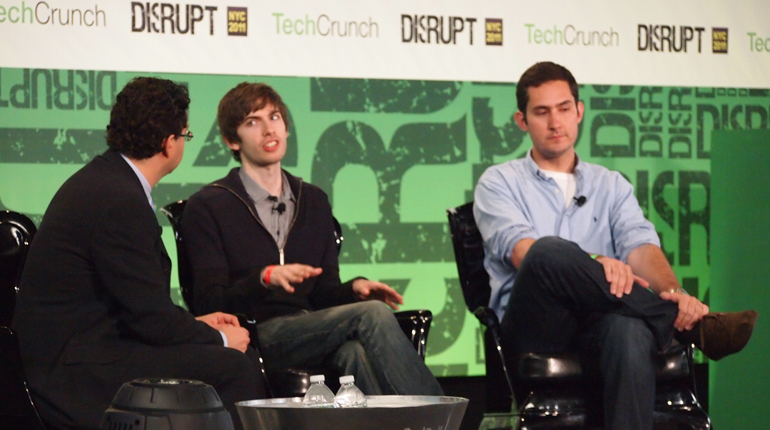
Tumblr founder David Karp onstage at TechCrunch Disrupt 2011 (photo: K. Sandler for Thedroidguy.com)

This was the big startup news all weekend. At the end of last week, rumors started bubbling up via AllthingsD suggesting that Yahoo, and it’s new powerhouse CEO Marissa Mayer was looking for their biggest startup acquisition to date. That startup was Tumblr.

Last week we started hearing that Yahoo was prepared to buy Tumblr for $1 billion dollars. Many tech and startup pundits suggested that Facebook may try and jump in and swallow up Tumblr before the Yahoo board could get together Sunday and vote on the acquisition. Facebook reportedly, never made an offer.

In case you’ve been living out in the wilderness without internet access, Tumblr is a microblogging platform. They have over 100 million monthly visitors and see over 90 million posts made per day.  Unlike the 140 character restriction on Twitter, people posting to Tumblr can write longer formatted posts and include pictures, videos etc.

Coincidentally Tumblr, and it’s founder David Karp, were the subjects of my most widely read story ever in my career is a “blogger”. Tumblr is just that popular.

Karp has been swatting off offers to buy Tumblr almost since it’s inception. Celebrities like Lady Gaga and others, flocked to Tumblr to add to their social media strategies. In fact GaGa actually posts on her own Tumblr, whereas her Facebook page is updated by a social media team.

The Wall Street Journal, and several other credible sources, have said that Yahoo’s board approved a $1.1 billion dollar acquisition of Tumblr. Many sources speculate that Mayer, a 13 year veteran of Google, hopes that Tumblr will be Yahoo’s YouTube.  It’s also been reported that, for now, Tumblr will operate as it’s own business unit, and continue to be based in New York.

There are no solid revenue numbers for Tumblr reported online. What has been reported is that the startup, that was founded in Karp’s mom’s small New York apartment in 2007, has raised $125 million in venture capital and at one point Karp sold 25% of the company for$750,000. It’s unclear how much Karp still owns today.

Karp, along with girlfriend Rachel Eakley, a grad student and chef, lived in a modest west village apartment until last year when they moved into a $1.6 million dollar loft in West Brooklyn. Karp dropped out of high school, finishing up his education on his own and then moved to Japan where he coded for a living.

There’s no official word of how long Karp will remain with the company.

New York even has a ping pong startup!

EEBOTHDiscount

Startup Life: Andy Smith of DailyBurn

Andy Smith

Andy Smith, Founder and CEO of DailyBurn

As a relative newcomer to the tech startup scene, one thing that fascinates me is the daily life of founders. The early stages of a company are so intense, and the pressure only grows with the companies. How do founders do it?

So, I’m on a quest. I want to talk to as many founders as possible and figure out how they make this startup life work.

I hear a lot about how easy it is for founders’ health to deteriorate. Late nights, skipped meals, and the midnight beer to relax. They all add up–with a big dose of stress mixed in–and it’s not hard to see why.

That made my first interview especially interesting. Andy Smith co-founded DailyBurn (then called Gyminee) in 2007. The company was part of TechStars Boulder in 2008, and in 2010 IAC acquired the majority share. Because of the reputation startup life has for bad health, I was interested to see what a health and fitness founder did to stay healthy in the process.

Q. What does your typical day look like?

AS: I’m normally in the office by about 9AM.  Most people here  at DailyBurn work “New York Tech” company hours (10-7), but I like to get home by 6:30 so I can spend time with my 3 kids.  These days I’m in more meetings than I used to be, as I’m trying to build out my core executive team.  We are at the stage in our company growth now where we can’t keep it flat – so I’m spending more time with my direct reports and getting that setup.

One thing that is scheduled in to my day each day is TRAINING.  It’s important to be in good shape if you are the leader of any company, but even more so if you lead a fitness company.  I either join our company workouts at 5pm (eat your own dog food) or train at the nearby gym.  A couple of us are getting ready for another Toughmudder race so I’m pretty strict with food and training right now.

Q. How is it different than in the early days of DailyBurn?

AS: Well, in the EARLY early days of DailyBurn there were two of us, and we both were coding full-time.  That stopped on our second round of funding, when I became full-time business side of things.  I do miss the coding sometimes, but running a business has other interesting problems to solve.

 I’m also learning how to navigate running a small growing business in a larger parent company – and that is bringing a lot of new challenges.  One of the biggest changes is not making all the decisions and learning to let others make decisions even when you don’t always agree with them.  It’s a necessary step in our growth because if I don’t give away some control, I become a huge bottleneck in the growth of the business.  Loosening that control is emotionally hard, because I have a pride/control idol that always shows its ugly head.  However, I’m seeing the benefits already and I’m excited of how it will free me up to focus on the area of business that needs the most attention – all while other parts of the business are continuing to grow and move without my direct focus.

Q. Obviously, DailyBurn is all about health and fitness. What tips do you have for founders to keep themselves healthy during the hectic days of starting a company?

AS: When you are super busy with startup life – it is easy to eat poorly and skip exercises.  It can move to the back burner.  However, it is in those times when eating right and working out give you the most benefit.  If you eat clean 90% of the time, and train 3-5 times a week you are going to perform better at your job.

 My second tip would be to try to set a culture of fitness in your startup.  Working out together can be a great bonding experience.  We also try to do athletic events together (Toughmudder is a great example).

Q. I love the DailyBurn videos, but they are HARD! Do you ever use them yourself?

AS: Of course!  And, I’m the one to blame if they are too hard! My favorite workouts on DailyBurn are in the Tactical Bodyweight Training (TBT) series and the INFERNO series.  I’m particularly fond of INFERNO because I was in the test group to make sure the workouts are hard enough!

 But – the great thing about DailyBurn is that there are workouts for everyone.  If you like to dance, we have MOVE.  If yoga is your thing we have world-class yoga videos.  We have kettle bells, abs, MMA, short workouts, long workouts – you name it.  That’s the beauty of our platform – there is something for everyone and you know it’s going to be great quality.

Q. Any other general advice for early-stage founders?

AS: I’m a big fan of startup accelerators like TechStars.  They really do work to accelerate your business (advice, connections, fundraising, strategy), and I encourage most first-time entrepreneurs to try to get into a program like TechStars.

 A lot of the advice I give to young companies is depending on what they are going through, but one of my biggest things is to share your idea with a lot of people.  Many early entrepreneurs think that their idea is so valuable that they keep it close hold.  In reality, execution is key and the advice you get will outweigh the value of being in stealth mode (most of the time! – I say this even as I have a small project in stealth!).

I couldn’t convince Andy to share that stealth project, but if it’s as great as DailyBurn, it will be great to watch.

Monica Selby is a writer and editor living in Memphis, TN. When she’s not chasing her three boys, she writes about women, work, and startups.

Memphis’ Bad Ass Startup Chick Brittany Fitzpatrick Pitches MentorMe

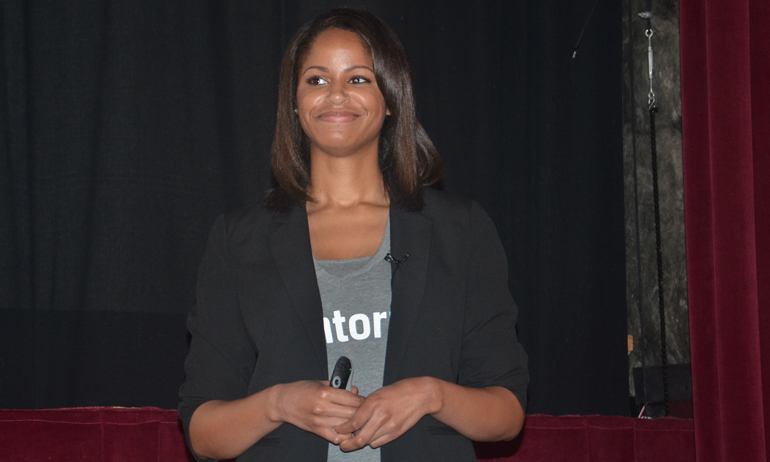
MentorMe,Brittany Fitzpatrick,Seed Hatchery,startup,memphis startupThe day of reckoning is upon us and it appears that Bad Ass Startup Chick Brittany Fitzpatrick’s nerves have calmed a bit. After working tirelessly on a startup she originally pitched at the women’s 48 hour launch in Decemeber, Fitzpatrick is ready to show the world her answer to many of mentoring’s problems.

Community service and helping people have been what Brittany Fitzpatrick’s life’s work have been about. But what makes this Memphian even more amazing is that she left a position with one of the most prestigious, well known brands in the non-profit space, Ronald McDonald House Charities, to start something of her own, again in community service.

As the communications coordinator for Ronald McDonald House Charities of Memphis, Brittany took the passion and drive she’s had since high school and through college at Howard University and Memphis University, and combined it with the tools available in recent day to double the groups social media reach. Ronald McDonald House Charities of Memphis works with the most well known children’s research facility in the world, St. Jude Children’s Research Hospital.

Over the last six years,  Brittany has been a mentor and helped other mentor’s in a variety of programs. Through her work with Ronald McDonald House Charities and other stops along the way, she found that mentorship was a great thing, but flawed in many ways.

When she first pitched the idea for her startup “Mentor Me” back in December at a women focused 48 Hour Launch, she revealed that most mentor orgranizations spend more money re-placing mentors and mentees than they do setting up original pairs. Brittanny quickly realized if someone could fix the initial matching proces than these programs could focus on their original goals and save a lot of money.

That’s where her startup Mentor Me comes in. Mentor Me is a mentor and mentee online matching service that uses a variety of information given from both parties and an algorithm to make more successful matches. While Brittany is hesitant about using the verbage “e-harmony for mentor”, at the core that’s what it is and that’s why it’s going to be so successful.

But the biggest factor in the success of Mentor Me is going to be a combination of the technology and the founder. Brittany is a dynamic young woman. Back in December, the prize for the 48 Hour Launch competition was a startup village booth at everywherelse.co. When Brittany came in second place she decided to crowdfund the people in the audience so that she too could have a booth for her startup. Within minutes her mission was successful.

After working for three months in the Seed Hatchery startup accelerator, Fitzpatrick unveiled MentorMe to the public at large Thursday in Memphis. Check out her pitch below:

But the biggest factor in the success of Mentor Me is going to be a combination of the technology and the founder. Brittany is a dynamic young woman. Back in December, the prize for the 48 Hour Launch competition was a startup village booth at everywherelse.co. When Brittany came in second place she decided to crowdfund the people in the audience so that she too could have a booth for her startup. Within minutes her mission was successful.

Find out more about Mentor me here at getmentorme.com

SHMarstonbanner


2 Memphis Tech & Startup Ninjas Turn Farmer With BetterFed [SeedHatchery]

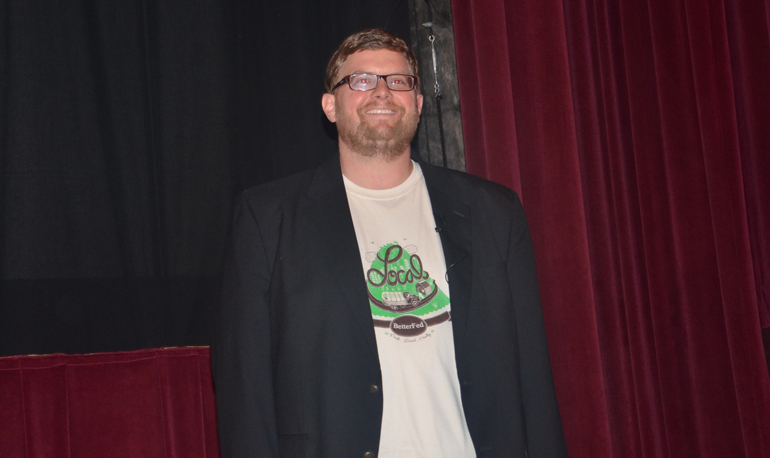
betterfedThe story about how Scott Finney and his scientific outsourcing startup, IncreaseIf, pivoted to become BetterFed is a story that wouldn’t even fit here on the pages of nibletz. It’s actually a classic story of believing in the founder though and that’s what the team that vetted Seed Hatchery startups did. (disclosure I was on that team).

We knew that Scott Finney had a very well versed background in engineering. A graduate of Auburn University, and a regular attendee of the local Startup Meetup, Finney has had a slew of great ideas. IncreaseIf may not have been one of those, but his passion and technical expertise would drive him to his ultimate destiny which is BetterFed.

BetterFed is a startup that bridges farmers and local growers with people too busy to get to the farmers market but still want the freshness, benefits and healthy alternatives that come from real home grown food. To get from IncreaseIf to BetterFed, took a lot of pivoting, until Finney just blew everything up and solicited the help of Seed Hatchery alum Kenn Gibbs.  Gibbs had taken his own edutainment startup, Knoco, through last year’s Seed Hatchery program.

At first Gibbs wasn’t sure if he would join Finney on the BetterFed journey. He was already knee deep in mentoring and offering technical advice to the other cohort teams. However without much poking and proding, Gibbs came around and now both young men are so into BetterFed that they created Twitter handles FarmerFinn and FarmerKenn. They’ve also been talking about opening up their own farm and becoming growersthemselves.

We got a chance to talk to Finney just before he went onstage here’s what he said:

What’s your startup, what do you do?
BetterFed connects customers to local food sources. We provide weekly food subscriptions that best fit your families eating habits.

Why did you apply to Seed Hatchery?

I was looking to get my MBA sometime soon. Speaking with some of the alum, I heard the benefits of Seed Hatchery outweighing a classroom experience.

What were you expecting?
I was expecting to be a technical co-founder for a team and ended up being a lone founder for the first month of the cohort.

Did you get what you were expecting?

Yes, I knew I was going to be forced out of my comfort zone, but didn’t know how much until now.

What was your big “A Ha Moment”?

The importance of taking action and realizing you can plan and assume all you want, but you won’t learn anything until you take action.

What are two big things you learned during the Accelerator Process?

Get a product out to your customers as soon as you can, and tell everyone about what you’re working on because you never know who can make an introduction to a valuable relationship.

What’s one thing you learned about yourself during the accelerator process?

The program required me to use skill sets I did not believe I had. In the past I would have let others handle sales and marketing, but I’m completely involved in those avenues.

What are you hoping for after Investor day?

We’re looking to continue our customer discovery to validate all that we’ve learned in the past couple weeks.

Tell us one of your mentors and what you learned from him or her?

Sarah Baker is a PR and communication expert and she’s helped us focus our message to our target audience.
 
And now check out their pitch video.
Find out more at BetterFed.co  

We’ve got more Seed Hatchery startup stories for you here. 

SHMarstonbanner

The Big Day Is Here For Memphis Startup ScrewPulp

screwpulpLast week we were pleased to bring you the story of ScrewPulp’s launch. The new self publishing platform is helping authors and publishers with much needed traction and engagement through a different model.

Publishers/authors sign up for ScrewPulp which helps them market their books by giving away the first 25 copies in exchange for a social media mention, review or rating. From there, as books gain popularity they increase in price by $1.00 per level. This format gives authors/publishers, much needed exposure and the benefit of having ratings and reviews built in to their profile.

Publishers hold all the rights to their books. ScrewPulp takes a small percentage and leaves the author/publisher with no less than 75%. They only ask that submitted works stay on the site for 90 days.

Screw Pulp founder Richard Billings launched the startup at 48 Hour Launch in June of last year. From there he went on to take the top prize at Launch Memphis’ Global Entrepreneurship Week event, which included pitching in front of Federal Court Judge, John Fowlkes.  The Seed Hatchery accelerator was the next natural step for the team.

We’ve chronicled the life of ScrewPulp from that very first pitch in June, consequently the same 48 Hour Launch event that attracted Nibletz to Memphis, through demo day. Check out more Screwpulp coverage here and watch Billings’ pitch video here:


Check out more of our Seed Hatchery coverage here. 

SHMarstonbanner

Musistic Debuts At Seed Hatchery Demo Day, Finally A GitHub For Musicians

musisticWhat do you get when you cross two musicians and two recording studio employees in Memphis one of the earliest cities in the world with a globally musical pulse? Musistic.

The Musistic team is made up of Justin Olita, Vince Rogers, Brian Wentzloff and Rachel Hurley (who joined them after leaving the soundstache team). The four of them together are pioneering a new collaborative music platform that allows musicians to collaborate in a meaningful way, similar to how programmers collaborate on GitHub.

Users can find others to collaborate on a song or album together via the Musistic platform. From there each musician can post their parts and tracks for the others to “pull down” and record on top of. The best part is that the Musistic platform is DAW friendly across many types of popular software.

Gone are the days when musicians need to upload enormous email attachments or figure out which drop box, box.net or other cloud account has enough space for their project.

Using Musistic they can easily find the parts they need, re-record, edit and get them back up for the collaborators to continue working on. This isa welcomed tool in the music community and it’s made from a team that is rich in their musical background.

To date they’ve secured a creative capital investment from Loaded For Bear equal to $100,000 per year for five years. They are also working on strategic partnerships with the Memphis Music Foundation and the Folk Alliance International.  It also helps that Hurley, who leads marketing and business development, has deep relationships with hundreds of Memphis musicians.

To get a better idea of what Musistic is and where it’s going, check out the pitch video below.


You can find out more at musistic.com

We’ve got more Seed Hatchery coverage here.

SHMarstonbanner

Star & Micey’s Nick Redmond Pitches Soundstache At Seed Hatchery Investor Day

nicksoundstacheMemphians, and for that matter a lot of folks in Tennessee are familiar with the name Nick Redmond. Nick is the frontman for the very popular indie band, Star & Micey. It was through touring, singing, performing and engaging with fans that Redmond had this great idea for a startup and Soundstache was born.

Through fellow Memphian Rachel Hurley who is knee deep in the Memphis music scene through working with the Poplar Lounge and other Memphis music spots, and through being active in the Memphis startup community, Redmond got the opportunity to apply for Seed Hatchery.

Hurley says that it was actually at famous movie director and local Memphian, Craig Brewer’s birthday party where Redmond pitched the idea for an interactive app that worked both online and off line and connected fans to musicians. Soundstache is a geo-caching app/game that allows fans to search for “staches” that bands put out for them to find. They could be in plain sight or maybe tucked under a tree, in a set of stairs or attached to a sign post.

Bands plant staches for fans to find and the app directs them to it.

Never afraid a challenge, just days into the Seed Hatchery program Redmond decided to try SoundStache out at one of the biggest playgrounds in the music world, SXSW and there it was met a ton of positivity. Fans loved the exclusive nature of the prizes they were winning.  Speaking of which, bands can give away whatever they want, a used drum stick, concert tickets, cd’s, demos whatever.

Most people know that indie music fans, real indie music fans not fake ass hipsters, go all in on their favorite bands and support them anyway they can. Soundstache gets them off the couch and out from behind the macbook, onto the street looking for “staches”.

In between his hard touring schedule Redmond just went through the Seed Hatchery accelerator program. Here’s their investor day pitch video.


Sign up for soundstache at signup.soundstache.net

Here are more SeedHatchery stories at nibletz.com The Voice Of Startups Everywhere Else.

SHMarstonbanner