MassChallenge Startup ZoomTilt Announces New Analytics Product

Zoomtilt, MassChallenge, TechstarsAnna Callahan is a bad-ass startup chick. First she was a hackstar for Techstars Boston, but she got the startup bug herself and decided to apply to Boston’s other mega-huge startup accelerator, MassChallenge. It was there that she grew her startup ZoomTilt, which was named a finalist in last year’s MassChallenge program.

But what is ZoomTilt?

Well, think 99designs for film. Callahan loves film making; in fact it was reading a script while working as a Techstars hackstar that made her decide to take the plunge and launch her own innovative idea. The idea: link filmmakers to people who want to build a brand using short films, mini TV shows if you will.  If you’ve got a brand and want to see film and TV stars in a video featuring your product, ZoomTilt is the answer. If you want to have an engaging YouTube miniseries or Facebook page video series that highlights your brand, ZoomTilt is the answer.

Callahan tells Nibletz that they’ve got hundreds of filmmakers waiting for the chance to work on your brand’s short video project. By leveraging the talent and creativity within their network ZoomTilt is able to offer unparalleled engaging video marketing solutions without a gigantic budget.

Callahan joined forces with cofounder Chris Bolman and ditched their first name, CrewTide, which Callahan says made people think they sold nautical supplies. Then they hunkered down over the summer as one of the 125 startups in MassChallenge and emerged as a finalist.

On Wednesday Zoomtilt announced ZoomTilt Analytics. It’s the first of its kind A/B testing platform for video.“The information our analytics will provide for brands, agencies, media companies, and content creators will allow [them] to make better audience targeted content, quickly identify areas to improve upon allowing for [their] videos to be more effective, engaging and shareable,”  Bolman said in a statement.

zoomtilt1 ZoomTiltanalyticsscreen

The software allows for the online video marketing community to lessen the pressure to create a video that will “go viral” and increase their video marketing return on investment (ROI). ZoomTilt Analytics makes this possible by generating fast feedback directly from target audience members.

Callahan adds: “When using video on the web, [advertisers] must create entertainment – too much money is spent on videos that get low viewership and have no impact. Our analytics tools help you understand which of your videos really engages your target audience. With this you can make better decisions about which videos are right for you to promote.”

ZoomTilt has been helping brands obtain affordable, crowdsourced content from independent filmmakers since early 2012. Besides being a 2012 MassChallenge finalist, they were also members of the 2013 Betaspring class and participated in the 2013 SXSW Interactive Accelerator, where they were featured as a finalist in the entertainment and gaming industry.

You can check out the ZoomTilt dashboard here.


Now read what Drive Capital’s Mark Kvamme thinks about the Brandery.

serious

22-Year-Old New York Entrepreneur Launches EdTech Startup In London, Raises $1.7M

Mobento, UK startup, Venture Capital, Seed Round22-year-old Summer Murphy created a video library startup with access to thousands of curated educational videos on a variety of topics. Unlike many entrepreneurs, though, this native New Yorker decided that he wanted to see if his luck would fare better across the pond in the TechCity incubator in London.

Growth Business UK reports that it has. Murphy’s startup Mobento has raised $1.7 million, which has been reported as the biggest investment for any education-focused tech startup in the UK. It’s also been reported that it was one of the biggest seed rounds of any UK tech startup.

Murphy told The Next Web that the company would use the money to grow the business and bring “educational technology up to speed with the advances made elsewhere in business, social networks, and mobile”.

When talking about the platform itself, Murphy told Growth Business UK : “It slots right into the behaviour and customs of contemporary students and is a democratising and liberating force within education because it enables the world’s best educators to reach out to students all over the world.”

New York has a thriving startup community, so relocating to London to launch Mobento was a testament to Tech City. “Mobento’s decision to base themselves here is further proof that Tech City is the ideal location to scale and grow a successful digital business. Quick access to Europe and our heritage of creativity and innovation make London attractive for digital media and tech companies. Whilst the blend of creativity and innovation that exists in East London with easy access to the financial centre of the City is also a major advantage,” Benjamin Southworth, deputy CEO of Tech City, said.

Check out Mobento at mobento.com

Check out this infographic, a programmer’s guide to getting hired by a startup

EE-FORENTREPRENEURS

Brooklyn Startup Makerbot Acquired in $604 Million Dollar Deal

Makerbot, Stratasys, New York startup, acquisitionMakerbot, the Brooklyn startup that came on the scene in 2009 and made 3D printing a household name, has been acquired in a $604 million dollar deal.

Makerbot developed the first desktop 3D printer, dubbed the “Makerbot” and quickly sold out of the initial 20 printers they had ordered. Fast forward to just two weeks ago, the company opened up a 50,000 square foot factory in Brooklyn’s Sunset Park. In addition to the 3D printers, Makerbot has a consumer facing web platform called Thingiverse that allows people to upload their 3d printer plans and have them printed by the company.

Almost immediately after the opening of the new factory rumors started swirling that Makerbot had put themselves on the market. This afternoon those plans materialized with the announcement that industrial 3d printing giant, Stratasys, acquired the company in a deal worth up to $604 million dollars.

Many tech sites, including CNet, reported earlier in the day that the all stock deal was worth $430 million howeverThe Verge reports that the initial 2/3 of the deal would happen when the deal closes with the remaining 1/3 of the deal contingent on Makerbot’s performance.

Stratasys has been a mainstay in the industrial 3d printing space. While their printers print molds and parts for several industries, they came into light earlier this year when Defense Distributed used one of their high end printers to print a 3D gun that actually worked.

3D printing continues to explode. While the original Makerbot desktop printer sold for over $2,000, back in April there was a desktop 3d printer featured in the SkyMall magazine for under $1000. We saw that advertisement on the way to TechCrunch Disrupt NY 2013 where we got a chance to see 3DLT pitch their platform which is like 99 designs for 3D templates.

Makerbot is also working on a 3d scanner so that users can scan objects and then print them using a Makerbot printer.

This acquisition will give Stratasys a firm footing in the consumer 3D printing space. Early adopters are seeing an approaching time when people will be able to print shoes, sunglasses, cups, bowls and just about any household item from their home. 3D printing could end up being the alternative to same day delivery from giant retailers like Walmart, at least for goods that can be 3d printed.

Just last month NY had another huge exit with Tumblr.

EE-FORENTREPRENEURS

StartCo & FedEx Institute Of Technology Bringing NewMe To Memphis, Discount Codes Available

NewMe Accelerator, Memphis, Startco,FedEx Institute Of TechnologyThe NewMe accelerator program is a critically acclaimed accelerator in San Francisco that specifically targets women and minority startups and founders. They launched their Silicon Valley program in June of 2011, and recently announced an abbreviated “pop up” accelerator tour, coming to cities across the country.

The NewMe pop accelerator will make it’s way to Memphis June 28-30 and be housed at the FedEx Institue of Technology, on the campus of the University of Memphis.

The three-night event June 28-30 features one-on-one coaching from NewME experts, a two-part workshop titled “The Art of the Pitch” that will provide the secrets to a perfect pitch and standing out among other founders. The weekend culminates with “Demo Day,” a night where startups will network with key players in Memphis’ tech scene, special guests from Silicon Valley, and ultimately pitch their idea to a panel of judges that consists of local and Silicon Valley investors.

They’ve already held the pop up program in Miami and Washington DC. In fact, Zoobean, the Washington DC pop up winner, has closed a $500,000 seed round led by Mitch Kapor.

In addition to Memphis Tennessee, the NewMe Popup accelerator will also be held in Detroit, Chicago, Atlanta, Durham, Austin, New York, Kansas City, Los Angeles and Oakland.

Participants in the NewMe popup accelerator in Memphis, or on any other city stop will get one-on-one coaching from Silicon Valley business leaders, hands on workshops, and the opportunity to pitch their idea to local and Valley-based investors with the chance to win $45,000 worth of prizes from our sponsors and the opportunity to participate in the NewME Accelerator in San Francisco.

“We’re excited about NewME’s mission and the important work they are doing to accelerate entrepreneurs across the country. Our mission with Google for Entrepreneurs is to grow entrepreneurial communities and equip them with the resources and technology they need to tackle big ideas and build amazing companies,” said Mary Grove, Director of Global Entrepreneurship Outreach at Google one of the key sponsors for the NewMe Accelerator. “We’re truly excited to be teaming up with NewME to bring this series to Memphis and can’t wait to see the big ideas that come from the teams here.”

Start Co. is eager to welcome NewME to Memphis. “We’re excited that Memphis was  selected for this exclusive opportunity,” said co-president and CEO Eric Mathews. “It’s a privilege to participate as their local community partner.”

Find out more and register here for the NewMe popup accelerator in Memphis.

Use discount code MEMPHISEDU for huge discount

Are you working on your pitch deck? Check out this Pop!

EEBOTHDiscount

NY Emotional Commerce Startup Fab Raises $150 Million At A $1 Billion Valuation

Fab, NY startup, fundraising

We’ve seen some crazy venture funding, and even crazier valuations, lately. We’ve even some some crazy acquisitions like the $1 billion dollar Tumblr deal.

Unlike some of these other deals though, Fab, a startup that CEO Jason Goldberg calls “emotional commerce,” has customers, revenue, and a big plan for all of the money they just raised. How much was that? Well according to multiple sources the New York based startup raised $150 million dollars at a $1 billion dollar valuation. What’s more is that TechCrunch is reporting Fab has another $100 million dollars on the way.

Investors in Fab’s recent deal included Andreessen Horowitz and Atomico.  New investor, Chinese firm, TenCent is also reported in the deal. This latest round brings their total venture funding up to $310 million.

Why on earth does an e-commerce site need so much money? Well the folks at GigaOm got a hold of this excerpt from a blog post Goldberg plans to post next week.

“Fab is focused on the long term. We are focused on creating “Wow!” shopping experiences that will result in customers making 20+ purchases from Fab within a couple of years. We are focused on being the global brand that represents emotional commerce for decades to come. Fab is not about a single transaction. Fab is about creating Wow! experiences in everything we do, from the unique merchandise we offer, to the user experience on our website and mobile apps, to fast delivery and a delightful out-of-box experience, to the follow-on customer service. We truly believe that it takes investing in Wow! in order to build the next $10B+ E-commerce company, and that’s what we’re doing.”

You can check out Fab here


EE-FORENTREPRENEURS.


Florida Startup World Housing Solution, Quick, Strong And Green!

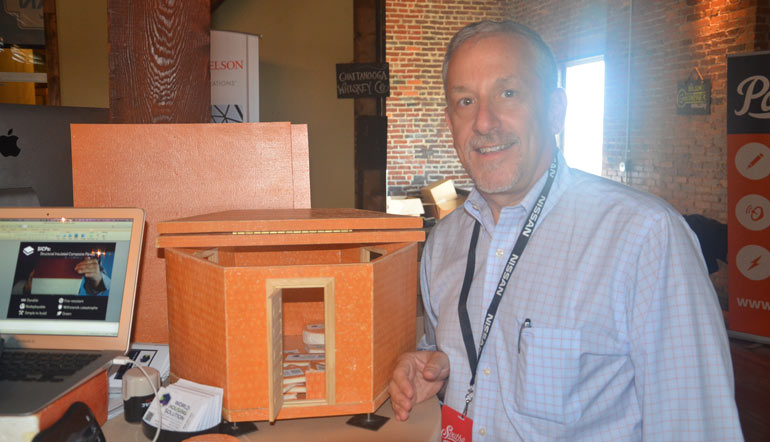
World Housing Solution, Orlando Startup, Florida startup,startup interview, startup video, SouthlandI gotta tell you, one of the most interesting startups I’ve seen at a startup conference is World Housing Solution. This Orlando based startup has created a way of making extremely strong, quick to build shelters out of Structural Insulated Composite Panels.  The company’s founder, Ron Ben-Zeev tells us that SICPs, are like a super strong sandwich made out of fiberglass bread and a foam center.  Ben-Zeev and his team have found a way to quickly and effectively use this material for shelter.

The SICPs make World Housing Solution shelters great for emergency needs like the aftermath of a natural disaster. They are also great for deploying in emerging countries. For instance, the scale model of the structure they showed off at Southland is actually being deployed to the horn of Africa as a hospital for women. That project calls for five of WHS’s structures to function as a maternity ward, delivery room, clinic, kitchen and rest rooms. In this case the structures deployed will be permanent but it will take days rater than weeks, months or years to get the hospital off the ground.

In addition to being extremely quick to set up the WHS shelters are hurricane resistant (up to 155mph), earthquake resistant (up to 7.8 richter), they don’t mold, mildew or rot, they’re fire resistant and bullet proof. Ultimately this makes the WHS shelters ideal for fast implementation in civilian, government and military installations.

Although he has no formal “construction” experience, Ben-Zeev is actually a Wharton educated executive with a background involving strategic consulting for Fortune 100 and 500 companies. He also served as Strategic Counsel to the North American CEO and President of Siemens Information Systems.

Check out our interview with Ben-Zeev in the video below. For more information visit worldhousingsolution.com

Here’s more of our coverage from Southland in Nashville Tennessee.

EE-FORENTREPRENEURS 


Meet The Man Behind NY Dress Startup BlueGala

Bluegala, NY startup,startup interview, Guest Post, YECJosh Weiss is the Founder and President of Bluegala, an online retailer of prom dresses, evening, party, and cocktail dresses. Previously, he worked for Lehman Brothers as a High Yield Credit Research Analyst. Josh graduated from the University of Virginia with a B.S. in Commerce with a concentration in Finance. Follow him @bluegala.

Who is your hero? 

Steve Jobs.

What’s the single best piece of business advice that helped shape who you are as an entrepreneur today, and why?

Match and exceed. Always keep a close watch on your competitors and make sure to match and exceed them in everything they do.

What’s the biggest mistake you ever made in your business, and what did you learn from it that others can learn from too?

When we first launched Bluegala, we placed a large order for lower-priced dresses before doing any research to see if we could actually compete in the market selling them. In hindsight, we should have placed a smaller order and tested the waters with a small PPC campaign. The lesson learned is to walk before you run and test everything.

sneakertacoWhat do you do during the first hour of your business day and why?

Check orders from overnight and go through the previous day in Google Analytics. I do this to keep a handle on what’s selling and if there are any issues. Google Analytics helps me to constantly get a sense of where our traffic/sales are coming from and if there are any red flags causing consumers to bounce off the site.

What’s your best financial/cash-flow related tip for entrepreneurs just getting started? 

Bootstrap your business for as long as you can and try to scale it from there. If you eventually need money, you want the business to be as profitable as possible to get the best valuation, and you want to hold onto the most equity you can.

Quick: What’s ONE thing you recommend ALL aspiring or current entrepreneurs do right now to take their biz to the next level?

Dive into your analytics. If you don’t know what to look for, there are tons of books and blogs that can point you in the right direction.

What’s your definition of success? How will you know when you’ve finally “succeeded” in your business?

I define success as being one of the dominant players (if not the most dominant) within a certain industry or niche. Success is accomplishing what others were unable to accomplish and thriving where others have failed.

I will know my business has succeeded when Bluegala is the go-to resource for social occasion gowns. We have had a lot of growth since our founding in 2009, but there is still a long way to go before we establish dominance in the sector. Each year that passes allows us to learn more and more about what it will take to establish dominance and I am confident we will get there eventually.

The Young Entrepreneur Council (YEC) is an invite-only organization comprised of the world’s most promising young entrepreneurs. In partnership with Citi, the YEC recently launched #StartupLab, a free virtual mentorship program that helps millions of entrepreneurs start and grow businesses via live video chats, an expert content library and email lessons.

EE-FORENTREPRENEURS

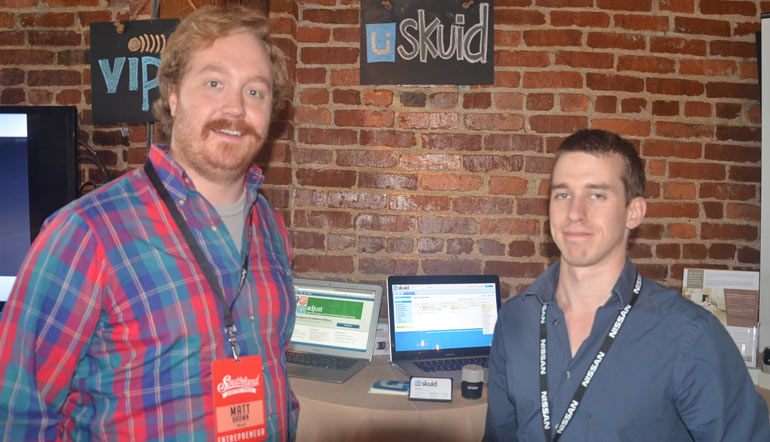
Chattanooga Startup Skuid, The Easiest Way To Build Salesforce Pages

Skuid, Chattanooga startup, Southland, startups, Salesforce

Salesforce, the cloud-based customer relationship management platform, is feature packed and quite possibly the best way to retain customer data. There are literally thousands of features, and customizations built into the platform. For a lot of companies, the easiest way to get their employees on the platform is to scale it down or build custom Salesforce pages, apps, and UI’s based on the information relevant to that company.

Normally, building interface components can be a long, drawn-out process. Salesforce has attempted to make it easier by providing shortcuts and one click access to certain features, but there’s still quite the learning curve.

Now a Chattanooga startup called Skuid has built a drag and drop platform that allows just about anyone to quickly build customized Salesforce pages. You can take one data field and move it to wherever you need it on the interface.

The company launched four months ago and has already bulked up to a staff of 12 and moved to the Southern Saddlery building, home to some other “ramp up” companies. Nooga.com reported that the company was able to go cash flow positive without taking a venture capital investment.

“We thought when we started out that we would need investment to get launched, and we don’t need it at this point,” Ken McElrath, co-founder and president, said. “We started with in-pocket capital, and we’re already cash flow-positive. We had numbers we were trying to hit in our first quarter, and we blew those out of the water. I think we were too conservative in our growth plans.”

Skuid isn’t the only Salesforce startup to go straight to revenue in Tennessee. Memphis based Cloud For Good, a company that does SalesForce development for non-profits and religious institutions, went straight to revenue.

Check out our video interview with Skuid from The Southland Conference below. For more information visit squidify.com


Here’s more Southland coverage at nibletz.com

EE-FORENTREPRENEURS


oDesk’s Gary Swart Has Advice for Startups Everywhere Else

Gary Swart, Sarah Lacy, Odesk, Southland

The Valley has done what the Valley is good at.

So said Sarah Lacy–native Memphian and founder of PandoDaily–during her Southland fireside chat with oDesk’s Gary Swart. This is great news for entrepreneurs everywhere else. While Valley companies have spent the last 30 years focused on tech, startups everywhere else think more about solving problems in every other industry. Families, healthcare, education, logistics, publishing. The list of industries ripe for disruption and innovation could go on. And, thanks to the tech created in Silicon Valley, those companies can build right where they are.

When asked if startups could legitimately stay out of the Valley, Swart encouraged entrepreneurs to take it slowly and really weigh the options. Depending on the company, moving to a tech hub could make sense. But, services like oDesk make it easier to hire workers from anywhere, and free tools like Skype and Google docs enhance collaboration. Gone are the days when people have to move across the country to work with one company. Now, according to Swart, “Work is not a place. Work is about finding the right people.”

And the perennial struggle to find investment outside Silicon Valley?

Paul Santinelli actually addressed that issue later in the day.

Stay put. Find great talent. Tackle a big problem. The money will follow.

Easier said than done, of course. Silicon Valley is a compact space, filled to the brim with entrepreneurs and capital. “Everywhere else,” on the other hand, is vast. It can be pretty difficult to find the best people, at just the right time, and an investor willing to take the risks associated with an early stage startup.

But, if–as Lacy says–the Valley is tech and millenial-focused and that market is saturated, there is huge opportunity out there. So, how do startups around the world make it happen?

Swart has some ideas:

  1. Don’t ride the rollercoaster. Entrepreneurship is full of extreme highs and extreme lows, often both within a minute’s time. In order to keep focused, entrepreneurs should stay even-keeled throughout the process.
  2. Ideas are great, but we all know ideas aren’t everything. Your big idea needs a big market and money, followed by great execution.
  3. So, what if you have all these things, but nothing seems to happen? External validation is important. Every idea has some naysayers, but if literally NO ONE is interested in what you’re building, it probably won’t ever sell.
  4. Always stretch yourself. Lacy said that early in her career, she purposely forced herself to “jump off cliffs” to keep herself uncomfortable. It’s the only way to keep your edge.
  5. Start as narrow as you can. Pick one thing and become the best at that one thing. After establishing expertise, then you can branch out into one or two other areas.

Lacy and Swart weren’t encouraging delusions. They both talked about how hard it is to be an entrepreneur, and any founder outside Silicon Valley can list the ways it’s especially difficult. But, it seems the tide is turning. Ecosystems around the world are thriving, and more companies are tackling big problems. Throw in some of the irrational optimism we entrepreneurs are known for, and it might just be possible to build the company of your dreams after all.

Here’s more Southland coverage at nibletz.com

EE-FORENTREPRENEURS

Columbus’ 10x Startup Accelerator Now Taking Applications For Fall 2013

10x accelerator, Columbus startup,startup accelerator, startup news

Columbus’ cohort-based startup accelerator, 10x, is gearing up for their 2013 fall session. The accelerator, started in 2011, has successfully accelerated startups like UFunded, Ribbon, and LaunchGram, which was acquired in February by Referly.

10x takes 10 startups for 10 weeks and seeds them with $20,000 in seed funding, office space, and a strong mentor network. The class will “graduate” at the end of 10 weeks with an investor day held in Columbus.

“Perhaps the greatest value teams will receive from the 10x program is the mentor network comprised of successful entrepreneurs, CEOs, VCs, and business veterans from the startup world,” Brooke Paul, Founder of Founders Factory and a director of the 10x program told metropreneur.com. “10x alums have effectively leveraged our mentor network for follow-on funding, access to customers, and more.”

10x’s mentor network includes people like Eric Corl, founder of Fundable, Ben Blanquera, founder of TechLife Columbus, and Mark Kvamme founder of Drive Capital. 27 startups have gone through the 10x program and have collectively raised over $9.4 million in follow on funding.

The next session begins September 4th and will run for 10 weeks. Startups interested in applying can use this application. The application deadline is July 14th.

Find out more about 10x here.


Bob Metcalfe, the inventor of ethernet, is speaking at this accelerator demo day in Chattanooga.

EE-FORENTREPRENEURS

Michigan’s Newest Accelerator, Coolhouse Labs, Launches Tomorrow

jordanbreighnerMichigan’s new startup accelerator is launching its first cohort tomorrow. It’s not in Detroit, Pontiac, or even Ann Arbor.  The Coolhouse Labs accelerator is based in a resort town off Lake Michigan called Harbor Springs, the hometown of 27-year-old Jordan Breighner, co-founder and Managing Director of Coolhouse Labs.

Harbor Springs is a small town with under 2000 year-round residents. It was once a popular summer destination for autoworkers, the life bread of Michigan’s economy. Like many others, Breighner sees the path to improving an economy is through entrepreneurship and startups.

Although he has no “formal” entrepreneurial experience, Breighner has a diverse background, including a stint working for the Obama administration and going to college in Utah to become a ski racer. His vision, passion, and tenacity to get things done has helped him secure the seed investments for the first five teams in this first cohort. He’s also stocked his team with a Program Director, Resident Designer, and Resident Developer.  Breighner has also been able to attract a top notch advisory board.

Now, just four months after launching the idea, the first cohort is ready to move into Coolhouse Labs. Coolhouse has attracted teams from New York, Philadelphia, Chicago, and Taiwan.  3 out of the 5 teams have a female co-founder, 3 out of the 5 teams have an international co-founder, and the average co-founder is traveling over 2700 miles to be part of Coolhouse Labs.

Here are the five teams.

Every Last Morsel – Every Last Morsel is a community marketplace for locally grown food – like an Etsy for small farms and backyard gardeners. It provides growers with web-based record-keeping tools and easy-to-use sales outlets that allow farms to focus on doing what they love: growing good food.

Lorious – Lorious is an online marketplace for expertise, where users can buy and sell one-on-one live video chat consulting services, at any time and from any location. Lorious empowers people to gain skills, from crafting to accounting, and to take ownership of their professional identities in response to this ever-changing economy.

Novi Times – Novi is aiming to redefine mobile news discovery through search. They have developed an editor-guided algorithm that helps users discover news through topics they want to follow.

QuickFixNow – QuickFixNow delivers fast and reliable home repair, connecting consumers with contractors on-demand through a mobile and web-based platform.

TRNK New York – TRNK New York is the online shopping destination for the discerning male who seeks an inspired and character-filled home.

Find out more about Coolhouse Labs here.


See what accelerator Drive Capital’s Mark Kvamme said was “One of the best outside Silicon Valley”

EE-FORENTREPRENEURS

NY Startup StoryKid, Born At The TechCrunch Disrupt Hackathon, Prepares For Launch

storykid

Two literature PhD candidates from Columbia University decided to attend the TechCrunch Disrupt NY hackathon this year with their startup idea that bridges their love of literature, kids, and technology. Tianjiao Yu and Lu Xiong, have created StoryKid, an app for the iPad that allows children to create stories of their own using images and features created by StoryKid.

If you’re a parent (like me) with a kid who uses an iPad, then you’re well aware that there are thousands children’s books in the iTunes app store. Some of the books are interactive, others are simply read along stories. Yu and Xiong’s app allows kids to make the story up from start to finish.

After the child has created a story, they can save it to the iPad and also share it across multiple channels.

When the app releases next month, it’s going to be fun for all young children, but naturally as a child gets older and starts developing their comprehension skills, the stories will start flowing better. StoryKid will help kids foster those comprehension skills. This feature could be very helpful to early education teachers, a market that Yo and Xiong hope to penetrate.


What is StoryKid?

StoryKid is an app on iPad that encourages kids to create their own stories by using images provided by us.

It is known to all that kids love stories, but listening to stories created by adults is one thing, creating something according to their own minds is quite another adventure. Kids are surprisingly good at this. They have totally fresh ways to think, and they don’t abide by many rules. So unlike other interactive apps in the store that let kids play with existing stories, StoryKid provides an exciting stage for the youngest to   create new relationships: organizing characters, locations and all elements seen in stories according to their wish. It allows kids to fully play with their imagination.

Because of it’s both fun and educational, we think this app can be both used in families and in schools. Teachers can use this app to let kids rewrite stories they are just told about. We believe this app can also be used for the sake of special education.

In the meantime, StoryKid will make the time parents spent with their little ones really fun and will make that fun last. When papa & mama sticks in getting a new story for the bed time, StoryKid is a good source. The stories finished by kids can also be saved and exported, so that the intimate moments in the childhood could always be preserved and revisited.

In layman’s terms, how does it work? (In other words how would you explain it to your grandmother)

First, the youngest selects a situation that interests him/her mostly to start with. For example, a situation could be “Jesse finds he can suddenly understand his dog’s barking….” Along with each situation, several images would be provided as the elements to help kids structure the development of the story line. Then they will enter the creation page. There are a number of possibilities of how to arrange the images and how to note down what they want to express. The finished stories can be exported and shared by parents.

Who are the founders and what are their backgrounds?

Tianjiao Yu and Lu Xiong are co-founders of StoryKid. We are school mates from Columbia University; we were both literature Ph.D students. Lu had great experience in humanity book publishing before joining the Ph.D program. Born to inherit and soak in literature, Lu gives the soul to this app. She is the content producer. Tianjiao is a kind of hard to find: thinks profoundly, executes efficiently and handles multitasks at ease. She manages the product, runs business and designs UX. We are very supplementary in a good way.

Where are you based?

We are based in New York. Btw, to show off, we have three roof windows in our apt/office.

How did you come up with the idea for StoryKid?

It was born when we were at Techcrunch Disrupt Hackathon NY 2013. One spirit we both greatly value is being creative. As literature students, it’s natural for us to favor the space provided by fictions/stories that allows people to be as creative as possible. So we thought it would be exciting to build a tool for people to easily and freely tell stories. Immediately we decided to focus on kids, who haven’t had boxes to jump out of yet and who will naturally unfold all kinds of possibilities in stories. iPad is just right for this idea.

Why now?

In short, the timing, the New York City, and the people we meet are just very right for us. We left the graduate program to explore other possibilities to make use of our knowledge. We soon realizes using current technologies, for example, the iPad, can introduce humanities subjects to more people and let people have fun with them, because to interact with the content is actually inviting users to become a part of the content, which automatically increases the intimacy. The tablet market grows like a rocket, and the early childhood education is also booming. That always receiving encouragement and suggestions from parents and teachers is another big incentive for us to start this marching. In addition, New York doesn’t frighten you when you are on the threshold of touching something new.

And what’s your secret sauce?

As with cooking, sometimes the amazingness is the result of lacking of something. In our case, we do not have a technology co-founder. Hence, almost all our product and UX ideas derives directly from daily life experiences, very intuitive, human, and breathing, which cannot be more appropriate for kids. We’d like to say that our product itself is like a kid. We hope StoryKid and other kids will be good friends.

What are some milestones you’ve achieved?

Our first milestone should be the demo presented at Techcrunch Hackathon. The demo day was the birthday of this app. We immediately received lots of great suggestions, pushing the baby app to grow really fast. We also got lucky that Ms. Ingrid Lunden from Techcrunch gave us an interview immediately after the presentation, so we got a bit viral in that week.

The second milestone we achieved was under the help of Mr. Trip O’Dell from Audio Book of Amazon. He gave us fabulous suggestions on how to improve our feature and UX when we met at Big Apple Redux 2013 in Bloomberg. That short conversation was a magic.

Most recently, we were contacted by several schools and online platforms who are interested in forming partnership with us in the long run.

What’s your next milestone?

We will have our BETA version in early July. We will invite kids to test the app and the teachers to review the app.

Where can people find out more and what is your Twitter username?

We so far suggested people to go to Techcrunch website where the interview was posted: http://tcrn.ch/Yfbcej. But we will soon finish the construction of the app intro site: storykid.me Our twitter account: @imstorykid


Check out over 50 startup stories from everywhere else at TechCrunch Disrupt NY 2013

serious


Image: TechCrunch

We Found The Future Of Loyalty & Rewards At Southland

Facedeals, Nashville startup,startup,Southland

Loyalty and rewards, loyalty and rewards, loyalty and rewards. It’s like a broken record. Everyone thinks they’ve stumbled onto the next big thing with loyalty and rewards. But maybe Nashville-based startup Facedeals actually has.

Facedeals uses a 100% opt-in facial recognition platform that is non-obtrusive to facilitate in person loyalty and rewards in a very passive way.

Users simply sign up for a Facedeals account using Facebook, and the magic starts. When that person walks into an establishment using Facedeals, their face will be captured using an eye-level, inconspicuous camera. In fact, the facial recognition software in the camera can capture the person’s image at their normal pace. They don’t have to do anything but simply walk past it.

The backend software in Facedeals already knows what that user likes and doesn’t like and their habits when patronizing a Facedeals establishment. Facedeals also specializes in relevance as co-founder David McMullen told 60 Minutes’ Leslie Stahl in this interview that aired last month.

In that 60 Minutes piece, McMullen and Stahl walked into a participating merchant, and as they were getting ready to decide what to order, Stahl was delivered a deal to purchase a Ceasar Salad and get a free Diet Coke. Both items, were things that Stahl actually likes. McMullen was offered a different deal on a local beer that he likes.

The secret to this relevance is that when users opt-in to Facedeals and let the service see their Facebook page, it builds a profile based on things they’ve liked..

McMullen told us (and 60 minutes) that the beauty behind Facedeals is that the deals are coming when you’re ready to make a purchase and not in an email first thing in the morning.

The company is working with a variety of different merchants including retail, restaurants, and bars. The robust back-end makes it the easiest way to do loyalty and rewards for any business. In fact they don’t have to do much of anything except let the customer redeem the deal.

Check out our own interview with McMullen from the Southland conference in Nashville.

You can find out more about Facedeals here at getfacedeals.com

Here’s more of our Southland coverage.

EE-FORENTREPRENEURS

Drive Capital’s Mark Kvamme: Brandery Is One Of The Best Accelerators Outside SV

The Brandery, Mark Kvamme, Drive Capital, Cincinnati startups, accelerator

Mark Kvamme, Co-founder and Partner at Drive Capital and a former partner at Sequoia, is high on startups and entrepreneurs outside of Silicon Valley. Kvamme, a life long Valley guy, moved out to Columbus, Ohio, to start Drive Capital and help spur innovation “everywhere else”.

Appearing on a panel Wednesday afternoon at the Southland conference in Nashville, Tennessee, Kvamme defended the hustle outside of Silicon Valley.

“I know people here in Nashville, I know people in the midwest that I think actually work harder than Silicon Valley people. Because Silicon Valley people are all into the appearance of what I’m doing versus actually getting down and “gettin’ ‘er done,” Kvamme said in response to a question from panel moderator and Solidus Partner Vic Gatto.

Gatto had eluded to the fact that he feels that some entrepreneurs in the Southeast don’t hustle the way people in the Valley do because there is no competition.

Through Solidus, Gatto funds multiple accelerators in Tennessee including Nashville’s Jumpstart Foundry and Memphis’ Seed Hatchery. Earlier in the discussion Gatto had brought up accelerators so Kvamme took the opportunity to talk about one accelerator in particular: the Brandery.

Most Nibletz readers know that our co-founder Nick Tippmann has been through the Brandery with two different startups, and we work out of the Brandery facility in Over The Rhine when we’re in Cincinnati.

During the panel Kvamme spoke very highly of the Brandery calling it “one of the best accelerators outside Silicon Valley,” in effect putting The Brandery in league with Techstars and MassChallenge.

Kvamme said he just funded a company out of The Brandery, as did Khosla and Tony Hsieh. He goes on to say that the Brandery is successful because of the ecosystem that surrounds it, and that the ecosystem could be replicated in Nashville and pretty much everywhere.  Check out the video clip below:


We’ve been tracking The Brandery, and their companies, heavily over the last two years. Check out more of our Brandery coverage here.

Here’s more from Southland.

EE-FORENTREPRENEURS